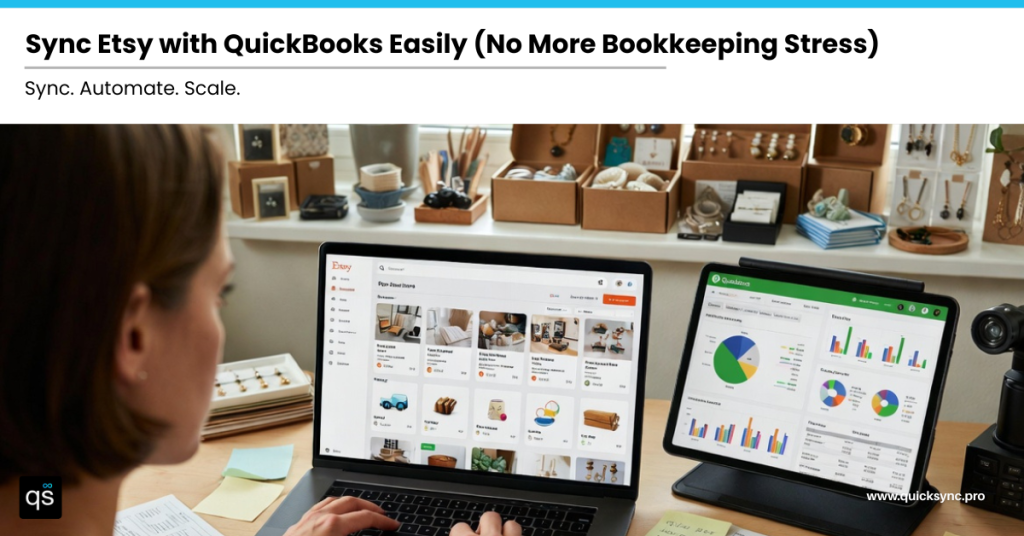

Selling on both Shopify and Etsy is a powerful way to grow an online business. Shopify gives you full control over your store and brand. Etsy provides access to millions of shoppers searching for handmade and unique products.
But many sellers ask the same question before expanding: Does Shopify integrate with Etsy? The answer is yes, but connecting these two platforms properly requires more than simply opening accounts on both.
Without a reliable integration system, product updates, inventory levels, and orders can easily become out of sync.
In this guide, we’ll explain how Shopify and Etsy integration works. The common problems store owners face when managing both platforms. And the best way to connect them so you can sell on multiple channels without inventory errors or extra manual work.
Does Shopify integrate with Etsy Shop?

Now that we understand why many sellers want to use both platforms, the next question is obvious: Does Shopify integrate with Etsy?
The answer is yes, but not natively.
Etsy and Shopify are built as separate systems. Shopify runs independent online stores where merchants control branding and customer relationships, while Etsy is a marketplace with its own listing rules and fee structure. As a result, the two platforms don’t have a built-in connection.
Instead, sellers use third-party integration tools to connect their Shopify app store with their Etsy shop.
However, there’s an important difference between a simple connection and a true integration. Some tools only move data occasionally. While proper integrations automatically sync products, inventory, prices, and orders across both platforms.
Whether sellers ask “Does Shopify integrate with Etsy?” or “Does Etsy integrate with Shopify,” the real goal is the same: keeping both stores synchronized without manual work or inventory mistakes.
Understanding this difference is the first step to building a reliable Shopify–Etsy setup.
How Shopify and Etsy Actually Work Together in Practice
Once you properly sync Shopify with Etsy stores, the two platforms stop working separately and start operating as a connected system. Instead of managing everything manually, synchronization keeps both stores updated automatically.
Here’s what effective Shopify–Etsy integration looks like in practice.
One Product Catalog to Manage Everything:
Your Shopify store acts as the central hub for managing products. When you create or update a product in Shopify, that change automatically updates on Etsy as well.
This means you don’t have to copy and paste product details across platforms or worry about inconsistent listings.
Typical synced data includes:
- Product titles and descriptions
- Images and
- Size or color variations
- Prices adjusted for each platform
- Stock levels
Inventory That Stays Accurate Across Platforms:
With the right synchronization, inventory updates automatically whenever a sale occurs on any of the platforms.
For example, if a product sells on Etsy, the stock level in Shopify updates immediately. Likewise, if you restock an item in Shopify, the new quantity appears on Etsy as well.
This is critical because inventory syncing accuracy is a major challenge for multichannel sellers. Studies show the average business maintains about 83% inventory accuracy, and manual multi-channel management often lowers that even further.
Orders Managed From One Dashboard:
When Shopify and Etsy are properly connected, all orders can be managed from a single dashboard.
Whether a customer buys from your Shopify store or your Etsy store, the order appears in one place. From there, you can:
- Process orders
- Print shipping labels
- Update tracking details
- Manage customer
This eliminates the need to constantly switch between platforms.
Smart Pricing Across Platforms:
Pricing is another area where integration helps sellers stay profitable. Etsy charges several fees, including listing fees, transaction fees, and payment processing costs.
A good integration system allows sellers to set a base price in Shopify, then automatically adjust the price for Etsy to account for those fees.
This ensures consistent pricing while protecting profit margins.
Common Problems When Shopify and Etsy Are Not Properly Synced
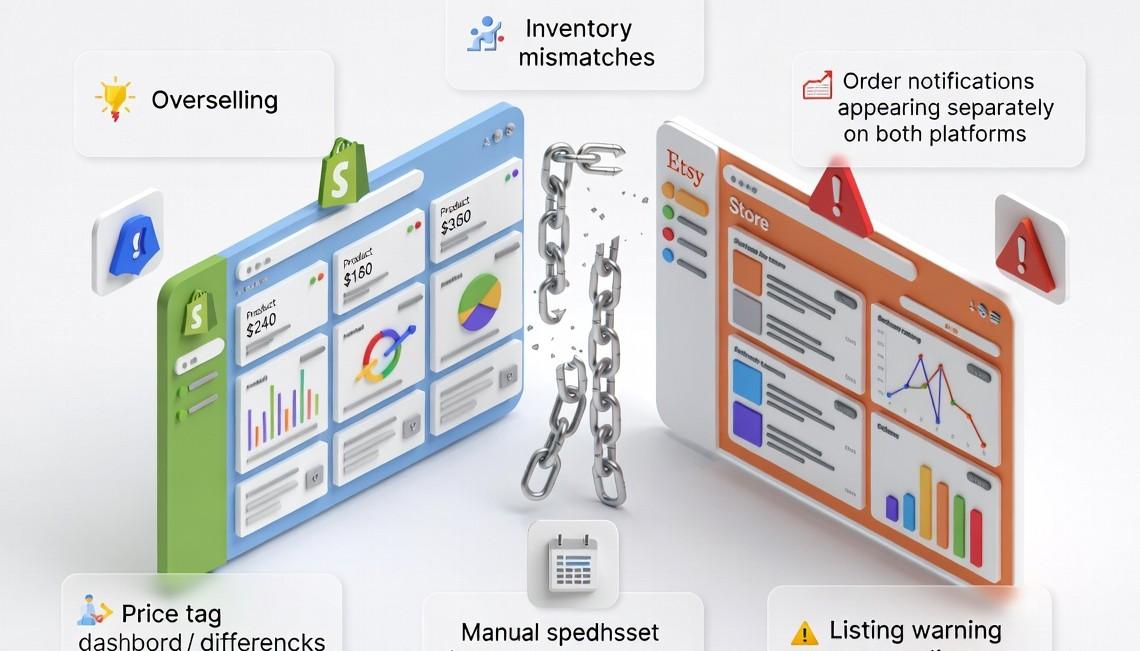
When sellers try to connect Shopify to Etsy using weak tools or manual processes, they often run into the same costly problems. Without proper synchronization, product data, inventory, and orders quickly fall out of alignment.
Below are the most common issues sellers face.
Overselling Products:
Without real-time inventory syncing, both Shopify and Etsy stores may show the same stock number even when items have already been sold on the other platform.
For example, a product may show 20 units available, even though several have already been sold elsewhere. Both stores continue accepting orders for inventory that no longer exists.
This often leads to order cancellations, negative customer reviews, lower Etsy shop ratings, and potential account restrictions. Repeated overselling can seriously damage your seller reputation.
Inventory Inaccuracies:
Even if overselling doesn’t happen immediately, inventory data often becomes inaccurate over time. This happens when:
- Returns are processed on one platform but not the other
- Pending orders reserve stock that isn’t visible everywhere
- Manual updates are delayed
When inventory records become unreliable, sellers may overstock slow products or run out of high-demand items.
Pricing Problems:
Etsy’s fee structure is different from Shopify’s. Sellers pay listing fees, transaction fees, payment processing costs, and sometimes advertising fees.
If prices are copied directly from Shopify without adjustment, many sellers discover later that their Etsy sales were far less profitable than expected.
Smart integrations help account for these platform differences automatically.
Time-Consuming Manual Work:
Managing two platforms without proper syncing creates a large amount of repetitive work. Sellers often spend hours:
- Updating inventory across platforms
- Copying product information
- Fixing listing errors
- Reconciling orders
Instead of focusing on growing the business, time gets lost managing spreadsheets and manual updates.
Listing and Compliance Issues:
Etsy shop has its own listing requirements, including category rules, product attributes, and photo guidelines.
When sellers manually link Shopify with Etsy, listings may miss required details or formatting rules. This can lead to listing rejections, reduced search visibility, or compliance warnings that hurt product performance.
Key Features Every Etsy and Shopify Integration Should Have
A reliable Shopify–Etsy integration should do more than just connect the platforms. It should automate key processes and keep products, inventory, and orders synchronized at all times. The table below shows the essential features a strong integration should provide.
| Feature | Why It Matters | Basic Connector Apps | QuickSync |
| Real-time inventory sync | Prevents overselling when products sell on either platform | Updates every 15–60 minutes | Updates in under 5 minutes |
| Two-way order synchronization | Allows sellers to manage all orders from one system | Often limited or one-way | Full two-way order flow |
| Dynamic pricing adjustments | Helps maintain profit margins after Etsy fees | Manual pricing updates | Automatic pricing rules |
| Product variant support | Important for items with multiple sizes, colors, or options | Limited support | Full variant handling |
| Error monitoring | Identifies syncing issues before they cause problems | Basic alerts | Automatic fixes and notifications |
| Multi-channel support | Makes it easier to expand to other marketplaces later | Typically limited to one platform | Supports multiple marketplaces |
A strong integration should do more than simply move data between platforms. It should automatically keep products, inventory, orders, and pricing synchronized. It will help sellers manage both Shopify and Etsy without operational risks.
How QuickSync Simplifies Shopify–Etsy Marketplace Integration
For sellers who want a reliable way to connect Shopify with Etsy, QuickSync provides a streamlined solution designed for multichannel ecommerce operations. The following are key features that QuickSync offers to multichannel sellers:
Quick and Easy Setup:
QuickSync is designed to be simple to configure. Sellers can connect their Shopify store and Etsy shop, choose their synchronization settings, and activate syncing in just a few steps.
No advanced technical knowledge is required, which makes the setup process accessible even for new ecommerce sellers.
Real-Time Synchronization:
Unlike basic tools that update data on scheduled intervals, QuickSync uses real-time synchronization technology.
When a product sells on Etsy, the inventory level in Shopify updates almost immediately. Likewise, product updates made in Shopify, such as price or description changes, can be reflected on Etsy automatically.
Smart Inventory Management:
QuickSync includes advanced inventory controls to help prevent overselling.
Sellers can set custom stock buffers for different sales channels, ensuring that a portion of inventory remains reserved. This helps maintain accurate stock levels even during busy sales periods.
Etsy-Specific Optimization:
Because Etsy has unique product listing requirements, QuickSync includes features designed specifically for the platform. These include automated category mapping, attribute management, and compliance with Etsy’s listing structure.
This helps reduce listing errors and improves product visibility within Etsy search results.
Centralized Order Management:
Once Shopify and Etsy are connected, orders from both platforms can be managed through a single dashboard.
From there, sellers can process orders, update shipping information, and manage customer communication without switching between multiple systems.
Built to Support Business Growth:
As order volumes increase, managing multiple platforms manually becomes difficult. QuickSync is designed to scale with growing businesses, helping sellers manage larger inventories, higher order volumes, and additional marketplaces efficiently.
When Does Shopify–Etsy Integration Make Sense for Your Business?
Not every seller needs integration immediately. But as your business grows, connecting both platforms becomes increasingly important for efficiency and accuracy.
You’re Ready for Integration If:
You process 50+ orders per month across both platforms:
At low order volumes, manual management might work temporarily. But once orders increase, manually updating products and inventory becomes time-consuming and error-prone. Automation quickly becomes worth the investment.
You’ve already experienced overselling:
Even one overselling incident is a warning sign. It shows your current system isn’t keeping inventory aligned across Shopify and Etsy, which can lead to cancellations, negative reviews, and account risks.
You spend more than 5 hours a week managing both platforms:
If you’re constantly copying product updates, adjusting inventory, or fixing order mismatches, proper integration can save hours of work every week and allow you to focus on growing your business.
You plan to scale your sales:
What works when you sell a few products often breaks when sales increase. Setting up integration early ensures your systems can handle growth without creating operational chaos later.
Final Words
So, does Shopify integrate with Etsy? Yes, but the effectiveness of that integration depends on how the two platforms are connected.
Basic connections can move data between systems, but delays and errors often lead to inventory issues, overselling, and extra manual work. A reliable integration keeps products, inventory, and orders synchronized automatically.
With the right integration in place, Shopify and Etsy can work together smoothly and help sellers manage operations more efficiently while growing across multiple sales channels.