

In today’s fast-moving ecommerce world, inventory management is more than just counting stock. It is about accuracy, speed, and control across every sales channel. Many merchants struggle with incorrect inventory numbers. These gaps usually happen when inventory is managed manually or across disconnected platforms.
Traditional inventory methods rely on spreadsheets or delayed updates. They often create stock mismatches, overselling, and fulfillment delays. With cloud-based inventory tools, retailers can access their inventory dashboard anytime and from anywhere using a phone, laptop, or tablet. Stock levels update in real time, allowing businesses to monitor availability and manage inventory across all sales channels from one centralized platform.
As per a MoldStud study, Cloud-based inventory systems can cut inventory costs by up to 30%. Let’s explore why cloud-based inventory management is important ecommerce success.
What is Cloud-Based Inventory Management?
Cloud-based inventory management means storing and managing inventory data on secure online servers. Instead of local computers or spreadsheets, this approach relies on the internet. This allows merchants to access inventory from any device with an internet connection.
Unlike traditional systems, cloud systems operate in real time inventory tracking. Stock levels adjust instantly when a sale occurs with cloud-based inventory tools.
By eliminating manual tracking and disconnected desktop tools, cloud systems reduce errors.
Key Features of Cloud-Based Inventory Management
Cloud inventory systems typically include:
- Automated SKU generation for products without identifiers
- Multi-location inventory management across warehouses
- Variant-level tracking by size, color, or batch
- Barcode scanning and real time inventory tracking
These features allow merchants to manage inventory more accurately. It improves cash flow and optimizes stock levels efficiently.
How Cloud Inventory Works in Ecommerce Business
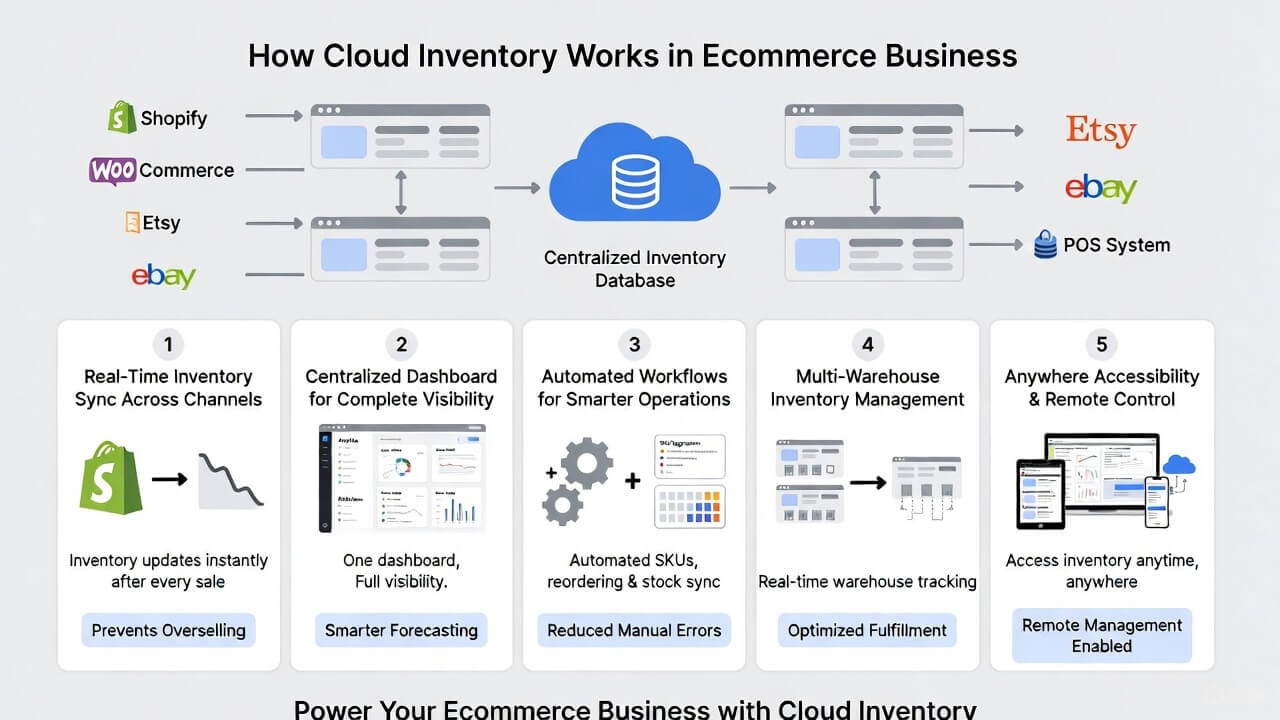
Today, retailers sell on many platforms like Shopify, eBay, Etsy, etc. When managing many ecommerce channels, manual inventory management can get messy.
That’s where Cloud inventory systems come in to assist. They connect all sales platforms to a centralized database. When a sale occurs, inventory updates everywhere. This eliminates mismatched stock levels and reduces manual intervention.
Let’s understand how cloud inventory management tools operate in ecommerce businesses.
Real-Time Inventory Sync Across Channels
A cloud inventory system continuously synchronizes stock levels across all sales channels. Inventory tools can sync inventory for Shopify, WooCommerce, Etsy, POS, or marketplaces. When an item sells, the system instantly updates inventory data everywhere. It reduces overselling and ensures customer satisfaction.
Centralized Dashboard for Complete Visibility
With cloud-based inventory software, merchants access a single platform for all operations. Sales orders, purchase orders, and stock levels are visible at a glance. Accurate data helps merchants make smarter decisions and forecast accurately. It also helps in improving supply chain management.
Automated Workflows for Smarter Operations
Automation handles routine inventory processes such as reordering, SKU creation, and variant management. An efficient inventory sync tool can create SKUs for products lacking them. Such tools can sync multi-location stock accurately by size and color. This reduces manual errors and frees staff to focus on growth-oriented tasks.
Multi-Warehouse Inventory Management
Cloud-based systems allow merchants to track stock across multiple warehouses seamlessly. Inventory transfers, stock allocations, and fulfillment routing are managed in real-time. It improves operational efficiency and customer satisfaction while reducing carrying costs.
Anywhere Accessibility & Remote Control
Since the system is cloud-based, merchants can access their inventory dashboard anytime and from anywhere using a phone, tablet, or laptop. There is no dependency on a single device or physical location. This flexibility supports remote management, faster decision-making, and better operational control across distributed teams.
Benefits of Cloud-Based Inventory Management
Moving to a cloud-based inventory system is not just about convenience. It improves how your business runs every day. In this section, we’ll look at the key advantages of cloud inventory systems.
Greater Accuracy and Reduced Errors
Inventory management for ecommerce with real-time inventory sync minimizes errors caused by manual data entry. Merchants can rely on accurate inventory levels. This prevents overselling and understocking. Inventory automation keeps SKUs consistent across all channels. It tracks each product variant separately and maintains accurate stock counts everywhere.
Operational Efficiency and Time Savings
Cloud-based systems keep all inventory data in one place. This makes daily operations simple and clear. Barcode scanning, automatic stock updates, and multi-channel syncing reduce manual work. Your staff can focus on important tasks instead of routine updates. This improves workflow and leads to better customer service.
Scalability for Growing Businesses
Cloud-based inventory software allows you to expand to new sales channels without complexity. You can add more products, warehouses, or marketplaces as your business grows. The system adjusts easily without a major technical setup. It keeps your inventory updated in real time, so you can scale with confidence.
Improved Cash Flow and Reduced Carrying Costs
Accurate inventory tracking helps businesses maintain the right stock levels. It reduces overstock and prevents deadstock. Real-time sales and demand data support smarter replenishment decisions. This improves cash flow and reduces money locked in inventory. As a result, businesses can invest more in growth instead of excess stock.
Data-Driven Decisions and Forecasting
Centralized inventory data gives merchants clear and reliable insights. It helps them understand sales trends and stock movement. Businesses can forecast demand, adjust stock levels, and plan purchases with confidence. This reduces supply chain risks and improves planning. Better data leads to faster and smarter business decisions.
Disadvantages of Cloud-Based Inventory Management
Not all inventory management systems are perfect. Cloud-based inventory software has its own challenges. Merchants should understand them before making a decision. This section covers potential drawbacks to help make informed decisions.
Dependence on Internet Connectivity
Cloud-based systems require a stable internet connection. Temporary internet outages can disrupt real-time inventory tracking and order management. Modern platforms often include offline modes or delayed inventory sync features.
Ongoing Subscription Costs
Unlike one-time desktop software, cloud-based inventory tools charge monthly or yearly fees. They save money in the long run. However, small businesses should plan their budget before investing.
Limited Control Over Updates
Since cloud providers manage system updates, merchants may have limited control over new features. Some businesses with specialized workflows may need to adapt to provider-driven changes.
Data Security Concerns
Cloud platforms use strong encryption and secure servers. Still, some merchants worry about storing sensitive inventory data online. Choosing a reliable provider with robust security protocols mitigates this risk.
Integration Limitations
Some cloud-based inventory systems may not integrate smoothly with all existing channels. This can create gaps in data flow or require additional setup. Choosing a platform with strong integration support helps reduce this challenge.
How Integration Tools Keep Inventory Accurate

Managing inventory across multiple sales channels and warehouse locations can quickly become complex. Disconnected systems often lead to data inconsistencies, stock mismatches, and operational inefficiencies.
Integration tools like QuickSync centralize inventory data and automate synchronization across platforms. By creating a unified workflow, they eliminate manual intervention and improve data accuracy.
Multi-Channel Synchronization
Selling on multiple platforms means your inventory must stay updated everywhere. A smart tool like QuickSync updates stock in real time whenever a product sells on any channel. This keeps inventory accurate across ecommerce stores, marketplaces, POS systems, and accounting tools.
Variant-Level and SKU Management
Today, ecommerce retailers sell products with variants, such as size, color, material, or batch. Tracking inventory only at the product level creates inaccuracies and fulfillment errors. Advanced inventory sync software like QuickSync tracks stock at the variant level. Such software ensures detailed variant-level tracking and structured SKU management.
Multi-Warehouse Inventory Management
As businesses grow, they often store inventory in multiple warehouses or retail locations. Without a central system, it becomes hard to track inventory counts properly for warehouses.
Multi-location tools like QuickSync help retailers know about the exact stock in the warehouses. QuickSync supports multiple stocking locations and provides real-time visibility into inventory across warehouses.
Automatic SKU Creation for Products Without Identifiers
Many merchants struggle when products do not have proper SKUs. This often happens when importing items from different suppliers or marketplaces. Missing SKUs can break syncing and cause reporting errors.
Tools like QuickSync can create SKUs for products that do not have them. It gives every product a unique code for accurate tracking and smooth integration.
Smooth Product Export and Channel Expansion
Expanding to new sales channels requires efficient product transfer between stores. Manual product creation increases setup time and risks data inconsistency.
With QuickSync, merchants can add missing products to connected stores by creating a product option. Inventory updates instantly. This makes it easy to launch new sales channels and scale operations smoothly.
When to Move From Traditional to Cloud Systems
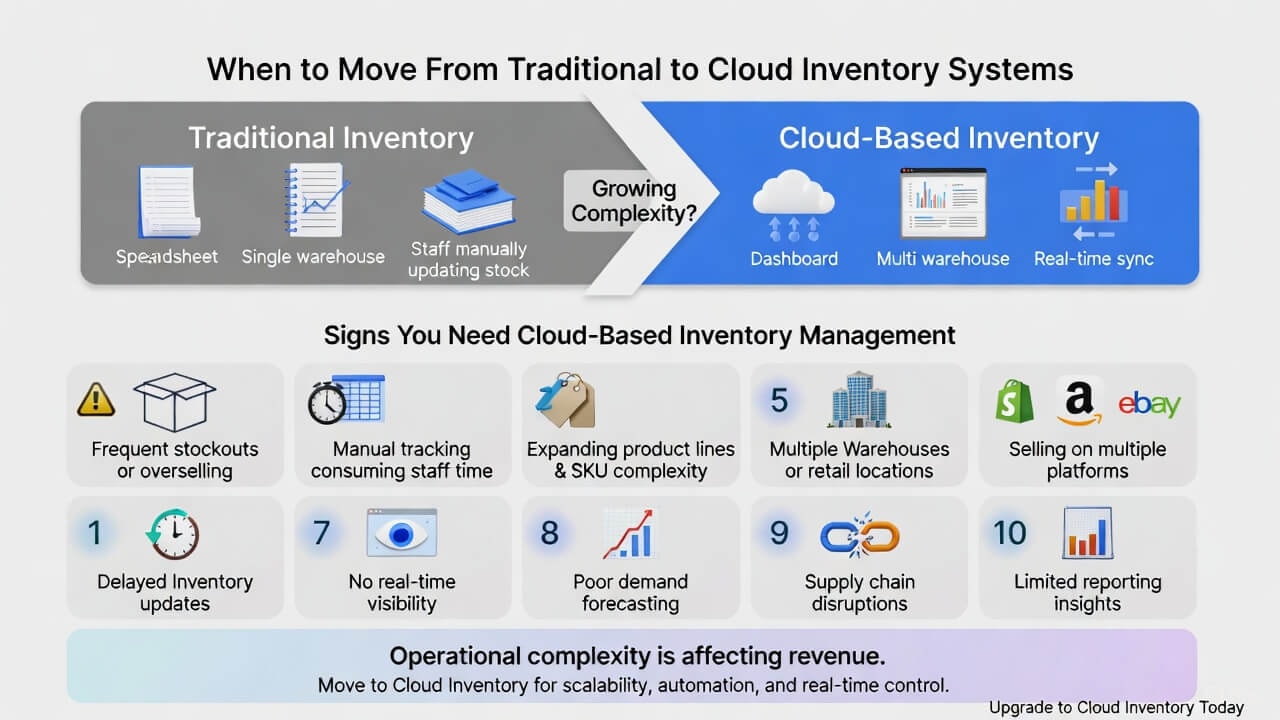
Traditional inventory tracking can handle small-scale operations, but growing businesses need smarter solutions. This section helps merchants know when they need cloud-based inventory management.
Signs You Need Cloud-Based Inventory Management
If you face any of these problems, it may be time to invest in advanced cloud-based inventory software.
- Frequent stockouts or overselling across channels
- Manual inventory tracking consumes significant staff time
- Expanding product lines with increasing SKU complexity
- Managing multiple warehouse or retail locations
- Selling across multiple ecommerce platforms or marketplaces
- Delayed inventory updates causing fulfillment errors
- Lack of real-time inventory visibility
- Difficulty forecasting demand accurately
- Supply chain disruptions affecting reorder planning
- Limited reporting and performance insights
Cloud-based inventory management becomes necessary when operational complexity starts affecting revenue. Moving to the cloud ensures the flexibility required to support long-term business growth.
Conclusion
Cloud-based inventory management for ecommerce is no longer optional. Manual systems cannot keep up with multiple channels, warehouses, and complex product catalogs.
Cloud inventory management systems like QuickSync bring all inventory data into one place. They update stock in real time, reduce errors, and support better decisions. This improves cash flow and protects customer trust.
Tools like QuickSync automate syncing, maintain SKU accuracy, and support multi-warehouse operations. Merchants who want to manage inventory with ease should switch to QuickSync.