Returns are now a core part of ecommerce business that retailers can’t avoid. According to the National Retail Federation, nearly 16% of all retail sales are returned every year. Smart retailers are using their return policy as a customer retention strategy. If you are someone who is struggling with handling returns or whose operations get into a mess after returns, you might need a good customer returns management strategy.
Return management is how businesses management products that customers return while keeping operations running smoothly. In this guide, we will break down how to manage customer returns efficiently from start to finish. You will learn how to reduce friction, control costs, and even turn returns into repeat sales.
Why Customer Returns Matter for Today’s Modern Merchants
Returns impact more than just revenue. They affect inventory accuracy, warehouse efficiency, customer service, and brand perception. Poor return handling leads to order delays, angry customers, and negative reviews that damage future sales.
If the return is smooth, customers are likely to shop again. If it’s slow or confusing, they may never come back. That makes managing customer returns a key part of the overall customer journey.
Returns also increase costs through shipping, checks, and refunds. When there is no clear return management system, retailers cannot track why items are returned. Strong customer returns management helps businesses spot patterns and fix root problems.
How Does the Customer Returns Process Work?
A clear return process helps retailers manage returns faster and avoid confusion. Below is a simple end-to-end returns workflow used by most e-commerce and retail businesses, which gives good results.
Step 1: Customer Initiates the Return Request
The return process begins when a customer submits a return request through email, support, or a returns portal. Customers usually select a return reason and preferred resolution, such as a refund or an exchange.
Step 2: Return Approval and Shipping Back to the Merchant
The merchant reviews the request and approves it based on the return policy. Once approved, the customer ships the product back using the provided instructions or return label.
Step 3: Receiving and Inspecting the Returned Item
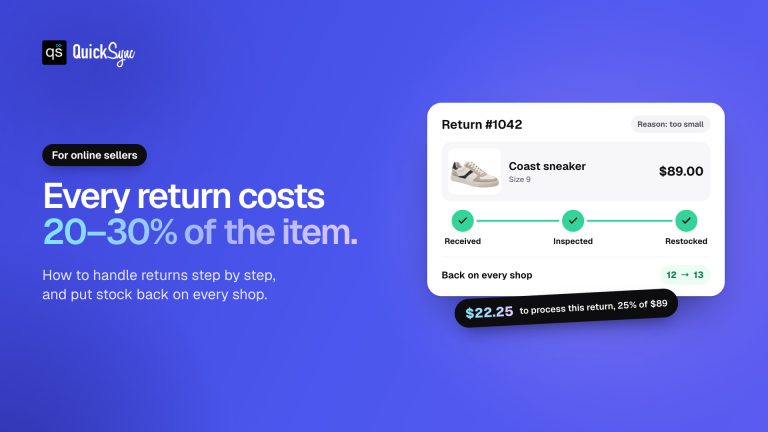
When the product is received, the team records and inspects it for condition and eligibility. This step confirms whether the product can be restocked, exchanged, or refunded.
Step 4: Refund, Exchange, or Store Credit Processing
After inspection, the merchant processes the refund, exchange, or store credit. Customers are notified once the return is completed.
Retailers musts documents and keep track of each step of the return process. Missing steps lead to lost items, refund disputes, and inventory mismatches.
Most Common Reasons Why Customers Return Products

Returns usually happen when customers are unsatisfied with the product they received. There might be many reasons based on which a customer may return the products, such as:
Fit and Sizing Issues
Sizing issues are one of the biggest reasons for returns, especially in apparel and footwear. Customers rely on the size charts retailers upload to their stores. If the size chart is not accurate, the return request will increase.
Damaged or Defective Products
Damaged or defective products always get returned. When customers buy something, they expect it to be upto the quality as shown in the product image. If the product received by the customer is not as per the image, it will be returned. Even small damage can lead to refund requests.
Wrong Item Shipped
Sending the wrong product immediately breaks customer trust, and they apply for return. This usually happens due to manual order handling, teammates’ errors, or poor inventory sync. As order volume grows, these mistakes become more frequent.
Slow or Unexpected Delivery
If customers receive the product late, they will likely return it, as they might not need it. This usually happens when delivery timelines are unclear or orders get delayed without updates. Retailers should update the customers if their order might be delayed.
Buyer’s Remorse
Some customers simply change their minds after purchasing. This is common during sales, impulse buys, or holiday seasons. While buyer’s remorse cannot be completely avoided, offering easy exchanges or store credit helps retain revenue.
How to Build a Good Customer-Friendly Return Policy
A return policy should protect your business from loss while improving customer experience. Complicated return policies increase confusion and create more support tickets. Your return policy should clearly explain who can return items, when returns are allowed, and how the process works.
Here are some points retailers must keep in mind while drafting a customer-friendly return policy.
- Eligibility and Accepted Conditions: Clearly define which products are eligible for returns and what condition they must be in. Mention requirements such as original tags, packaging, and unused condition.
- Return Timelines and Windows: State your return window clearly, whether it is 14, 30, or 60 days. Customers want clarity, not assumptions. Properly defined timelines help teams process returns faster and manage inventory better.
- Return Methods and Costs: Explain whether returns are free, paid, or partially covered by the customer. Also, clarify if returns must be shipped back or can be done in-store.
- Communication and Visibility: Customers should know what happens after they submit a return request. Confirmation messages, status updates, and clear next steps reduce anxiety and support follow-ups.
How Merchants Can Management Customer Returns Without Errors
Customer returns management needs a clear process. When returns follow a fixed workflow, teams make fewer mistakes, and processing becomes faster. The steps below explain how customer returns are usually handled.
Step 1: Receiving Returned Items
All returned items should be logged as soon as they arrive. Scanning or recording them immediately prevents losses and delays. Centralized tracking allows customer support teams to answer queries accurately.
Step 2: Inspection and Quality Check
Each returned product should be checked using the defined quality criteria. This ensures consistent decisions on refunds, exchanges, or restocking. Without clear standards, teams make subjective decisions that cause confusion.
Step 3: Categorizing Return Outcomes
Returned items usually fall into specific categories such as refund, exchange, store credit, repair, or disposal. Clear categorization speeds up processing and reporting. It also helps finance teams track return-related costs.
Step 4: Inventory Updates
Inventory should be updated immediately after inspection. Delayed updates cause overselling and stock mismatches across channels. Integrated systems make this process smoother and more accurate.
How to Management Customer Communication When Returns Happen
Communication plays a major role in how customers feel about returns. Customers may accept delays, but they dislike uncertainty. So, retailers should be honest about the return timelines and process. Here are some of the practices that merchants can implement to handle customer returns.
Status Updates at Every Stage
Customers want to know what is happening with their return. A simple update when the return is approved, received, or completed reduces follow-up emails. When customers hear nothing, they assume something is wrong with their return or refund amount.
Clear Timeline Expectations
Always set realistic timelines for refunds or exchanges. If processing returns takes 5 to 7 business days, communicate clearly to the customers. Clear return timelines prevent complaints even when processing takes time.
Simple and Human Messaging
Avoid internal or technical language when communicating with customers. Use clear and friendly messages that explain what is happening with their return and what comes next. This reduces repeat queries and builds trust.
Single Point of Contact for Return Queries
Retailers can assign a dedicated support channel or reference number for return-related questions. This helps customers get faster answers and avoids confusion across multiple conversations.
Proactive Delay Notifications
Another good practice is informing customers in advance if a return or refund is delayed. Proactive updates prevent customer frustration and show that the retailer values transparency.
How Retailers Can Lower Return Rates Gradually
The best way to manage returns is to reduce them before they happen. Here are some ways that retailers can apply to reduce return rates.
Better Product Information
Clear product descriptions, accurate images, and videos help customers make better purchase decisions. When product listings have missing or misleading information, return requests eventually increase. Improving product clarity is one of the easiest ways to reduce returns.
Inventory and Cost Visibility
Retailers should track what happens to every returned item. Whether it’s restocked, repaired, or disposed of, visibility helps control inventory and return-related costs. Without tracking, returns silently eat into profits.
Reducing Fraud and Misuse
Not all returns are genuine. Merchants should watch for repeat or suspicious return behavior and apply fair limits where needed. Clear policies and basic checks help reduce abuse without hurting genuine customers.
Learning from Return Data
Go through the customer feedback and analyze the reasons behind increase return rates. Tracking patterns helps merchants fix root issues instead of dealing with the same returns repeatedly. Over time, this directly reduces return rates.
Sustainable and Responsible Returns
Unsellable return products can be handled responsibly through repair, resale strategy, recycling, or proper disposal. Sustainable return practices reduce waste and improve brand perception without adding major costs.
Technology and Tools That Improve Customer Returns Management
One of the major reasons why returns collapse the operations like inventory management and order processing is that it’s handled manually. Manual return handling does not scale as businesses grow. Technology becomes essential when order volume increases.
Here are some tools that help simplify and automate returns management.
Returns Portals
Self-service returns portals allow customers to submit return or exchange requests without contacting support. This reduces support tickets and speeds up the returns process for both customers and teams.
RMA Systems
Return Merchandise Authorization (RMA) systems standardize return approvals and tracking. They provide clear visibility into return status and ensure every return follows a consistent process.
Order and Warehouse Management Systems
OMS and WMS tools keep orders and inventory aligned during returns. They ensure returned items are correctly recorded, restocked, or flagged, preventing inventory mismatches.
Inventory and Order Sync Tool like QuickSync for Multichannel Sellers
Sellers using multiple sales channels can use inventory sync tools like QuickSync to make return management smoother. This reduces manual updates, minimizes listing errors, and improves overall returns management accuracy.
How Smart Returns Improve Customer Retention
Returns do not always mean lost customers. With the right approach, they can strengthen relationships and improve retention. Here are some ways businesses can turn returns into long-term customer retention.
Exchange and Store Credit Incentives
Retailers can allow simple exchanges or offer store credit instead of refunds. This helps keep the order value within the business. Many customers are fine using store credit for a later purchase. It often leads to another order instead of a lost sale.
Post-Return Remarketing
After a return is completed, retailers can follow up with the customer. Sending a short email with relevant product options works well. This reminds customers about the brand without pressure. It also gives them a reason to come back.
Loyalty Hooks:
Retailers can reward regular customers who return items responsibly. Small perks or loyalty points help balance return costs. Customers feel treated fairly, not restricted. This encourages repeat buying over time.
Personalized Return Experience:
Retailers can make returns more helpful instead of generic. Suggesting better sizes or similar products reduces future returns. Customers appreciate guidance instead of silence. This builds trust and long-term retention.
Make Customer Returns Work for Your Business
Customer returns are a permanent part of ecommerce business. Ignoring returns or not having a return policy leads to higher costs, unhappy customers, and operational issues. However, by having a smart customer returns management system, merchants can protect profits. The goal is not to eliminate returns, but to manage them efficiently.
Retailers can improve their return management by using tools like QuickSync. With QuickSync, the inventory gets updated automatically after each return. QuickSync also offers product syncing, through which retailers can avoid listing errors and avoid returns with inconsistent product titles, description and images.
Sign up to QuickSync today and avail a 14-day free trial.
FAQs
What is the customer return process?
The customer return process covers every step from return request to final resolution. It includes approval, return shipping, inspection, inventory updates, and refunds or exchanges. A clear customer returns management system helps avoid errors, delays, and refund disputes.
What are the return management strategies?
Return management strategies include setting a clear return policy, checking items quickly after they arrive, updating inventory on time, and analyzing why products are returned. These steps help businesses control costs, reduce repeat returns, and improve the overall customer returns experience.
How to manage customer returns?
Managing customer returns requires clear return policies, organized workflows, and accurate inventory updates. Merchants should track each return, communicate clearly with customers, and use customer returns management tools to prevent losses, delays, and stock mismatches.
What is the best return window for ecommerce?
Most ecommerce businesses offer a 14 to 30-day return window. This range meets customer expectations while protecting profit margins. A well-defined return window supports better return management and keeps customer returns under control.
How can merchants reduce return rates?
Merchants can reduce return rates by improving product descriptions, adding size guides, checking product quality, and keeping accurate inventory data. These steps improve customer returns management and lower avoidable returns over time.
Are free returns always a good idea?
Free returns can increase conversions, but they also raise return costs. Many brands use conditional free returns or store credit options. This balanced approach supports return management while controlling expenses from customer returns.
How do returns affect profit margins?
Customer returns increase shipping, labor, and restocking costs. Poor return tracking leads to hidden losses. Strong customer returns management systems help protect margins and reduce long-term financial impact.
What tools help with managing customer returns?
Returns portals, RMA systems, OMS or WMS tools, and inventory sync software like QuickSync simplify managing customer returns. These tools automate tracking, speed up refunds, and automatically update inventory after returns.