

Over the last few years, consumer shopping behavior has changed dramatically.
Customers no longer shop from a single website. They explore multiple marketplaces, channels, and social platforms before making a purchase decision. A customer might discover a product on Instagram. They compare prices on Google Shopping. Then they purchase it on Amazon or a Shopify store.
In fact, 73% of shoppers now use multiple channels during a single purchase journey.
This shift has changed how ecommerce businesses operate. Retailers today sell on more than one platform. When merchants expand to Amazon, Shopify, Walmart Marketplace, Google Shopping, and TikTok Shop, operations get complicated fast.
Inventory counts stop matching. Orders get scattered across different dashboards. Product listings require manual updates.
This is where multichannel ecommerce solutions become essential. These tools help businesses sell on multiple channels. They keep inventory, product data, and orders synchronized automatically.
In this guide, I will explain what multichannel ecommerce solutions are. I’ll cover how they benefit ecommerce businesses. And when automation becomes necessary to sell on multiple channels efficiently.
What Are Multichannel Ecommerce Solutions?
Let me explain this simply.
Multichannel ecommerce solutions are software tools. They help businesses manage inventory, product listings, and orders across multiple sales channels. All from a single dashboard.
Businesses use multichannel ecommerce software to reduce manual work. These tools help maintain accurate inventory counts. They simplify operations across multiple online sales channels.
Here’s how multichannel ecommerce tools actually work. When you connect your sales channels to a multichannel platform, the software sits in the middle. It acts as a live data layer. It monitors every connected channel at once. When something changes on one platform, it updates everywhere else automatically.
These solutions help businesses:
Synchronize inventory across all your sales channels
Manage listings across multiple marketplaces
Centralize order management from different channels
Automate product catalog updates
Reduce manual work and operational complexity
Without these systems, selling across multiple marketplaces becomes difficult to manage. This includes Amazon, Shopify, Etsy, Walmart Marketplace, and Google Shopping.
Why Multichannel Ecommerce Is Growing Fast
Most customers don’t shop in just one place anymore. Some prefer marketplaces. Others search on Google Shopping. Many buy directly from online stores.
Because of this shift, ecommerce businesses are expanding to multiple online sales channels. This helps them capture demand from different platforms. Here’s why multichannel selling continues to grow rapidly.
Reach More Customers
One of the biggest advantages of multichannel ecommerce is increased customer reach. Every marketplace has its own audience and search behavior. Many shoppers begin their product search directly on Amazon rather than Google.
By listing products across multiple platforms, merchants expose their catalog to more buyers. Many of these buyers may never visit their standalone Shopify store. This significantly expands their potential customer base.
Increase Revenue Potential
Selling across multiple channels creates more opportunities for customers to buy your products. Merchants distribute listings across several marketplaces and ecommerce platforms. This creates more touchpoints for buyers to discover the brand.
Broader visibility often increases total sales volume. It also supports stronger long-term revenue growth.
Reduce Low Sales Risk
Relying on a single platform for revenue is risky. Marketplace algorithms change frequently. Advertising costs fluctuate. Search rankings can shift overnight. If your entire business depends on one channel, these changes directly impact your sales.
A multichannel ecommerce strategy spreads revenue across different platforms. It reduces the impact of sudden marketplace changes.
Expand Into New Marketplaces
Multichannel ecommerce lets businesses explore new marketplaces easily. They do not need to rebuild their ecommerce infrastructure. A Shopify merchant can expand to Walmart Marketplace, Etsy, and eBay. This helps them reach different customer segments.
Each marketplace brings its own audience. This helps merchants grow faster while tapping into new demand streams.
Improve Customer Experience
Modern customers expect flexibility when shopping online. Some buyers prefer purchasing through marketplaces they already trust. Others prefer buying directly from a brand’s website.
By selling across multiple platforms, merchants let customers purchase through their preferred channel. This improves convenience and enhances the overall shopping experience.
Top Multichannel Selling Platforms Used by Merchants

To succeed with multichannel ecommerce, merchants must choose the right combination of marketplaces and ecommerce platforms.
Different platforms attract different types of customers. Expanding into the right channels increases product visibility and revenue potential.
Here are some of the most widely used multichannel selling platforms today.
|
Platform |
Best For |
Key Benefit |
|---|---|---|
|
Shopify |
Ecommerce stores |
Full control over brand and website |
|
Amazon |
Global marketplace |
Massive built-in customer base |
|
Walmart Marketplace |
Large retail marketplace |
High trust among US shoppers |
|
Handmade & niche products |
Strong niche communities | |
|
eBay |
Auction & retail selling |
Large international buyer base |
|
Google Shopping |
Product discovery |
Visibility in Google search results |
|
Social commerce |
Viral product discovery | |
|
Instagram Shop |
Social selling |
Direct sales through social media |
Common Challenges of Multichannel Selling

Let me tell you something. Selling across multiple marketplaces sounds simple in theory. But once your catalog appears on several platforms, operations get significantly more complex.
Without proper multichannel ecommerce solutions, merchants deal with these issues.
Operational Complexity as Channels Grow
Adding new marketplaces increases sales potential. But it also increases operational complexity. Every new channel adds additional dashboards, order flows, and inventory updates to manage. Without automation, managing five sales channels can require five times more work.
This is why most growing businesses eventually adopt multichannel ecommerce management software.
Fragmented Order Management
Orders from different marketplaces appear in separate dashboards. Shopify orders remain in Shopify. Amazon or Walmart orders appear on their own platforms. Managing fulfillment across several systems slows down operations. It increases the chance of missed orders or delayed shipping.
Multichannel ecommerce software solves this by centralizing order management into one dashboard.
Manual Listing Updates
Product listings must stay consistent across all sales channels. When merchants update prices, descriptions, or images, they must update every marketplace. Each platform requires the same update again. This manual work increases as the catalog grows.
Stores with hundreds or thousands of SKUs spend hours managing listings each week.
Inconsistent Product Data
Different marketplaces may display outdated information if listings are not synced properly. A product might have a new price or updated description in one store. But show old data in another marketplace listing. These inconsistencies confuse customers and create trust issues.
Reliable multichannel listing software ensures product catalog data stays consistent everywhere.
Inventory Mismatches Across Channels
One of the biggest challenges in multichannel selling is inventory mismatch. When a product sells on one platform, the inventory level must update everywhere else immediately. Without inventory synchronization, merchants risk overselling items that are already out of stock.
This leads to order cancellations, refunds, and frustrated customers.
What to Look for in Multichannel Ecommerce Solutions
Choosing the right multichannel ecommerce software matters when managing multiple sales channels efficiently.
Not every platform integration tool offers the same features. Some only help with listing products. Others provide complete automation for inventory and order management.
Here are the most important features merchants should look for.
Centralized Inventory Management
The most important feature to look for is centralized automated inventory management. A multichannel platform should maintain a single inventory source. It should automatically update stock levels across all connected sales channels.
This eliminates manual updates. It ensures customers always see accurate inventory counts regardless of where they shop.
Unified Order Management
Managing orders from different marketplaces separately slows down operations. A strong multichannel solution should collect orders from all platforms. It should display them in one centralized dashboard. Merchants can then process orders faster.
They can track shipments more efficiently. They can also maintain consistent customer communication across channels.
Product Listing Management
Managing product listings across multiple marketplaces manually is inefficient. A good multichannel platform lets merchants manage listings from one interface. They can update product titles, images, descriptions, and prices there.
These updates automatically sync across connected marketplaces. This ensures listing consistency while saving significant time.
Marketplace Integrations
The best multichannel ecommerce solutions support major marketplaces and ecommerce platforms. These typically include Shopify, Amazon, eBay, Walmart Marketplace, and Google Shopping. Broad integrations allow merchants to expand into new marketplaces easily. You should be able to connect eBay to QuickBooks, sync Etsy with QuickBooks, connect Shopify and QuickBooks, etc.
They don’t need to rebuild their entire ecommerce infrastructure to do it.
How Multichannel Ecommerce Solutions Work
Now that you understand the challenges, let me explain how these tools work. These marketplace integration tools connect different platforms together.
Multichannel ecommerce solutions act as a central hub. They connect your ecommerce platforms and marketplaces.
Here’s how the process typically works:
Connect your ecommerce store and marketplaces to one multichannel platform
Import your product catalog and listings into a centralized dashboard
Synchronize inventory counts across all connected channels
Keep product listings consistent across marketplaces
Collect orders from multiple platforms into one system
Automate inventory updates whenever products sell
This centralized workflow helps merchants manage all their sales channels from one platform.
How QuickSync Simplifies Multichannel Ecommerce
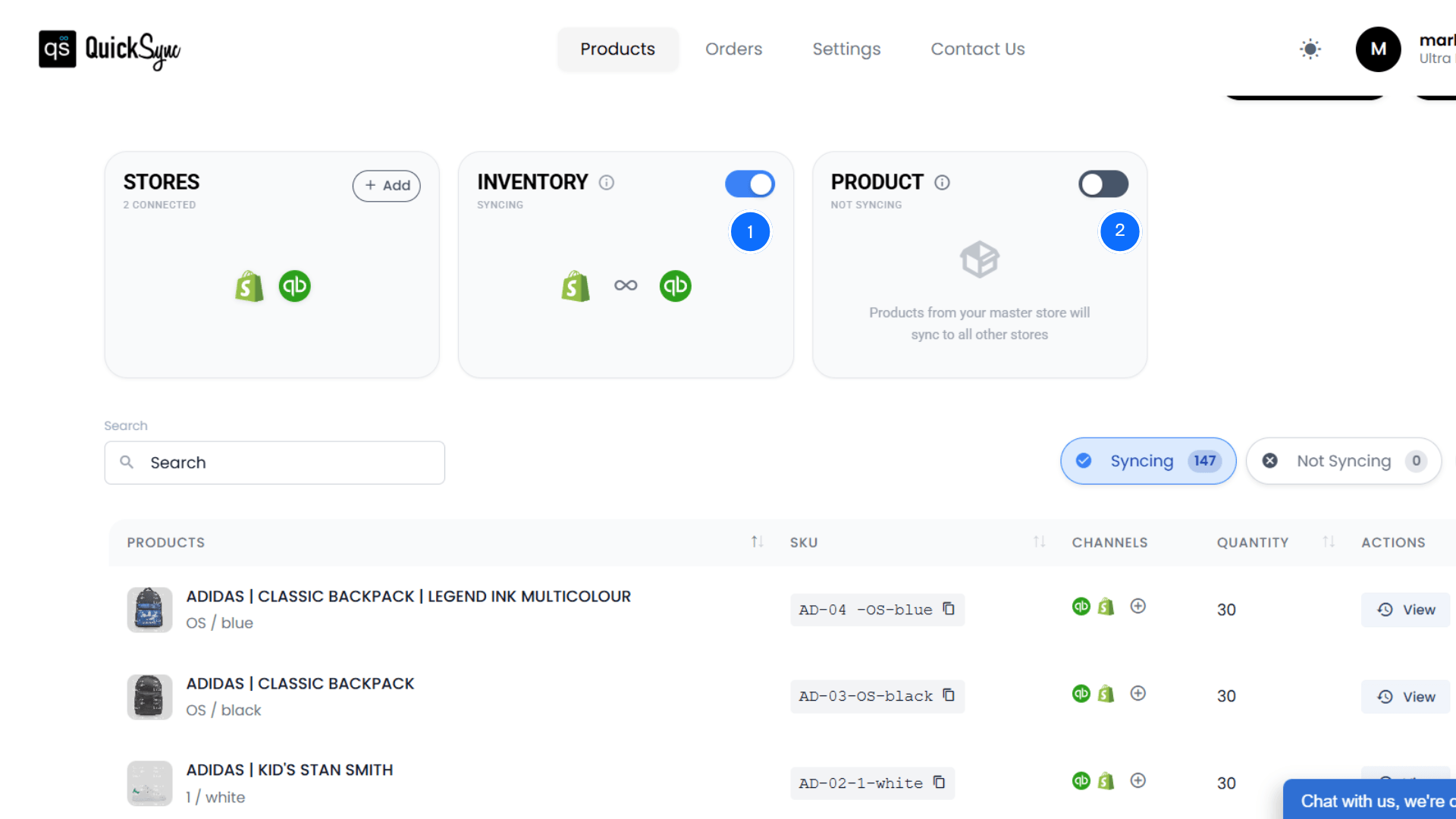
Managing multiple sales channels becomes easier with the right automation tool. It reduces manual work and simplifies operations.
QuickSync helps merchants manage inventory, listings, and orders across connected platforms. It syncs multiple sales channels. These include Shopify, Etsy, and WooCommerce. It also connects Clover POS, Amazon, Square, and eBay.
Here’s how QuickSync makes multichannel operations work smoothly.
Real-Time Inventory Sync Across Every Connected Channel
QuickSync updates stock levels across all connected platforms automatically. This happens the moment a sale occurs anywhere. If an order comes from Amazon, Etsy, or Shopify, inventory updates instantly. The same applies to sales from Clover POS in a retail store. Every connected channel then reflects the new quantity.
There’s no lag and no batch update delay. You avoid overselling and get better inventory visibility for future stock planning.
Product Sync From One Master Store to Every Listing
QuickSync’s product sync lets you designate any connected platform as your Master Store. Every product update made there pushes automatically to all connected channels. Product titles, descriptions, images, prices, SKUs, and variants stay consistent. They remain synchronized across Shopify, Amazon, eBay, and Etsy.
You can even use selective syncing to push only specific products. This is especially useful for stores like Etsy, which charge listing fees.
Centralised Order Management in One Dashboard
With QuickSync order sync, orders from all connected channels appear in one dashboard. Merchants can view and manage every order in one place. You can set any platform as your fulfillment store. Then process all orders through one workflow. Tracking information and carrier updates sync back to each originating channel automatically.
Your Amazon buyers get their Amazon notification. Your Etsy buyers get their Etsy update. You don’t manage any of it manually.
Easy Setup That Any Store Owner Can Complete Alone
QuickSync connects your platforms through standard authentication. No developer required. No technical background needed. Most sellers connect all their channels and complete the initial sync in under an hour.
The setup is simple and quick. Store owners can get it working the same day. It is not a technical project. It does not take weeks to implement.
Multi-Location Inventory Support Across All Your Stock Points
QuickSync’s multi-location feature maps and manages inventory across every location you hold stock. A sale at one warehouse, retail store, or fulfillment center updates that location’s stock. The system records the change immediately.
It also updates the shared inventory pool. This pool feeds all connected online channels. Whether you have two locations or twelve, every channel always shows accurate availability.
Benefits of Using Multichannel Ecommerce Solutions

When merchants start selling on multiple marketplaces, the biggest challenge is not getting orders. The real challenge is managing everything together without things breaking.
This is where multichannel ecommerce solutions make a big difference. Instead of logging into many dashboards, retailers manage everything in one system. Tools like QuickSync make this possible.
Here’s what actually improves when you start using the right multichannel ecommerce software.
Save Time Through Automation
One of the first things merchants notice is reduced manual work. A multichannel solution automates many daily tasks. Inventory updates, product edits, and order syncing happen automatically. These tasks run in the background. Retailers no longer spend hours updating stock across platforms.
They can focus more on growing the business. Many retailers save 10 to 15 hours every week. Automation handles inventory and product management tasks.
Increase Sales Opportunities
Customers don’t shop in just one place anymore. Some prefer Amazon. Others shop at Walmart. Many buy directly from online stores. By selling across multiple platforms, merchants reach more customers. Many buyers would never discover the store otherwise.
Studies show multichannel sellers earn more revenue. They can generate up to 30 to 40% more than single-channel sellers.
Improve Inventory Accuracy
Inventory mistakes are one of the fastest ways to lose customers. If stock levels are not updated properly, overselling becomes almost unavoidable. With centralized inventory syncing, stock updates automatically across every platform. This prevents overselling and reduces cancellations.
It keeps operations running smoothly. Some businesses reduce inventory errors by up to 80 to 90% once proper syncing is in place.
Expand Into New Marketplaces Easily
When merchants want to sell on a new marketplace, things can get complicated quickly. Every platform has different listing requirements and processes. A good multichannel ecommerce platform makes this much easier. Merchants can push product listings to new marketplaces easily. They do not need to rebuild everything.
Inventory data and pricing can also sync automatically. This makes expansion to new marketplaces faster. That means faster expansion without increasing operational chaos.
Simplify Order Management
Managing orders from multiple platforms separately gets confusing fast. Merchants often switch between many dashboards. They check orders, shipping status, and cancellations. With a multichannel ecommerce solution, orders from all marketplaces come into one system.
This centralized order flow helps merchants process orders faster. It reduces missed shipments and improves fulfillment efficiency across all sales channels.
Gain Better Operational Visibility
When products, inventory, and orders are spread across platforms, visibility drops. Merchants struggle to see what is happening. Multichannel ecommerce software solves this problem. It provides a centralized dashboard.
Merchants can track sales, inventory levels, and order activity there. Everything appears in one place. This visibility helps retailers make faster decisions. It improves operational efficiency by 15 to 25% across multiple channels.
Who Should Use Multichannel Ecommerce Solutions?
Many people think multichannel ecommerce tools are only for large companies. But they help businesses at almost every stage of growth.
Whether you are starting in new marketplaces or managing thousands of SKUs, operations can become complex. Multiple platforms increase daily workload.
Automation makes operations easier. It also keeps systems stable as the business grows.
Here’s who benefits the most.
Small Retailers Expanding Sales Channels
Most small sellers start with a single platform, usually their Shopify store. But once sales grow, they begin exploring marketplaces like Amazon or Walmart. That’s when things get messy. Inventory updates need to be repeated everywhere.
Listing management becomes time-consuming. Multichannel solutions help small sellers manage multiple platforms without increasing manual work.
Mid-sized Ecommerce businesses
Once a business reaches a few hundred products, complexity increases. Selling on multiple marketplaces adds more work. Manual processes start breaking at this stage for mid-sized ecommerce businesses. Orders arrive from different platforms.
Inventory levels begin to drift apart. Product updates become harder to manage. Multichannel ecommerce software solves this problem. It brings products, inventory, and orders into one system.
Large Enterprises
Large ecommerce companies sell across many marketplaces and regions. Manual management becomes impossible at this scale. They handle thousands of SKUs daily. They also manage multiple warehouses. Order volumes remain very high. Teams need strong automation to keep operations stable.
Here ecommerce multichannel solutions provide automation support. They also support bulk product management. Centralized reporting helps teams track performance easily. This keeps operations running efficiently.
Conclusion
Multichannel ecommerce is no longer optional for growing online businesses. Customers now shop across multiple marketplaces, social commerce platforms, and brand websites. Businesses that rely on a single platform limit their growth potential.
But managing several marketplaces manually quickly becomes overwhelming. Inventory mismatches, fragmented order management, and inconsistent product listings slow down operations. They also damage customer experience.
This is why multichannel ecommerce solutions like QuickSync have become essential. Modern retailers rely on them to manage complex operations.
QuickSync makes this process simple. It helps merchants manage multiple marketplaces easily. It provides real-time inventory synchronization. It also automates product syncing and order management. The platform supports multiple locations. Merchants can manage all channels from one system.


