On this page
- Quick Overview of Top Multichannel Listing Software in 2026
- What Is Multichannel Listing Software?
- Key Features to Look For in Multichannel Listing Software
- How We Evaluated The 10 Best Multichannel Listing Softwares
- The 10 Best Multichannel Listing Software For Ecommerce sellers
- 1. QuickSync: Real-Time Listing and Inventory Sync
- 2. Sellbrite
- 3. LitCommerce
- 4. Linnworks
- 5. Shopify Marketplace Connect
- 6. Zentail
- 7. Sellbery
- 8. SellerChamp
- 9. CedCommerce
- 10. Ecwid by Lightspeed
- Not Sure Which Multichannel Listing Tool to Choose? Start Here
- The Bottom Lines
- Frequently Asked Questions-
Managing listings across Amazon, eBay, Shopify, and other sales channels can quickly become time-consuming. Manual updates can also lead to inventory errors, overselling, and unhappy customers.
Multichannel listing software helps solve these challenges by allowing you to manage and synchronize product listings across multiple channels from one platform.
But not every tool is built for every ecommerce business. Some are better for small sellers, while others are designed for large catalogs and high-volume operations. So, which is the best multichannel listing software for your needs?
We compared the top platforms based on automation features, pricing, integrations, usability, and scalability. Here are the 10 best options for ecommerce sellers in 2026.
Quick Overview of Top Multichannel Listing Software in 2026
For sellers who want a quick summary before reading the full guide, here is a side-by-side comparison of all ten multichannel listing software across the criteria that matter most. Detailed breakdowns of each one are provided in the sections below.
| Tool | Best For | Key Platforms | Listing Creation | Bulk Listing | Starting Price | Free Trial |
| QuickSync | Ecommerce sellers needing real-time listing and inventory sync | Shopify, Amazon, eBay, Etsy, WooCommerce, TikTok Shop, Square, Clover | From source store | Yes | $19/mo | 14 days |
| Sellbrite | Established sellers with large catalogs across major marketplaces | Amazon, eBay, Walmart, Etsy, Shopify, WooCommerce, Google Shopping | Yes | Yes | $29/mo | Free plan (30 orders) |
| LitCommerce | Smaller sellers needing affordable listing management | Amazon, eBay, Etsy, Shopify, WooCommerce, TikTok Shop | Yes | Yes | $29/mo | Free plan |
| Linnworks | Enterprise retailers with complex multichannel operations | Amazon, eBay, Shopify, Walmart, WooCommerce, 100+ channels | Yes | Yes | Custom pricing | Demo only |
| Shopify Marketplace Connect | Shopify-first brands expanding to marketplaces | Amazon, eBay, Walmart, Etsy (via Shopify) | Via Shopify | Yes | $29/mo + app fees | Via Shopify trial |
| Zentail | Mid-market sellers needing listing automation and compliance | Amazon, eBay, Walmart, Google Shopping, Shopify | Yes | Yes | Custom pricing | Demo only |
| Sellbery | Growing sellers at an accessible price point | Amazon, eBay, Etsy, Google Shopping, Shopify, WooCommerce | Yes | Yes | $19/mo | Free plan |
| SellerChamp | High-volume sellers needing bulk listing at enterprise scale | Amazon, eBay, Walmart, Shopify | Yes | Yes (thousands at once) | Custom ($199+/mo) | Demo only |
| CedCommerce | Sellers expanding to international and regional marketplaces | Amazon, Walmart, Etsy, Shopify, Lazada, Shopee, Miravia, 100+ channels | Yes | Yes | $14/mo | Free plan |
| Ecwid by Lightspeed | Small sellers starting multichannel on a limited budget | Amazon, eBay, Walmart, Facebook, Instagram, Google Shopping | Yes | Limited | Free (5 products) | Free forever plan |
Note: Prices are starting prices as of 2026 and may vary based on factors such as SKU count, order volume, and the number of connected channels. Check the provider’s website for the latest pricing before making your decision.
What Is Multichannel Listing Software?
Multichannel listing software connects multiple sales channels to one central place for creating, managing, and distributing product listings. Instead of logging into Amazon, eBay, Etsy, and Shopify separately to create or update the same listing multiple times, sellers manage product data in one system, and the software handles formatting and distribution to every connected channel.
In practice, this means a seller can create or update a product listing once, and the software formats that listing for each platform’s specific requirements before publishing it. When stock changes on any channel, whether from a sale, a return, or a manual adjustment, the software updates every other connected channel to reflect the accurate count.
Sellers managing five channels manually spend 10 to 15 hours per week on product data entry and listing updates across multiple online sales channels. Multi channel listing software replaces that manual work with automation, freeing up time for the activities that actually grow the business.
Now that we know what multichannel software does, let’s look at the key features you should consider before choosing one.
Key Features to Look For in Multichannel Listing Software
Most multichannel listing software tools claim to do the same things. The differences become clear only when the criteria are specific. Here are the key factors that matter most when evaluating any tool in this category.
Listing Creation Capability:
Some tools create listings from scratch on any connected marketplace. Others only sync listings that already exist in a source store. This distinction matters significantly for sellers building a presence on new channels. A tool that requires listings to already exist on a platform before it can sync is not helpful for initial marketplace expansion.
Bulk Listing Performance:
Multichannel listing software should allow bulk uploading and updating of product listings across multiple channels simultaneously. The ability to bulk upload hundreds of new SKUs in minutes is a core productivity feature that separates capable tools from basic ones.
Thus, ensure you check how many listings can be created or updated at once and through what input methods, including CSV uploads, barcode scanning, and direct catalog imports.
Platform-Specific Formatting:
Every marketplace has different listing requirements. Amazon needs specific category mappings and bullet-point descriptions. Etsy requires handmade classifications and strategic tagging. eBay demands structured business policies.
A good multichannel listing tool handles these requirements automatically, like QuickSync, flagging what needs attention before a listing goes live rather than generating rejection errors after the fact.
Listing Consistency Across Channels:
Your product information should look the same everywhere you sell. Good multichannel ecommerce software lets you update a product once and automatically sync the changes across all connected channels. This saves time, reduces errors, and keeps customers from seeing different information on different marketplaces.
Pricing Flexibility Per Channel:
Different marketplaces charge different fees. Amazon typically charges 15% referral fees. Etsy charges 6.5% transaction fees. A good multichannel listing tool lets you set channel-specific pricing rules, so your prices can automatically adjust based on where the product is sold. Automated pricing updates save time for sellers managing large catalogs across multiple high-fee channels.
Support Quality:
Setting up multichannel listing software involves connecting multiple platforms and migrating existing product data. Clear onboarding documentation and responsive customer support directly affect how quickly the tool delivers value and how well problems get resolved when they arise.
With these criteria established, here is exactly how the ten tools in this guide were evaluated against them.
How We Evaluated The 10 Best Multichannel Listing Softwares
There are hundreds of multichannel product listing software options available for ecommerce sellers. These ten were not chosen at random. Every software on this list went through the same evaluation process, so the comparison is fair, honest, and useful for making a real buying decision.
| What We Evaluated | How We Measured It |
| Listing creation capability | Can the tool create listings from scratch on new marketplaces or only sync existing ones from a source store? |
| Bulk listing performance | How many listings can be created or updated simultaneously and through what input methods? |
| Platform-specific formatting | Does the tool automatically handle each marketplace’s unique listing requirements, or does the seller need to manually reformat? |
| Listing consistency across channels | When a product detail changes in one place, how quickly and reliably does every connected channel reflect the update? |
| Pricing flexibility per channel | Can sellers set different prices per channel to account for different marketplace fee structures? |
| Ease of setup and daily use | How long does initial setup take, and how much ongoing manual work does the tool require? |
| Pricing transparency | Is pricing published clearly or hidden behind a sales call? |
| Real-world seller feedback | Verified reviews from active merchants on G2, Trustpilot, Shopify App Store, and Capterra |
Seller feedback was gathered from verified reviews on G2, Trustpilot, the Shopify App Store, and Capterra. Priority was given to reviews from active merchants running established multichannel operations rather than trial users testing a single channel.
| Editorial independence notice: No vendor on this list paid to be included, to be ranked higher, or to have limitations softened. QuickSync is included at number one because it was evaluated against the same criteria as every other tool and scored highest for the seller type this guide is written for. Sellers with different requirements will find the decision framework at the end of this guide helpful for identifying which tool suits their specific situation. |
The 10 Best Multichannel Listing Software For Ecommerce sellers
Each tool below follows the same review structure, so every comparison is apples to apples. What it does, who it suits, key features, pricing, genuine pros, honest cons, and a bottom-line verdict on who should and should not choose it.
1. QuickSync: Real-Time Listing and Inventory Sync
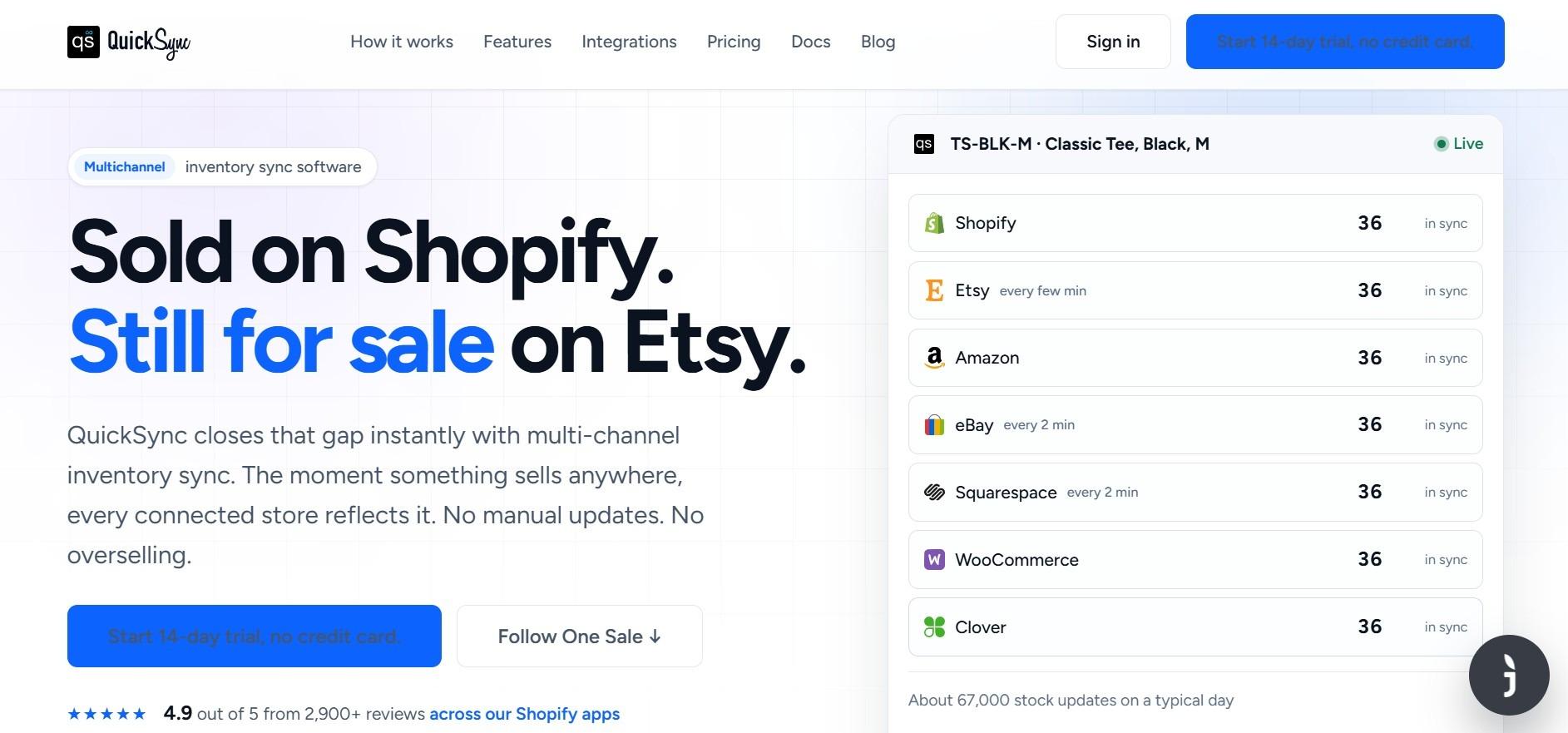
QuickSync helps you manage product listings across 10+ commerce channels from one central dashboard. With its product sync feature, you can automatically update titles, descriptions, images, prices, variants, and sizes across all your connected channels.
QuickSync also checks platform-specific requirements before you publish a listing. If something needs to be fixed, it flags the issue beforehand, helping you avoid rejections and save time on corrections.
Key Listing Features of QuickSync:
- Product listing sync: Copies titles, descriptions, images, variants, and prices from a source store to every connected channel, with platform-specific formatting handled automatically.
- Channel-specific price rules: Set a percentage markup, fixed amount, or specific price per channel so higher-fee marketplaces do not erode margins.
- Listing accuracy flags: Platform-specific requirements are identified before publishing rather than returned as rejections after.
- Product matching: Existing listings on connected channels are matched automatically. Anything that cannot be matched goes to a short review list rather than being silently ignored.
- Real-time inventory synchronization: Stock counts update across every channel within seconds of any sale so listed quantities stay accurate.
Pricing plans:
Starts from $19 per month for two connected shops. Plans scale by catalog size, not order volume. Also, there is a 14-day free trial so you can test it for free.
Pros of QuickSync:
- Listing sync pushes product data from a source store to every connected channel without requiring sellers to rebuild product information per platform.
- Channel-specific price rules manage the fee difference between platforms automatically without manual price editing per marketplace.
- Pricing does not increase with order volume, which makes it cost-effective for multichannel sellers with high sales velocity.
Cons of QuickSync:
- QuickSync supports 11 mainstream ecommerce integrations, so sellers looking to connect with niche or regional marketplaces may find the available options limited.
The Verdict: QuickSync is the strongest choice for ecommerce sellers who have an existing product catalog and need to push those listings to additional channels with accurate pricing and real-time stock counts automatically maintained.
If the primary challenge is keeping listings consistent and inventory accurate across Shopify, Amazon, eBay, and Etsy without manual updates, QuickSync solves it reliably at a price that makes sense from the first month.
2. Sellbrite

Managing a large product catalog across multiple marketplaces can be a lot of work. Sellbrite brings these tasks into one dashboard, allowing sellers to upload products in bulk, create listings, and manage them across major channels including Amazon, eBay, Walmart, Etsy, Shopify, WooCommerce, and Google Shopping.
Key Features of Sellbrite:
- Bulk product uploads and listing creation across all connected marketplaces from one dashboard.
- Automated catalog management that keeps listings consistent across channels when product data changes.
- Amazon FBA integration that pulls FBA inventory into the listing workflow for cross-marketplace publishing.
Pricing plans:
- Plans start at $29 per month for up to 100 orders monthly. A free plan supports up to 30 orders. Amazon FBA integration adds $19 per month to any plan. Pricing scales with order volume.
Pros of Sellbrite:
- Quick setup process with minimal learning curve compared to building separate workflows for each marketplace individually.
- Outstanding customer support consistently praised in verified reviews for responsiveness and genuine problem-solving.
- Deep Amazon FBA integration that competitors at this price point do not match.
Cons of Sellbrite:
- As your business grows beyond 100 orders a month, you may need a more expensive plan.
- No integration capabilities with social commerce channels. Sellbrite does not integrate with TikTok Shop or Instagram Shopping, so sellers using these channels may need an additional tool.
- Limited support for sellers outside the United States for certain marketplace integrations.
The verdict: If you already sell on several major marketplaces, Sellbrite can make managing listings and inventory much easier. It is especially useful for sellers on Amazon, eBay, Walmart, and Etsy.
However, the pricing may become harder to justify as your order volume increases, and you will need another solution if social commerce is an important part of your business.
3. LitCommerce

Coming in at number three is LitCommerce, another handy product listing tool for ecommerce sellers. It offers a simple way to manage product listings across multiple sales channels without a hefty price tag. You can connect platforms like Amazon, eBay, Etsy, Shopify, WooCommerce, TikTok Shop, and Google Shopping from one place.
Key Features of LitCommerce:
- LitCommerce lets you handle listings across seven platforms from a single dashboard.
- Bulk editing lets you change multiple listings at once, which can save a lot of time with a large catalog.
- When you make a change in your source store, LitCommerce can sync it across your connected channels.
- Its templates help you format listings according to the requirements of different marketplaces.
Pricing plans:
Starter plan at $29 per month for up to 500 listings. Advanced plan at $149 per month for up to 10,000 listings.
Pros of LitCommerce:
- You get multichannel listing and inventory management without having to spend a lot.
- The interface is clean and simple, so you don’t need much time to figure things out.
- The free plan lets small sellers try out the platform before deciding whether to move to a paid plan.
Cons of LitCommerce:
- LitCommerce does not offer as much sales forecasting and analytics as some more advanced tools.
- Users have reported occasional problems with certain product details not syncing correctly across some marketplaces.
- Customer support response times may increase during periods of high demand.
The verdict: LitCommerce is a budget-friendly choice for smaller sellers who need basic multichannel listing management. It offers good value for the price, but sellers looking for advanced analytics or highly customizable automation may need a more powerful platform.
4. Linnworks
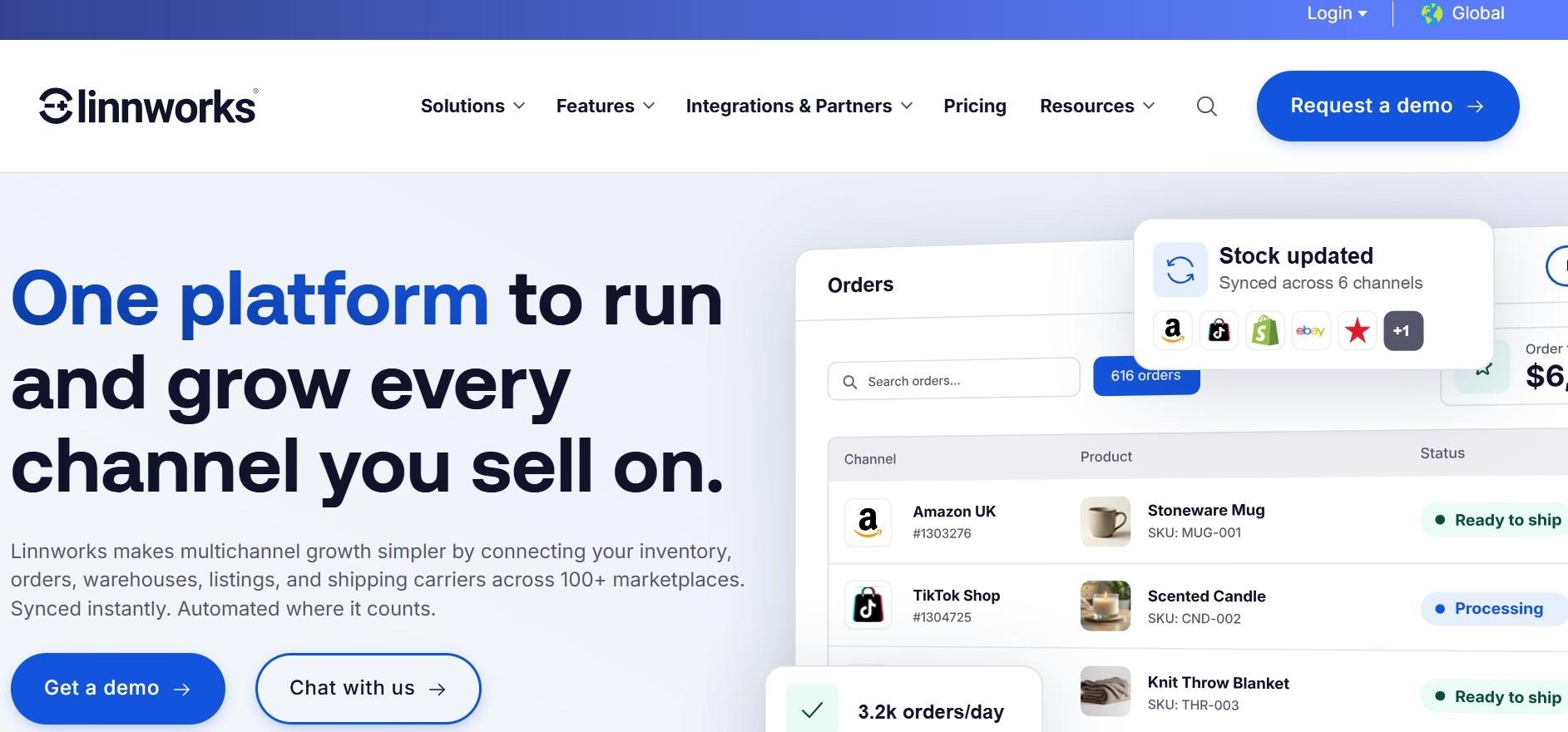
At number four is Linnworks, a multichannel ecommerce platform designed for larger businesses. It connects with more than 100 sales channels and brings product listings, inventory, and orders into one place. It is particularly useful for businesses managing multiple warehouse inventory operations or large product catalogs where simpler listing tools may not be enough.
Key Features of Linnworks:
- Connections to 100 plus sales channels with centralized listing management and marketplace compliance monitoring.
- Bulk listing creation and catalog management at enterprise scale across all connected channels.
- Automated listing updates that push product changes across every connected channel simultaneously.
- Channel-specific listing rules and fee calculations managed from one centralized system.
Pricing plans:
- Linnworks offers custom enterprise pricing rather than fixed plans. Monthly costs can start at hundreds of dollars and increase into the thousands based on order volume and features.
Pros of Linnworks:
- If you’re managing millions of products across 100+ sales channels, Linnworks is built to handle that kind of workload.
- Automation reduces fulfillment errors significantly in high-volume operations where manual processes would be unreliable.
- Multi-location inventory support handles warehouse transfers, allocation rules, and location-based selling that smaller tools cannot accommodate.
Cons of Linnworks:
- Not a practical option for most independent or smaller ecommerce sellers.
- Setup can require technical expertise or professional assistance.
- ts extensive features are mainly useful for large operations with complex inventory and multichannel needs.
The verdict: Linnworks is built for large retailers and distributors with complex multichannel and multi-warehouse operations. Smaller sellers may find it too expensive and more complicated than necessary.
5. Shopify Marketplace Connect
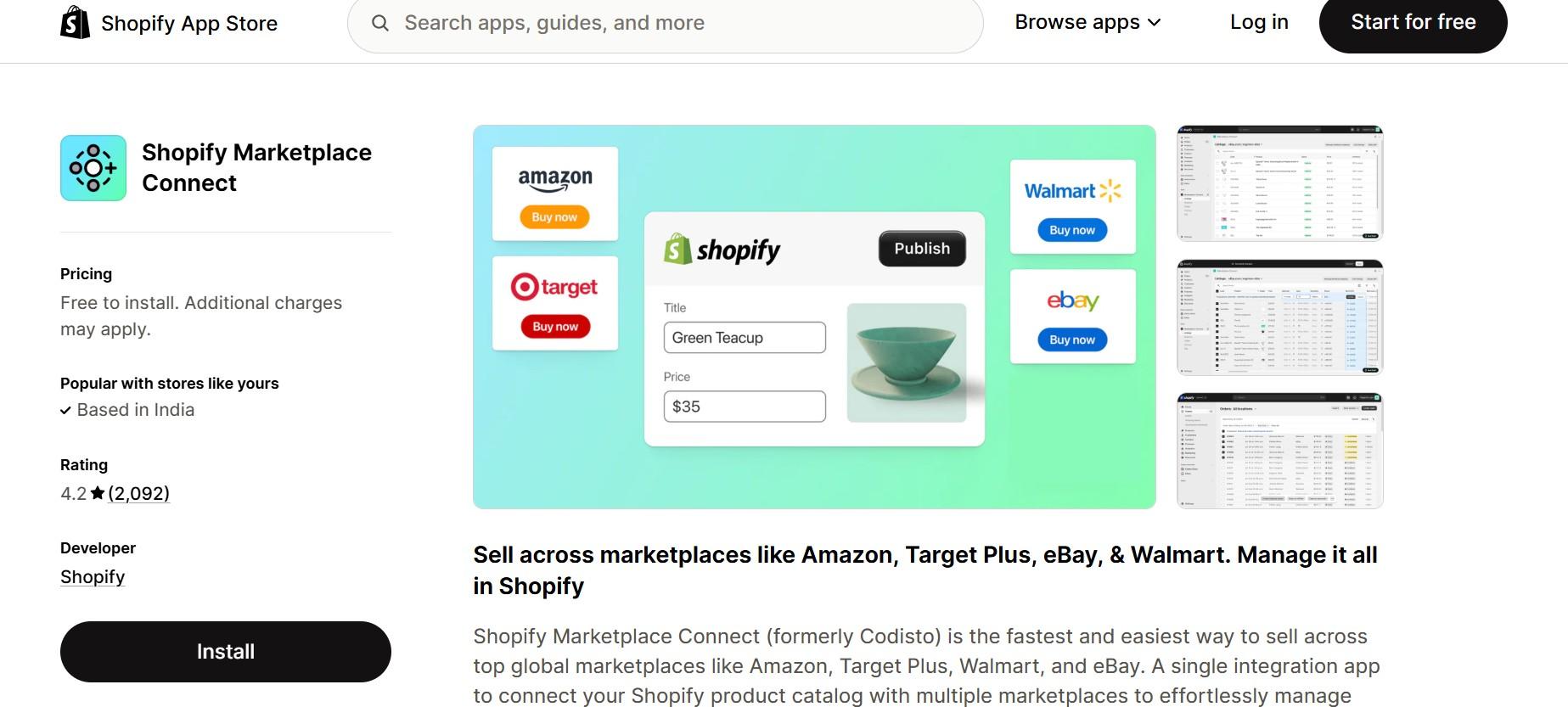
Coming in at number five is Shopify Marketplace Connect, formerly known as Codisto. It lets Shopify sellers connect their store to major marketplaces such as Amazon, eBay, Walmart, and Etsy directly from the Shopify admin.
Instead of managing each marketplace separately, you can use your existing Shopify catalog to manage products, listings, pricing, and other details from one place.
Key Listing Features of Shopify Marketplace Connect:
- You can manage your marketplace listings from the Shopify dashboard instead of switching between different platforms.
- Make a product change in Shopify and Marketplace Connect can sync it across your connected channels.
- Your Shopify catalog stays at the center, helping keep product information consistent everywhere you sell.
- It helps adapt your product details to the different formats and requirements used by each marketplace.
Pricing plans:
You need an active Shopify plan, which starts at $29 per month. The cost of Marketplace Connect can vary depending on the marketplaces you use and your monthly order volume.
Pros of Shopify Marketplace Connect:
- Shopify sellers can manage marketplace listings from the same admin interface they already know.
- Because it is part of the Shopify ecosystem, you don’t have to rely as heavily on separate third-party systems.
- Your Shopify catalog helps keep product information and branding consistent across your website and connected marketplaces.
Cons of Shopify Marketplace Connect:
- You need a Shopify subscription plan even if most of your sales happen on marketplaces rather than your own Shopify store.
- Limited to Amazon, eBay, Walmart, and Etsy. Social commerce channels and POS integrations require separate solutions.
- Only works well when Shopify is already the primary platform and source of product truth.
The verdict: Shopify Marketplace Connect is a good fit for brands that already use Shopify and want to expand to major marketplaces. If Shopify isn’t your main platform or you need to sell across more channels, QuickSync may be a better option.
6. Zentail
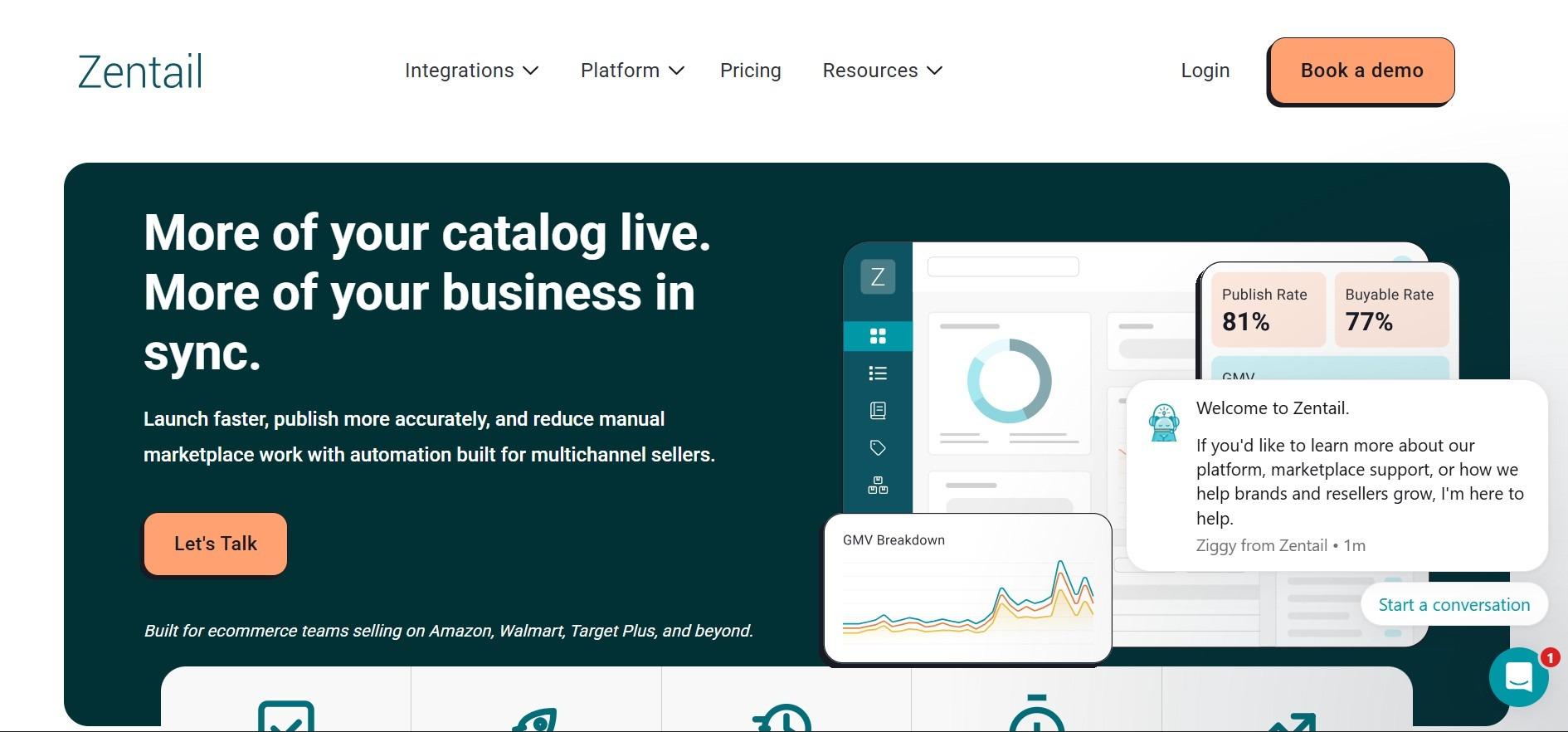
And at number six, we have Zentail, another option for sellers managing products across multiple e-commerce channels. It supports major platforms like Amazon, eBay, Walmart, Google Shopping, and Shopify.
It is particularly strong on listing compliance monitoring, automatically flagging issues that can help sellers avoid unwanted account warnings.
Key listing features of Zentail:
- Bulk product listing and automated catalog management across all connected marketplaces.
- Listing compliance monitoring that identifies marketplace-specific requirement issues before listings go live.
- Automated listing updates that push product changes to every connected channel simultaneously.
- Create listings that are properly formatted for each marketplace.
Pricing plans:
Zentail does not offer fixed pricing plans. Instead, the cost depends on your catalog size and the channels you want to connect.
Pros of Zentail:
- Users often praise the support team for being responsive and focused on solving problems.
- Its compliance tools check listings for marketplace requirements before they cause problems.
- You don’t need a lot of time to learn the platform, which makes getting started easier.
Cons of Zentail:
- You won’t find a clear price on the website, which makes it harder to compare costs before contacting sales.
- Sellers looking for detailed reports and sales forecasts may find the analytics a little limited.
- Marketplace coverage is limited to major US platforms. International marketplace expansion requires additional solutions.
The verdict: Zentail is worth considering if you sell across major US marketplaces and want a simple way to automate listings and catch compliance issues early. The main drawbacks are the lack of transparent pricing and fewer marketplace options, especially if you plan to expand internationally.
7. Sellbery

Next up is Sellbery, a multichannel listing solution that helps sellers keep their product information in sync across different platforms. It supports Amazon, eBay, Etsy, Google Shopping, Shopify, and WooCommerce.
The platform focuses mainly on product syncing and catalog management, but it also includes built-in analytics to help sellers keep track of their sales and performance.
Key Features of Sellbery:
- Cloud-based product listing sync that distributes updates to every connected channel when product data changes.
- Automated listing management that keeps product details consistent across platforms.
- Bulk listing tools for updating multiple listings simultaneously across connected channels.
- Built-in analytics showing sales performance data across all connected channels.
Pricing plans:
Plans start at $19 per month for up to 100 listings and scale to $195 per month for up to 5,000 listings. A free plan is also available with limited functionality.
Pros of Sellbery:
- Sellbery has straightforward pricing, so you can easily see what you get with each plan.
- Your data stays synced automatically, so you don’t need a specific device or browser extension to keep things running.
- The analytics dashboard gives you a clear view of sales across different channels without needing another reporting tool.
Cons of Sellbery:
- 5,000 listing cap on the highest plan limits scalability for sellers with expanding catalogs.
- No payment integrations, which creates gaps for businesses running higher transaction volumes.
- Limited channel coverage compared to competitors at similar price points. Social commerce and POS channels are not supported.
The verdict: Sellbery is a good choice for growing sellers who want an affordable way to manage listings across multiple channels. However, its listing limits and smaller range of supported channels could become a problem as your business grows.
8. SellerChamp
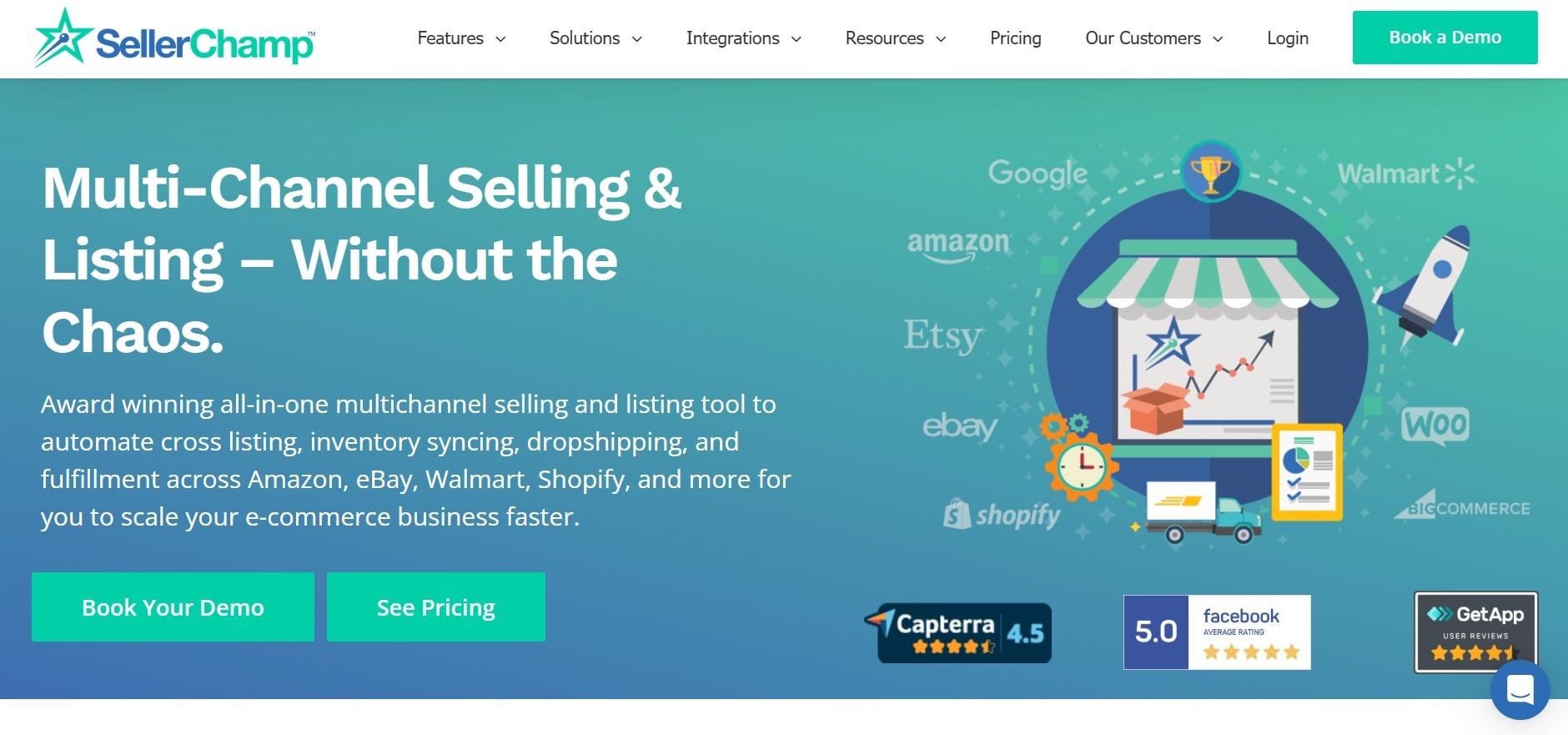
Coming in at number eight is SellerChamp, a multichannel listing tool built for large retailers and ecommerce businesses with thousands of products. Its main strength is bulk listing, allowing sellers to create and publish large numbers of product listings at once using barcode scanning, CSV files, or direct data feeds.
Key listing features of SellerChamp:
- Bulk listing automation processing thousands of SKUs through barcode scanning, CSV uploads, or direct data feeds.
- AI-powered listing optimization that converts product photos into marketplace-ready listings with titles, descriptions, and keywords
- Automated repricing that monitors competitor pricing and adjusts prices dynamically across connected channels.
- SellerChamp can format your product data based on the requirements of different marketplaces.
Pricing plans:
SellerChamp uses custom pricing, so there are no fixed plans listed publicly. Some third-party sources estimate that plans start at around $199 per month. Contact SellerChamp for an exact quote.
Pros of SellerChamp:
- SellerChamp can process 10,000+ product listings at once, making it a strong option for high-volume sellers.
- It monitors competitor prices and can adjust your prices automatically, saving you from checking them manually.
- It can automate several parts of the multichannel selling process, from creating listings to managing fulfillment.
Cons of SellerChamp:
- Its high pricing is sometimes unsuitable for smaller sellers and growing ecommerce businesses, regardless of feature quality.
- SellerChamp has limited channel coverage focused on major US marketplaces only.
- If you sell unique, handmade, or one-off products, SellerChamp may not fit your workflow as well.
The verdict: SellerChamp makes the most sense for businesses with large catalogs and high listing volumes. If you’re an independent seller or still growing your business, you may find the price and extra features harder to justify.
9. CedCommerce
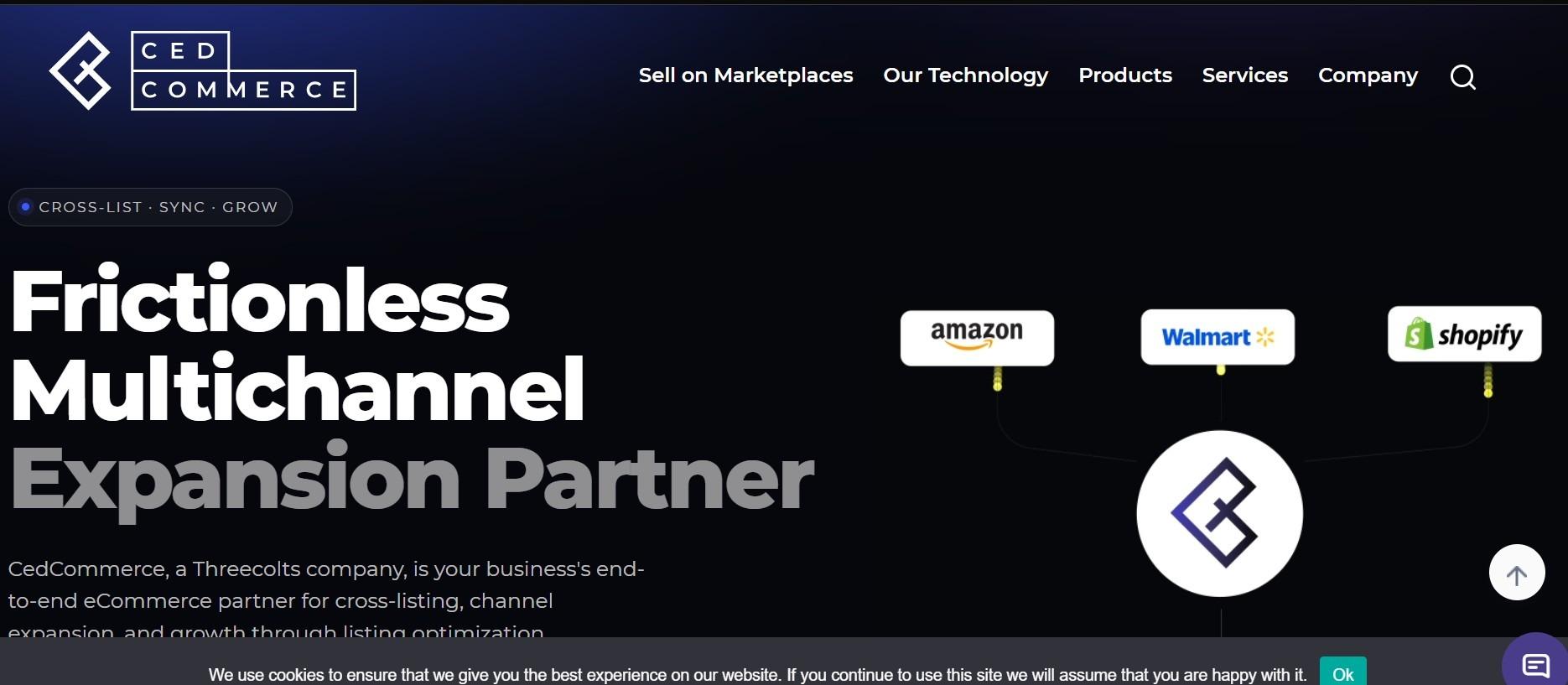
Next up is CedCommerce, a multichannel listing tool designed for sellers who want to reach customers in different countries. It supports major US marketplaces as well as platforms in Southeast Asia and Europe.
You can connect marketplaces such as Lazada, Shopee, and Miravia, along with several regional channels that aren’t commonly supported by other tools.
Key listing features of CedCommerce:
- Integration with 100 plus marketplaces, including regional platforms across Southeast Asia, Europe, and the Middle East.
- Connections to shipping providers, accounting tools, marketing platforms, and electronic point of sale systems from one platform.
- Order fulfillment and inventory management across all connected channels.
- Advertising management allowing sellers to run marketplace ads from within the platform.
Pricing plans:
CedCommerce uses different pricing plans depending on the marketplace and ecommerce platform you use. Plans can range from free to $249+ per month, with pricing often based on product listings or order volume.
Pros of CedCommerce:
- CedCommerce supports marketplaces in many countries, including channels that other tools on this list don’t offer.
- The pricing can be reasonable considering how many marketplaces and integrations you can access.
- Its advertising features mean you may not need as many separate tools to manage your international sales.
Cons of CedCommerce:
- The interface can feel complicated at first, especially for sellers who are new to multichannel selling.
- CedCommerce is better suited to sellers who already have experience managing multiple sales channels.
- Your support experience may vary depending on which integration you’re using and where your business is located.
The verdict: If international expansion is part of your growth plans, CedCommerce is worth considering because of its wide marketplace coverage. But if you only sell in the US, a simpler tool may be a better fit.
10. Ecwid by Lightspeed
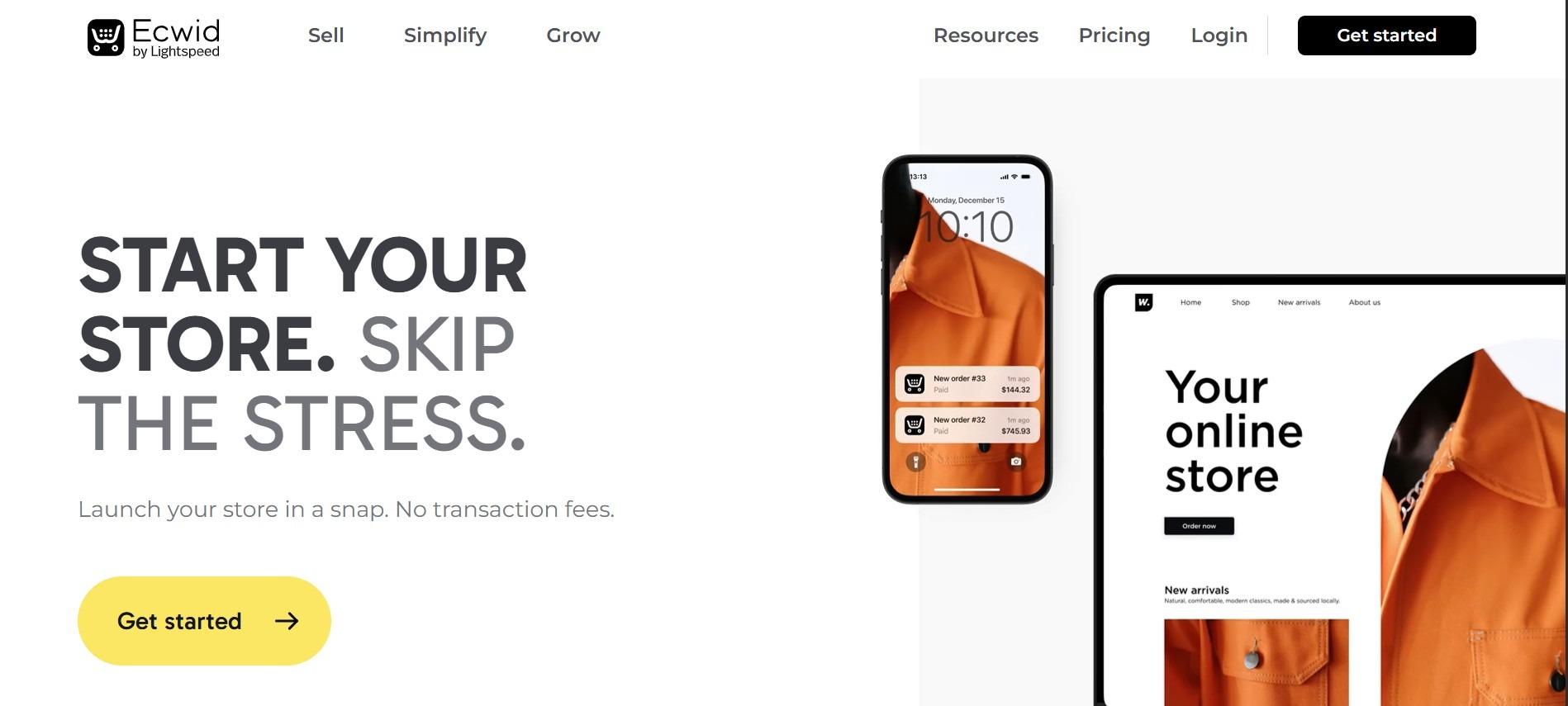
And at number ten, we have Ecwid by Lightspeed. It combines an online store with multichannel selling, giving you the option to sell across Amazon, eBay, Walmart, Facebook, Instagram, and Google Shopping.
What makes it especially appealing for beginners is the free plan. You can start small, test different sales channels, and upgrade later if your business grows.
Key listing features of Ecwid:
- Product listing connections to Amazon, eBay, Walmart, Facebook, Instagram, and Google Shopping.
- One-page store creation for sellers who do not yet have a dedicated ecommerce website.
- Social commerce connections to Facebook and Instagram for product discovery and in-app purchasing.
- Free forever plan supporting up to five product listings with no subscription required.
Pricing plans:
Free forever plan for up to five products. Paid plans start at $25 per month for up to 100 products and scale to $99 per month for unlimited product listings. Multichannel features are not available on the free plan.
Pros of Ecwid:
- The free plan provides a genuine zero-risk starting point for sellers testing multichannel listing for the first time.
- Simple setup with a short learning curve suited to sellers who are new to ecommerce operations.
- Social commerce connections to Facebook and Instagram handled more smoothly than some established competitors.
Cons of Ecwid:
- Listing sync runs on a schedule rather than in real time, which can cause stock count discrepancies on connected channels.
- Sellers who outgrow Ecwid will need to migrate to a more capable tool, which involves additional setup and data migration work.
- Limited listing management depth compared to dedicated multichannel product listing software.
The verdict: If you’re just starting out and want to test multichannel selling without a monthly cost, Ecwid is worth considering. However, larger catalogs and more sales channels may eventually require a more powerful platform.
Not Sure Which Multichannel Listing Tool to Choose? Start Here
By now, you’ve probably noticed that every tool has its strengths and weaknesses. So instead of asking which one has the most features, ask yourself a simpler question: What do I need this tool to help me with?
Whether you’re trying to keep inventory in sync, build listings faster, manage thousands of products, expand internationally, or simply keep costs low, the right choice will depend on the following situation.
If your primary challenge is keeping listings consistent and inventory accurate across channels:
This is the most common operational complexity for independent ecommerce sellers managing products across Shopify, Amazon, eBay, and Etsy simultaneously. QuickSync addresses it more directly than any other tool on this list at its price point.
It syncs product listings from a source store to every connected channel automatically, applies channel-specific pricing rules to protect margins on higher-fee platforms, and updates stock counts across every channel within seconds of any sale.
For sellers who want one tool that handles listings, pricing, and inventory from a single dashboard without enterprise-level complexity or cost, QuickSync is the clearest fit.
If you are building a product catalog from scratch on new marketplaces:
Sellbrite and LitCommerce both have stronger listing creation workflows for sellers who need to build product catalogs on new channels without an existing source store to sync from. Sellbrite suits larger catalogs and dropshippers managing consistent inventory levels across major marketplaces. LitCommerce suits smaller budgets and sellers newer to multichannel listing management.
If you manage thousands of SKUs across dozens of channels:
Linnworks and SellerChamp handle enterprise-level catalog management and bulk listing automation at a scale that smaller tools cannot support reliably. Both require custom pricing and significant implementation effort. For operations genuinely working at that volume, the capability justifies the investment.
If Shopify is your primary platform:
Two tools on this list connect to Shopify but in meaningfully different ways. Shopify Marketplace Connect keeps listing management entirely within the Shopify admin, which suits sellers who want to stay inside the Shopify interface they already know.
QuickSync connects Shopify to a broader range of channels, including TikTok Shop, Square, Clover, and Lightspeed, that Shopify Marketplace Connect does not cover. For Shopify sellers whose channel mix extends beyond Amazon, eBay, Walmart, and Etsy, QuickSync covers more ground from one dashboard.
If you are expanding to international marketplaces
CedCommerce covers regional e commerce marketplaces in Southeast Asia, Europe, and the Middle East that no other tool on this list reaches. For sellers whose growth strategy includes international expansion beyond the major US platforms, CedCommerce provides channel access that is not available anywhere else in a single tool.
If you need a simple all-round solution:
If you’re selling across several channels, you probably want three things from your listing software: consistent product information, accurate inventory, and pricing that works across different marketplaces.
QuickSync brings these functions together in one platform and supports the channels many independent sellers rely on. It offers enough automation to reduce manual work without requiring the kind of setup that comes with more advanced enterprise tools.
The Bottom Lines
In short, choosing the best multichannel listing software depends on how many products you manage, which channels you sell on, and how much automation you need. The right tool should make it easier to create, update, and sync product listings while keeping pricing and inventory accurate across every channel.
For most independent ecommerce sellers, QuickSync stands out as a strong all-round choice. It combines listing sync, channel-specific pricing, and real-time inventory updates without the complexity of enterprise-focused platforms.