If you are using Trunk to keep your inventory in sync, you already know the problem it solves. Without proper inventory sync software, the same item can appear as available on Shopify, Amazon, and eBay at the same time. Trunk helps with this, but it is not the right tool for every seller.
Research shows that sellers operating on three or more channels generate over 140% more revenue. But more channels mean more complexity. And as sellers grow, many find that Trunk has limitations like no POS integration support, no accounting sync, and no order management. Even the platform coverage is limited. These are the big limitations of Trunk that make merchants search for Trunk inventory alternatives.
Hence, we gave it a thought and brought the top 10 alternatives to trunk inventory solutions for multichannel sellers. We tested and compared these 10 best alternatives to trunk in depth. For each tool, we cover what it does, what it costs, its honest limitations, and who it is the right fit for. By the end of this blog, you will know exactly which tool matches your business.
Trunk Inventory pricing in 2026
Trunk prices on orders a month, in eight bands. Essential covers stock sync: $35 for 0–100 orders, $45 to 200, $59 to 400, $89 to 800, $129 to 1,500, $179 to 3,000, $229 to 6,000, $279 to 10,000. Pro adds bundles, kits and duplicate-SKU sync at $39 through $329 across the same bands. Channels and listings are unlimited, billing is monthly, and the trial is 14 days with no card. Source: help.trunkinventory.com, “What are the pricing plans”, 21 August 2026.
Trunk vs QuickSync at a glance
| Trunk | QuickSync | |
|---|---|---|
| From | $35/mo Essential; $39/mo Pro | $19/mo, two shops |
| What sets the bill | Orders a month, eight bands | Catalogue size × shops; orders never meter it |
| How stock moves | Real-time on order events; manual edits a few seconds later | Under a second; eBay, Etsy and Squarespace stock checked every 2 min |
| Bundles and kits | Yes, on Pro | No |
| Tills | Square | Square, Clover, Lightspeed |
| Channels | 20+, including Faire, Walmart, Xero | 11, including TikTok Shop and QuickBooks |
| Trial | 14 days, no card | 14 days, no card |
Best Trunk alternative by need
- Bundles and kits: stay on Trunk Pro, or look at Thrive; QuickSync doesn’t do bundles.
- A bill that ignores order volume: QuickSync, priced on variation count. Plans from $19.
- Faire and wholesale: Trunk connects Faire; most sync tools don’t.
- Clover or Lightspeed on the counter: QuickSync; Trunk connects Square only. POS inventory.
- Etsy and Shopify makers: either; Etsy pushes stock events to nobody, so compare how often each checks. Shopify + Etsy.
- The full field: our multichannel inventory software guide compares nine tools on price model and sync.
Trunk Inventory Overview: What It Does Well and What It Doesn’t
Before exploring the best Trunk alternatives, it’s worth understanding what Trunk actually does.
Trunk is an inventory management tool that helps online sellers keep their inventory levels updated across multiple sales channels. If you sell the same product on Shopify, Amazon, Etsy, eBay, or other platforms, Trunk automatically adjusts your inventory whenever a sale happens.
For example, if a customer buys your last item on Shopify, Trunk instantly updates the stock quantity on your other connected stores. This helps prevent overselling and saves you from canceling orders later. Trunk is especially popular among Shopify sellers because it’s easy to set up and simple to use. If your main goal is to keep inventory synced across a few sales channels, Trunk does that job well.
But wait! All that glitters is not gold. Similarly, there are some key reasons why sellers look for Trunk alternatives. Let’s look at those reasons below.
Why Multichannel Sellers Want Trunk Inventory Alternatives?
Most sellers who start looking for trunk inventory competitors are not leaving because Trunk is broken. They are leaving because their business has grown beyond what Trunk was designed to handle. Below are the most common situations that push sellers toward a Trunk alternative.
POS Integration Missing:
Trunk is an ecommerce-only tool. The moment a seller opens a physical retail location and starts using a POS system like Clover or Square, Trunk can no longer keep inventory accurate across all channels. In-store sales do not update online stock. Online sales do not reach the register. This is the most common reason sellers look for a different multichannel inventory management tool.
No Centralized Orders Sync:
Trunk syncs inventory counts but does not bring orders from multiple channels into a single dashboard. Sellers who are processing orders from Shopify, Amazon, eBay, and Etsy at the same time eventually need one place to see and manage all of them. Trunk does not provide that.
Accounting Integration Missing:
As a business grows, keeping accurate financial records becomes critical. Sellers who use QuickBooks or other accounting software need their inventory tracking software to connect directly to their accounts so that every sale creates the right financial entry automatically. Trunk does not offer this connection.
Limited Channel Support:
Sellers who expand to TikTok Shop, Etsy, or social commerce channels sometimes find that Trunk does not support their new platforms. Finding an ecommerce inventory tool that covers all their channels without workarounds becomes the priority.
Pricing Increases With Growth:
Trunk’s pricing scales with the number of synced SKUs. For sellers with large and growing catalogs, the cost can increase significantly. At a certain point, other tools offer more features for a similar or lower price.
How We Evaluated These 10 Trunk Inventory Alternatives
So the big question that you might have now is, “Should we believe the list of trunk inventory alternatives?” So there are dozens of tools that could appear on a trunk inventory alternative list, and we did not pick these 10 randomly.
Every tool went through the same evaluation process, so this comparison is fair, honest, and actually useful for making a real buying decision.
The Factors that we used for an honest comparison of each tool
- Sync speed and reliability: Does the tool sync in real time or on a schedule? How quickly do inventory updates appear across connected channels after a sale?
- Platform and channel coverage: Which platforms does each tool actually support, and how deep is that support? We checked whether integrations handle orders, returns, and product data, not just stock counts.
- Order sync capability: Does the tool centralize orders from all channels into one dashboard, or does it only sync inventory counts?
- Product sync depth: Beyond stock counts, what product information syncs between platforms? We looked at whether tools sync names, descriptions, images, variants, pricing, categories, and tags.
- POS integration: Does the tool connect to physical point of sale systems? This is the gap Trunk leaves, and one of the most important factors for retail sellers evaluating alternatives.
- Accounting integration: Does the tool connect to QuickBooks or other accounting software for automatic financial record keeping?
- Ease of setup and daily use: How long does it take to connect platforms and go live? We also paid attention to whether a non-technical seller could set up each tool without developer help.
- Pricing transparency: Is pricing published clearly? We noted every tool that hides its prices and every tool where you can see exactly what you will pay before signing up.
- Real-world seller feedback: We reviewed feedback from real merchants actively using each tool to understand how each one performs in practice, not just in demos.
Note: No vendor on this list paid to be included, to be ranked higher, or to have their limitations softened. Where a tool has a genuine weakness, we say so clearly. Where another tool does something better, we say that too. The goal is to help you choose the right tool for your business, not to push you toward any particular option.
Quick Overview of Trunk Inventory Alternatives
This quick overview will help you compare the top options at a glance so you can see which tools stand out and why. Instead of going into details, we’ll focus on what each solution is best suited for. Here is a quick comparison of all 10 trunk inventory alternatives across the features that matter most for multichannel selling.
| Tool | Platforms Supported | Sync Type | Order Sync | Product Sync | POS Support | Accounting | Starting Price | Best For |
| QuickSync | Shopify, WooCommerce, Amazon, eBay, Etsy, TikTok Shop, Clover, Square, QuickBooks | Seconds on most; Etsy/eBay/Squarespace polled | Yes | Yes (full) | Yes | QuickBooks | $19/mo | Multichannel sellers needing ecommerce, POS, and accounting sync |
| Sumtracker | Shopify, WooCommerce, Amazon, eBay, Etsy | Real-time | No | Yes | No | No | $59/mo | Small to mid-size sellers wanting simple real-time sync |
| Sellbrite | Amazon, eBay, Etsy, Walmart, Shopify, WooCommerce | Real-time | Yes | Yes | No | No | $29/mo | Marketplace-focused sellers managing listings across channels |
| Finale Inventory | Shopify, Amazon, eBay, Etsy, WooCommerce, QuickBooks | Real-time | Yes | Yes | No | QuickBooks | $499/mo | Growing brands needing inventory and accounting together |
| Zoho Inventory | Amazon, eBay, Etsy, Shopify, WooCommerce | Scheduled | Yes | Yes | No | Zoho Books | $29/mo | Small sellers on a budget with predictable order volumes |
| Cin7 | Amazon, eBay, Shopify, WooCommerce, built-in POS, B2B portal | Real-time | Yes | Yes | Yes (built-in) | Xero, QuickBooks | $349/mo | Omnichannel brands with wholesale and retail needs |
| Linnworks | Amazon, eBay, Walmart, Shopify, WooCommerce, TikTok Shop, 100+ more | Real-time | Yes | Yes | No | Xero, QuickBooks (3rd party) | Contact for pricing | High-volume enterprise sellers across many channels |
| Katana | Shopify, WooCommerce, Amazon, QuickBooks, Xero | Real-time | Yes | Yes | No | QuickBooks, Xero | $299/mo | Brands that manufacture or assemble their own products |
| SKU IQ | Shopify, WooCommerce, Square, Clover, TikTok Shop | Real-time | Yes | Yes | Yes | No | $45/mo | Retailers connecting POS with ecommerce channels |
| Multiorders | Shopify, WooCommerce, Amazon, eBay, Etsy, Walmart | Real-time | Yes | Yes | No | No | $30/mo | Small to mid-size multichannel sellers needing order management |
The Top 10 Alternatives to Trunk Inventory for Multichannel Sellers
Now that we’ve covered how Trunk works, where it falls short, and what to look for in a better solution, it’s time to move to the main part of this guide. Here are the 10 best trunk inventory alternatives for multichannel sellers in 2026.
1. QuickSync
QuickSync is a real-time multichannel inventory management platform built for sellers who need to keep ecommerce stores, marketplaces, POS systems, and accounting software all synchronized at the same time.
It connects Shopify, WooCommerce, Amazon, eBay, Etsy, TikTok Shop, Clover, Square, and QuickBooks from one central dashboard. Where Trunk focuses on inventory sync between ecommerce stores, QuickSync covers the full picture: inventory, products, orders, pricing, and financial records all synced automatically.
Key Features of QuickSync:
- Real-time inventory sync: Supported stock changes arrive by webhook or scheduled checks. Processing and platform responses affect delivery time.
- Full product sync: Name, description, images, variants, SKU, pricing, categories, and tags sync automatically between platforms.
- Order sync: All orders from every channel route to one central fulfillment dashboard so you never juggle multiple systems.
- POS sync with Clover and Square: Clover sale-stock checks run 30 minutes after order import; queue processing and platform responses can add time. Square sends supported stock changes by webhook. Eligible orders can route to the selected fulfillment store on Pro or higher.
- QuickBooks integration: Every sale automatically creates the correct financial document in QuickBooks without manual entry.
- Master Store architecture: One platform acts as your single source of truth, and all changes flow to every other connected channel.
- Multi-location inventory: inventory tracked separately across multiple warehouses or store locations.
- TikTok Shop support: AI-powered category mapping and real-time sync for the fastest-growing social commerce channel.
Supported Platforms by QuickSync:
Shopify, WooCommerce, Amazon, eBay, Etsy, TikTok Shop, Clover POS, Square, QuickBooks
Pricing Plan at QuickSync
- Lite: $19 per month (up to 1,000 items, 4 integrations, inventory sync).
- Pro: $29 per month (up to 2,500 items, full product and order sync).
- Ultra: $69 per month (up to 10,000 items, full setup service, video sync, Forex pricing).
Note: 14-day free trial on all plans. No credit card required.
Limitations of QuickSync:
- Squarespace inventory sync does not support multiple locations.
Our verdict: QuickSync is the strongest trunk inventory alternative for multichannel sellers who need more than basic inventory sync. It covers every gap that Trunk leaves open: POS integration, order management, product sync, and accounting connection, all in one tool at a price that starts lower than most alternatives. If you are leaving Trunk because your business has outgrown it, QuickSync is where most sellers should start looking.
2. Sumtracker
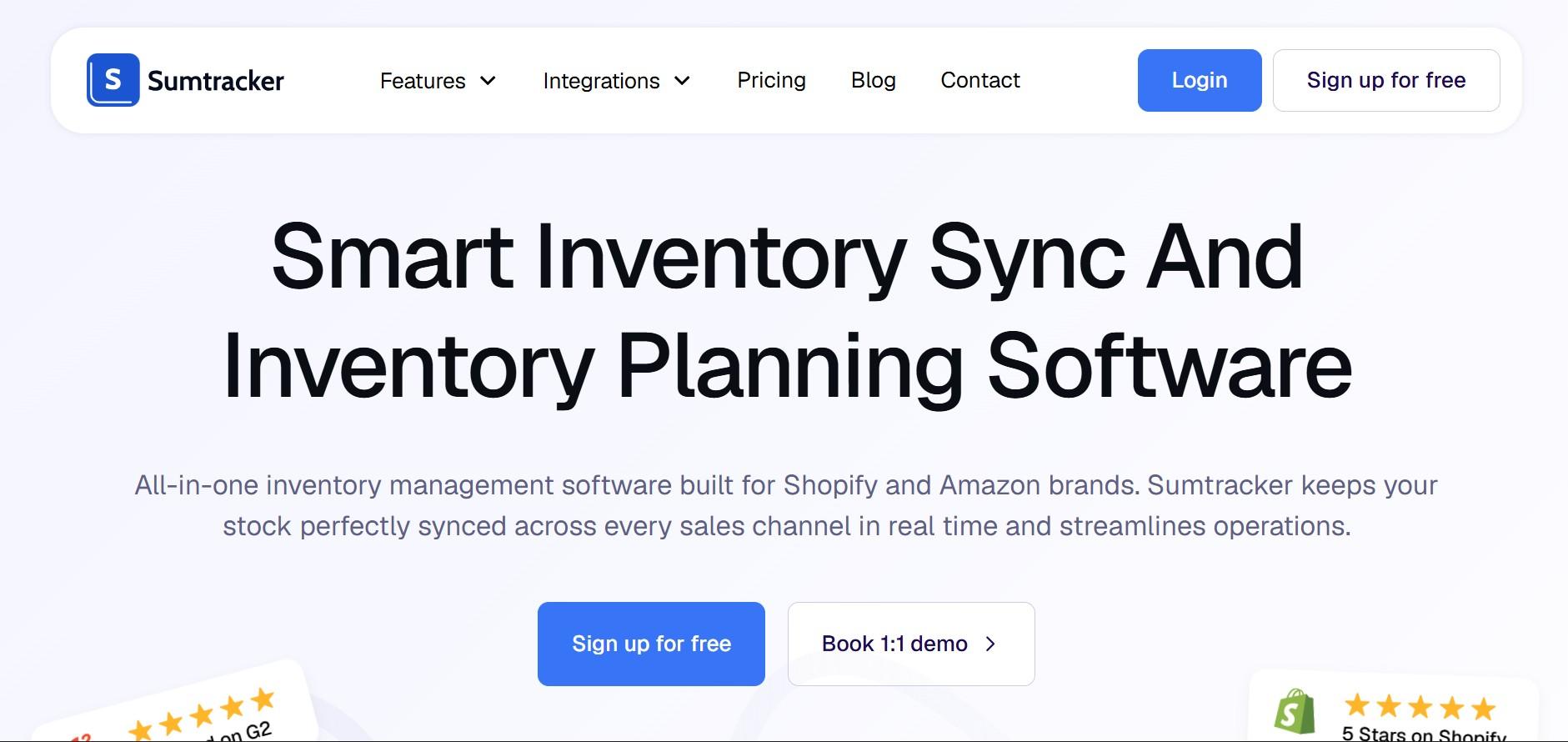
Sumtracker is a focused real-time inventory sync software tool built for small to mid-size ecommerce sellers who want accurate stock levels across their channels without the complexity or cost of enterprise platforms.
It does one thing well: keeping your inventory counts correct across Shopify, WooCommerce, Amazon, eBay, and Etsy. It is a popular choice for sellers who are comfortable with Trunk but need something with slightly broader platform support or a different pricing structure.
Key Features of Sumtracker
- Real-time inventory sync across all connected channels.
- Bundle and kit tracking so composite products deduct the right components when they sell.
- Low stock alerts and reorder point management.
- Product sync including titles, descriptions, images, and variants.
- Simple dashboard showing inventory levels across all channels at a glance.
- Historical inventory reports to track sinventory movements over time.
Supported Platforms by Sumtracker
Shopify, WooCommerce, Amazon, eBay, Etsy, and Walmart
Pricing Plans at Sumtracker
- Manage: From $59/month.
- Replenish: From $99/month.
- Enterprise: Custom pricing.
Note: a free 14-day trial is available on all plans.
Limitations of Sumtracker
- No order sync. Sumtracker syncs inventory, but does not centralize orders from multiple channels.
- No POS integration. Sellers with physical stores need a separate tool.
- No accounting integration with QuickBooks or Xero.
- Fewer platform integrations than QuickSync.
- Limited reporting compared to more advanced platforms.
Our Verdict: Sumtracker is a solid like-for-like trunk inventory alternative for sellers who mainly need real-time stock accuracy across ecommerce channels and do not yet need order management or POS integration. If you are leaving Trunk because of higher-SKU pricing, Sumtracker is worth comparing. If you need order sync, POS connectivity, or accounting integration, QuickSync covers all of those needs and is a better fit.
3. Sellbrite

Sellbrite is a multichannel listing and inventory tracking software tool designed for sellers who sell primarily through online marketplaces. It was built to make creating, managing, and syncing product listings across Amazon, eBay, Etsy, Walmart, and Shopify simpler and faster.
Sellbrite gives sellers a single place to create listings that publish to multiple marketplaces at once and keeps inventory counts synchronized in real time so overselling does not happen.
Key Features of Sellbrite
- Real-time inventory sync across all connected marketplaces and stores.
- Centralized listing creation so you build one listing and publish it everywhere.
- Bulk listing tools to manage and update large catalogs across channels quickly.
- Order management with all marketplace orders routed to one central dashboard.
- FBA and warehouse routing so orders go to the right fulfillment location.
- Reporting and analytics covering sales by channel and inventory performance.
Supported Platforms by Sellbrite
Amazon, eBay, Etsy, Walmart, Shopify, WooCommerce
Pricing Plans at Sellbrite
- Free plan available (up to 30 orders per month).
- Pro 100: $29 per month (up to 100 orders per month).
- Pro 500: $79 per month (up to 500 orders per month).
- Pro 2000: $179 per month (up to 2,000 orders per month).
Limitations of Sellbrite
- No POS integration for sellers with physical retail locations.
- No accounting integration with QuickBooks or Xero.
- Platform coverage is more limited compared to other tools.
- Order volume limits on lower plans can be restrictive during peak periods.
- Less suitable for sellers who need deep inventory management features.
Our Verdict: Sellbrite is a strong multichannel selling tool for marketplace-focused sellers who want simple and affordable listing management and inventory sync across Amazon, eBay, Etsy, Walmart, and Shopify. The free plan makes it accessible for very small sellers. For sellers who also need POS sync, accounting integration, or product sync depth, QuickSync covers those needs at a similar starting price.
4. Finale Inventory
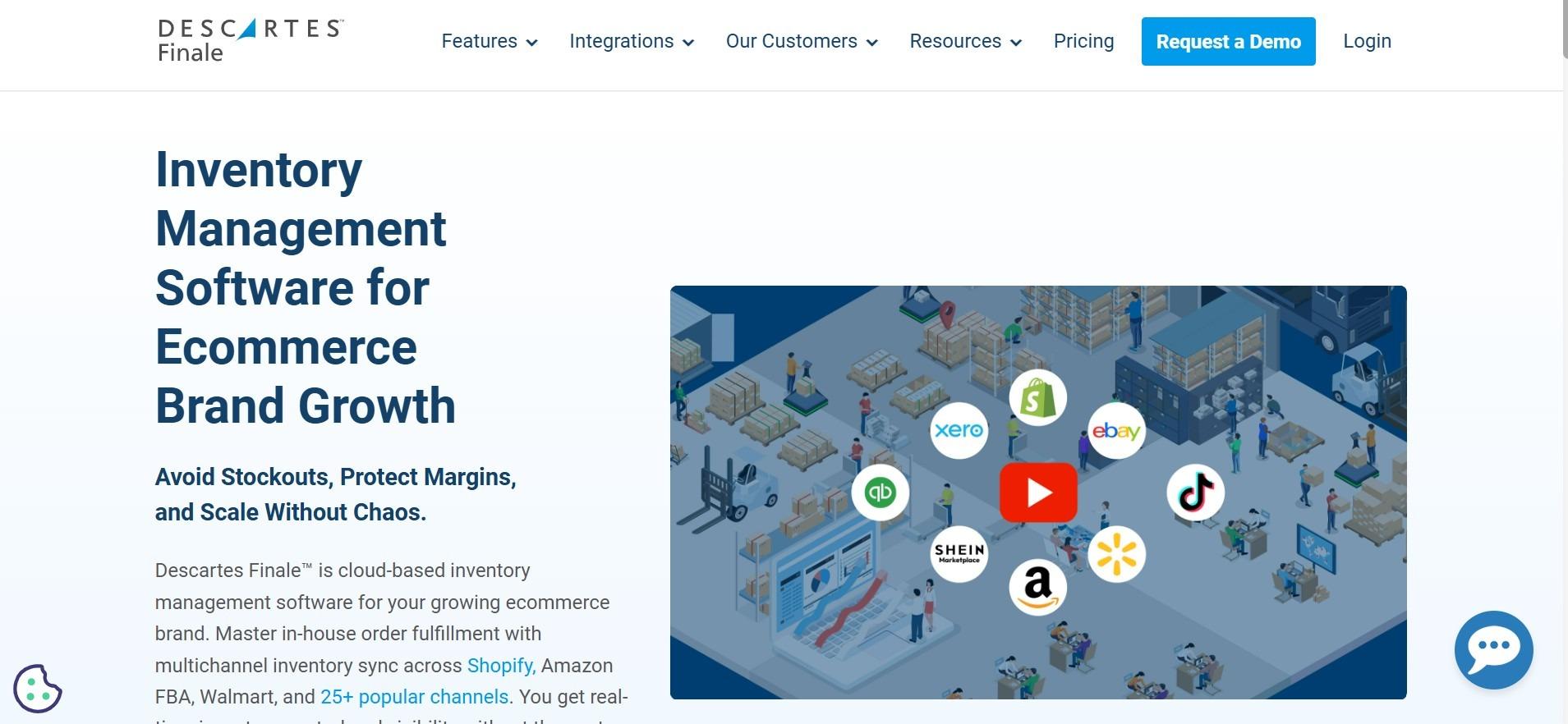
Finale Inventory is a cloud-based inventory and warehouse management tool for growing ecommerce businesses. It helps sellers manage stock across multiple sales channels and also includes features like purchase orders, barcode scanning, warehouse tools, and QuickBooks integration. It is designed for businesses that need more than basic inventory syncing.
Key Features of Finale Inventory
- Real-time inventory sync across connected ecommerce channels and marketplaces.
- Direct QuickBooks integration for automatic financial record keeping.
- Purchase order management to automate restocking based on sales velocity.
- Barcode scanning support for warehouse receiving and stock counts.
- Kitting and bundling with automatic component deduction on sales.
- Reporting and analytics on inventory turnover, stock health, and channel performance.
Supported Platforms by Finale Inventory
Shopify, Amazon, eBay, Etsy, WooCommerce, BigCommerce, QuickBooks
Pricing Plans at Finale Inventory
Finale Inventory pricing starts at $499 per month and varies based on users, order volume, integrations, and features. It does not have fixed plans and requires a custom quote.
Limitations of Finale Inventory
- Higher starting price than Trunk and most comparable tools at $99 per month.
- No POS integration for sellers with physical stores.
- Interface can feel complex for sellers used to simpler tools like Trunk.
- Setup requires more time and configuration than lighter-weight alternatives.
- Limited social commerce channel support compared to QuickSync.
Our Verdict: Finale Inventory is a good trunk inventory alternative for growing brands that need inventory sync and QuickBooks integration in one tool and are willing to pay more for that combination. The accounting connection is genuine and saves meaningful time for sellers with complex financial reporting needs.
5. Zoho Inventory
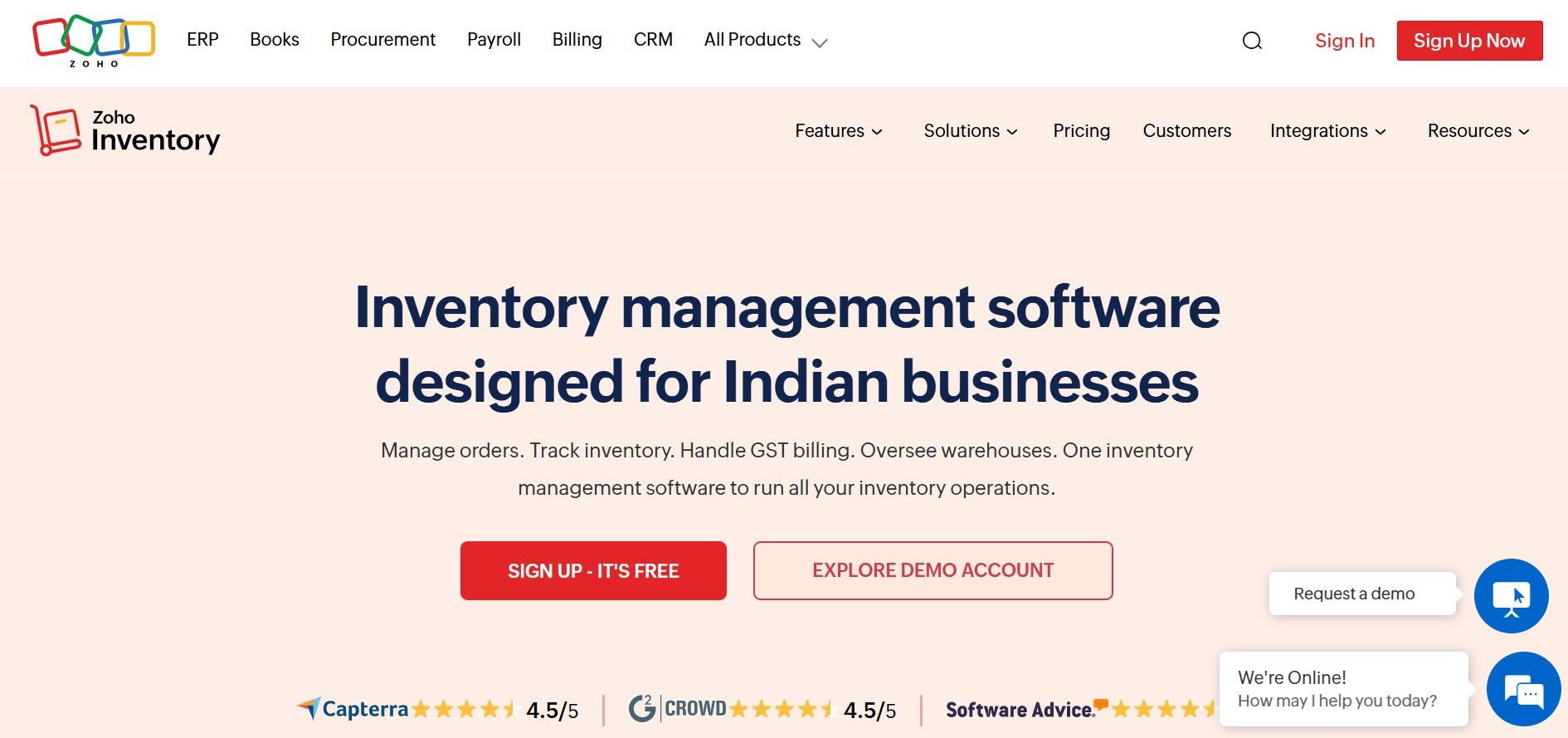
Zoho Inventory is a cloud-based inventory management tool that is part of the larger Zoho software suite. It is popular for its free plan and low-cost pricing, making it a good option for small businesses moving beyond spreadsheets.
It helps with inventory tracking, order management, and basic multichannel selling, and it also connects with Zoho Books for accounting and Zoho CRM for customer management.
Key Features of Zoho Inventory
- Inventory tracking with low stock alerts and automatic reorder points.
- Multichannel order management across Amazon, eBay, Etsy, and Shopify.
- Warehouse management for sellers with multiple storage locations.
- Serial number and batch tracking for products that require traceability.
- Integration with Zoho Books for accounting and Zoho CRM for customers.
- Basic demand forecasting on higher plans.
Supported Platforms by Zoho Inventory
Amazon, eBay, Etsy, Shopify, WooCommerce
Pricing Plans at Zoho Inventory
- Free plan available (50 orders/month).
- Standard: $29/month.
- Professional: $79/month.
- Premium: $129/month.
- Enterprise: $249/month.
Limitations of Zoho Inventory
- Updates inventory on a schedule instead of instantly. The fastest update is every 30 minutes, which can lead to overselling during busy times.
- Does not connect with POS systems, so it’s not ideal for businesses with physical stores.
- The free plan is very limited, and most users outgrow it quickly.
- Demand forecasting is only available on expensive plans.
- Not ideal for fast-growing businesses because inventory updates are not in real time.
Our Verdict: Zoho Inventory is a good Trunk alternative for small sellers on a tight budget who need basic multichannel inventory management. Its free plan is useful for beginners and low-volume stores. However, it uses scheduled syncing instead of real-time updates, which can cause overselling during busy periods. If real-time sync is important, tools like QuickSync or Sumtracker are better options at a similar price.
6. Cin7
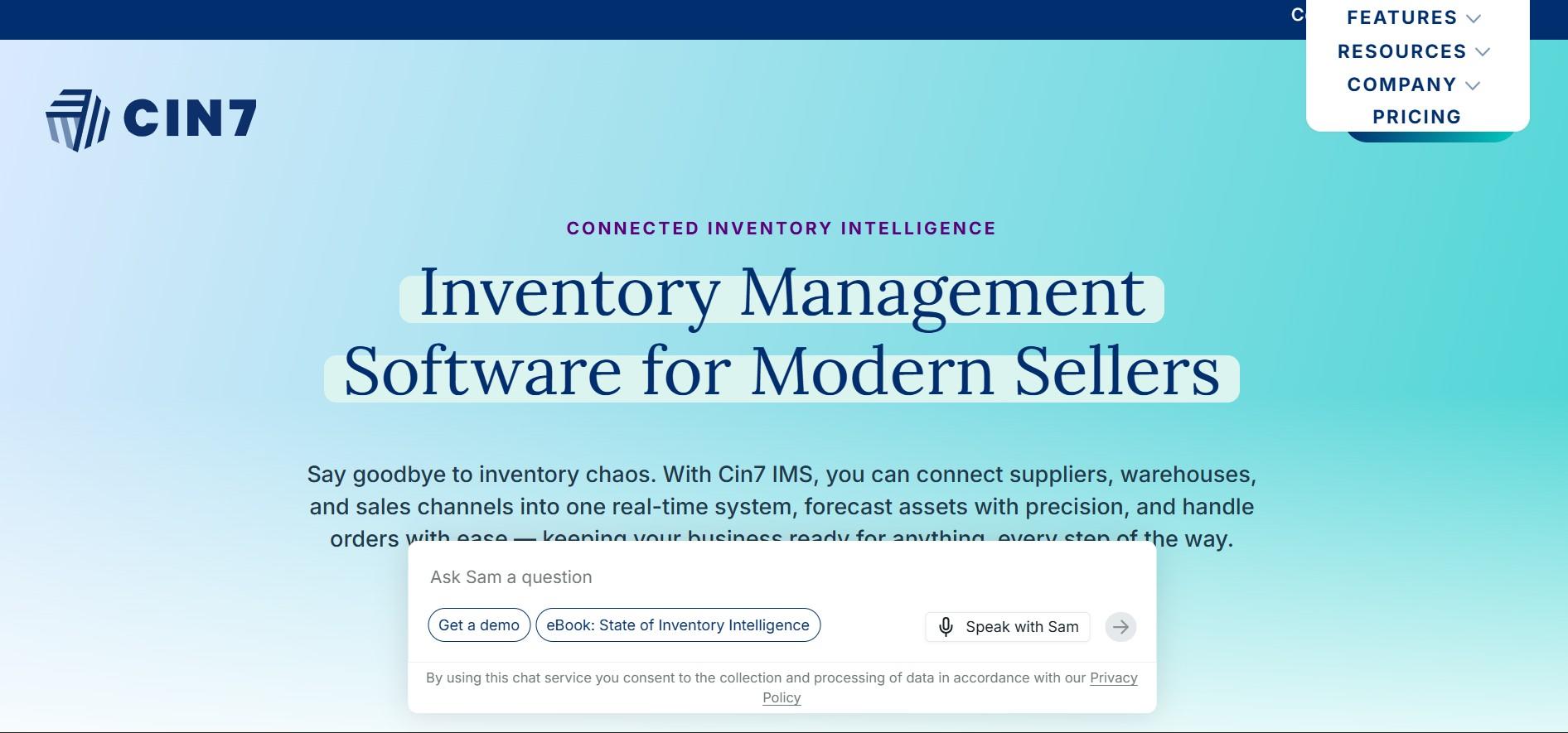
Cin7 is an inventory and order management platform built for businesses that sell through multiple channels. Whether you sell online, in physical stores, or to wholesale customers, Cin7 helps you manage everything from one place.
It provides real-time inventory tracking, includes a built-in POS system for retail stores, and offers a wholesale ordering portal for B2B customers.
Key Features of Cin7
- Real-time inventory sync across online and offline sales channels.
- Built-in POS system for managing in-store sales without a separate tool.
- B2B ordering portal for wholesale customers to place orders directly.
- EDI connections for selling to large retail buyers and enterprise accounts.
- Multi-warehouse management with stock tracking across locations.
- Advanced reporting on channel profitability, inventory turnover, and sales trends.
Supported Platforms by Cin7
Amazon, eBay, Shopify, WooCommerce, BigCommerce, Magento, built-in POS, B2B portal, EDI connections
Pricing Plans at Cin7
- Standard: $349/month (5 users, 2 integrations, 6,000 sales orders/year).
- Pro: $599/month (10 users, 4 integrations, 24,000 sales orders/year).
- Advanced: $999/month (15 users, 6 integrations, 120,000 sales orders/year).
- Omni: Custom pricing for enterprise businesses.
Note: Additional integrations, users, automation features, POS, and advanced capabilities are available as add-ons.
Limitations of Cin7
- Significantly higher starting price than most alternatives at $349 per month.
- Complex to set up, particularly for businesses new to inventory management software.
- Some features that are included in competing tools require additional add-ons in Cin7.
- Customer support quality has been noted as inconsistent by some users.
Our Verdict: Cin7 is the right alternative to the trunk inventory for brands that sell across online, wholesale, and retail channels simultaneously and need everything managed in one place. Its built-in POS and B2B portal in one system is a genuine advantage for that specific type of business. For sellers who only sell online or on marketplaces, the $349 starting price is hard to justify when QuickSync or Sellbrite cover those needs at a fraction of the cost.
7. Linnworks
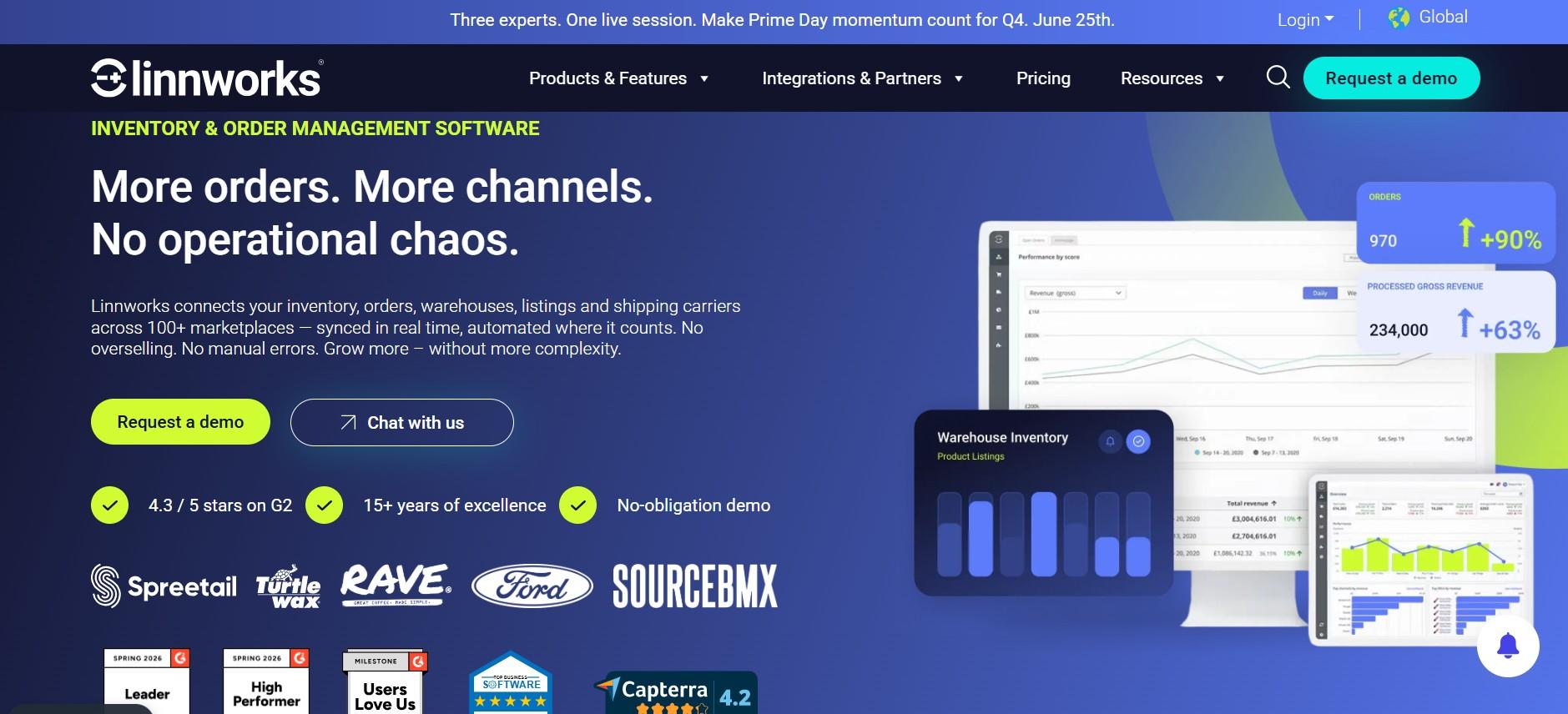
Another alternative for Trunk Inventory is Linnworks, a platform that helps businesses manage inventory and orders across multiple marketplaces and online stores. It connects with popular channels like Amazon, eBay, Shopify, and Walmart, making it easier to keep everything organized from a single dashboard.
Key Features of Linnworks
- Real-time inventory sync across 100+ connected channels and marketplaces.
- Advanced automation rules engine to route orders, manage stock, and trigger workflows.
- Multi-warehouse management with location-specific stock tracking.
- Listing management to create and manage listings across channels from one place.
- Shipping automation with carrier integrations and fulfillment routing rules.
- Detailed analytics covering sales performance, inventory health, and channel profitability.
Supported Platforms by Linnworks
Amazon, eBay, Walmart, Shopify, WooCommerce, BigCommerce, Magento, TikTok Shop, Lazada, and 100+ others
Pricing Plans at Linnworks
- Linnworks uses custom pricing, so you’ll need to contact the company directly for a quote.
- Since pricing is tied to order volume, costs can add up quickly for growing businesses and may not be ideal for smaller sellers.
Limitations of Linnworks
- Pricing is not publicly available, so you’ll need to contact the sales team for a quote.
- Costs increase as your order volume grows, which can make it expensive for small businesses.
- Setup can be complicated, and many businesses need help getting started.
- The platform has a lot of features, so it can take time to learn and configure.
- It doesn’t connect directly with QuickBooks or Xero and may require additional integration tools.
- It may be too advanced for businesses with low order volumes.
Our Verdict: Linnworks is best suited for high-volume sellers with complex multichannel operations. It provides advanced automation, broad integration support, and powerful inventory management tools that can handle large-scale businesses. However, its pricing and learning curve may be difficult to justify for smaller sellers. Unless you need enterprise-level capabilities, a more straightforward solution may offer better value. Besides this, there are many Linnworks alternatives for inventory and multichannel selling, that you can look at.
8. Katana
At number 8 on our list is Katana, an inventory and manufacturing management platform built for businesses that make or assemble their own products. It helps track raw materials, production schedules, inventory, and finished goods in one place, making it a great choice for ecommerce brands that need more than basic inventory syncing.
Key Features of Katana
- Track the materials and parts needed to make each product.
- Plan, manage, and monitor production jobs from start to finish.
- See real-time inventory levels for both raw materials and finished products.
- Allow production teams to update manufacturing progress directly from the shop floor.
- Manage orders from multiple sales channels, including Shopify, WooCommerce, and Amazon.
- Connect with QuickBooks and Xero to keep inventory and accounting in sync.
Supported Platforms by Katana
Shopify, WooCommerce, Amazon, QuickBooks, Xero, and various shipping and 3PL integrations
Pricing Plans at Katana
- Free Plan: Free (up to 30 SKUs).
- Core Plan: Starts at $299/month.
- Advantage Plan: Custom pricing.
Note: Additional add-ons available for Manufacturing Management, Warehouse Management, Traceability, and Shop Floor functionality
Limitations of Katana
- More expensive than most inventory tools, with plans starting at $199 per month.
- Best suited for manufacturers, not businesses that only buy and resell products.
- Supports fewer sales channels and marketplaces than some competitors.
- It can take time to learn, especially the production and manufacturing features.
Our Verdict: Katana is a strong Trunk alternative for product-based manufacturers who need full control over materials, production, and inventory. It offers deep functionality that is ideal for Shopify and WooCommerce brands that produce their own goods. However, for sellers who simply need multichannel inventory syncing, it may be more advanced and costly than necessary. Simpler tools like QuickSync or Sumtracker are often a better fit.
9. SKU IQ
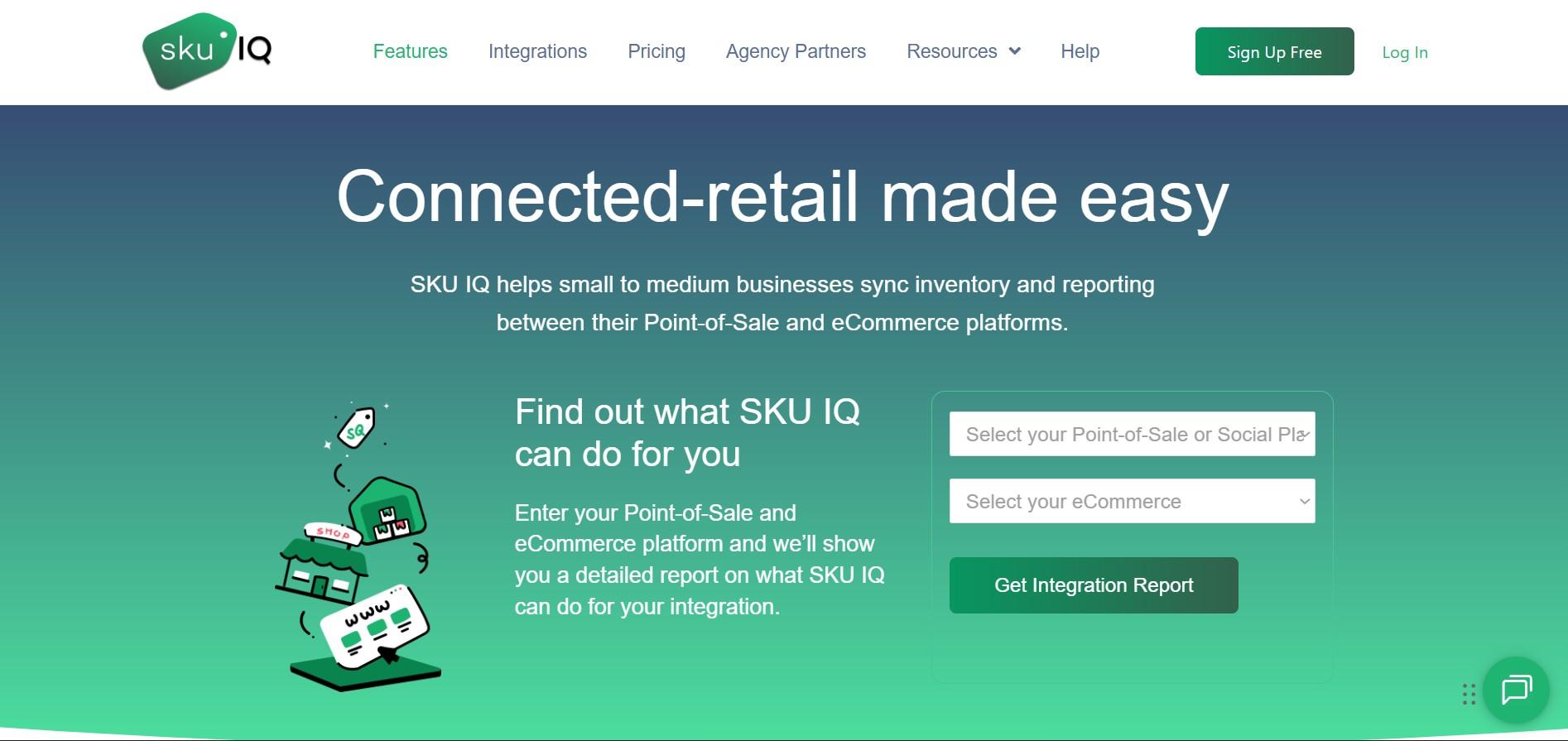
Another Trunk Inventory alternative is SKU IQ, a platform built to bridge the gap between physical retail and ecommerce. It keeps inventory synchronized between POS systems and online stores in real time, helping prevent overselling across channels. It integrates with popular platforms such as Shopify, WooCommerce, Square, Clover, and TikTok Shop.
Key Features of SKU IQ
- Real-time inventory sync between POS systems and online stores.
- Product sync including titles, descriptions, images, pricing, and variants.
- Order sync routing online orders to the POS system for fulfillment.
- TikTok Shop integration for social commerce sellers.
- Simple setup designed for non-technical retail owners.
- Analytics dashboard showing performance across connected channels.
Supported Platforms by SKU IQ
Shopify, WooCommerce, Square POS, Clover POS, TikTok Shop
Pricing Plans at SKU IQ
- Basic: $45/month
- Plus: $89/month
- Growth: $159/month
- Premium: $349/month
Note: Pricing is based on order volume and business size.
Limitations of SKU IQ
- More limited platform coverage compared to QuickSync. Does not support Amazon, eBay, or Etsy natively.
- No accounting integration with QuickBooks or Xero.
- Less suitable for pure marketplace sellers who do not use a POS system.
- Fewer advanced inventory management features than broader tools.
Our Verdict: SKU IQ is a good Trunk alternative for retailers who mainly sell through Shopify or WooCommerce and need to connect their physical store with their online shop. It works especially well for POS syncing. However, if you also sell on marketplaces like Amazon, eBay, or Etsy, a tool like QuickSync is a better option because it supports both POS systems and online marketplaces.
10. Multiorders
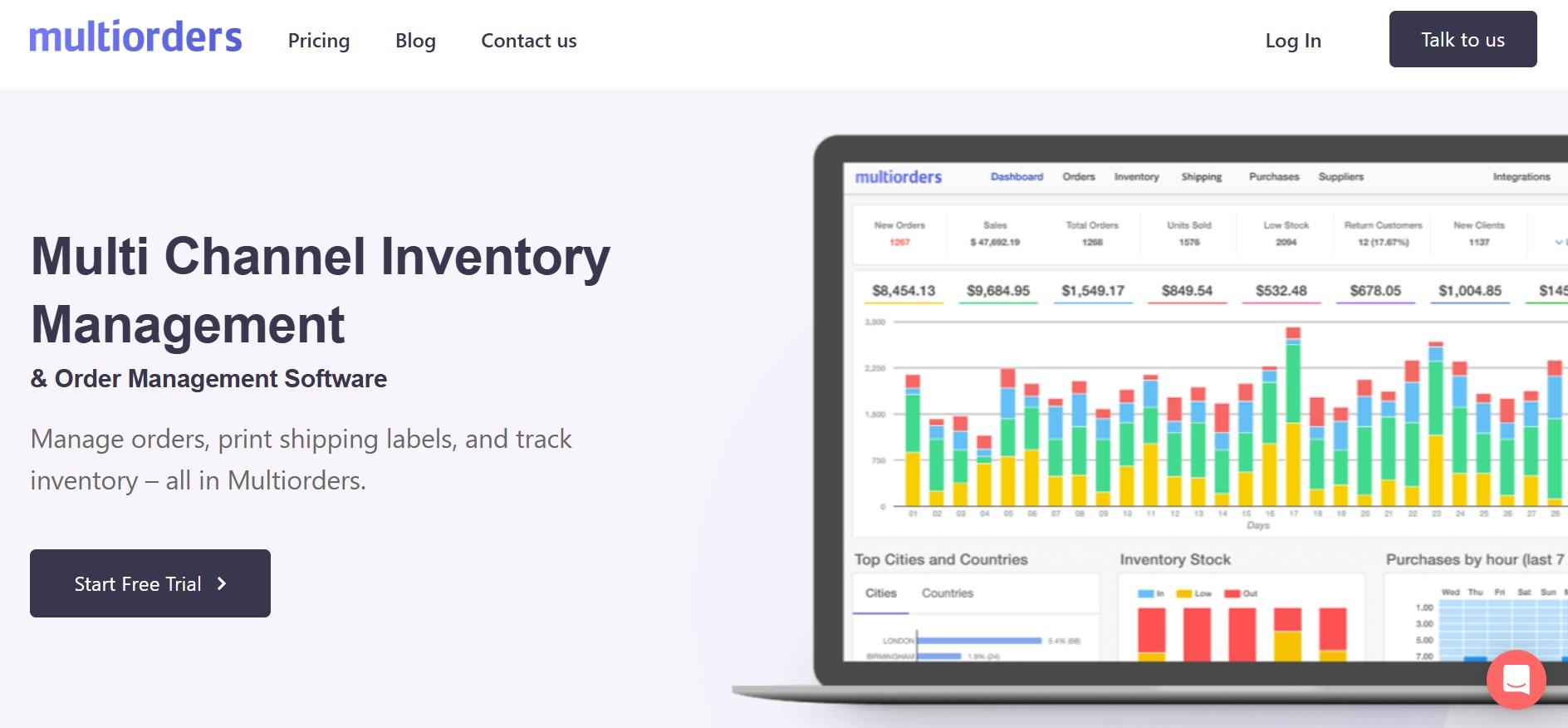
So, the final pick on our list at number 10 is Multiorders, a multichannel inventory and order management platform designed for growing ecommerce sellers. It allows you to track orders from different platforms in one place while keeping inventory updated, and also offers simple shipping tools.
Key Features of Multiorders
- Real-time inventory sync across connected channels.
- Centralized order management dashboard for all channel orders.
- Shipping integration with major carriers for order fulfillment.
- Product listing management to create and push listings to connected channels.
- Low stock notifications and inventory reporting.
- Simple interface designed for sellers without technical backgrounds.
Supported Platforms by Multiorders
Shopify, WooCommerce, Amazon, eBay, Etsy, Walmart
Pricing Plans at Multiorders
- PRO 500: $64/month (up to 500 orders)
- PRO 1K: $129/month (up to 1,000 orders)
- PRO 2K: $195/month (up to 2,000 orders)
- PRO 5K: $299/month (up to 5,000 orders)
Note: Pricing is based on monthly order volume.
Limitations of Multiorders
- No POS integration for sellers with physical stores.
- No accounting integration with QuickBooks.
- Fewer platform integrations than tools like Linnworks or QuickSync.
- Less advanced inventory management features compared to dedicated inventory tools.
- Customer support response times have been noted as slower than those of competitors.
Our Verdict: Multiorders is a good Trunk alternative for small to mid-sized sellers who want a simple and affordable tool for managing orders and inventory in one place. It is easy to set up and use, even for non-technical users. However, if you need POS integration, accounting sync, or support for more platforms, there are other tools in this list that you can opt for.
What Multichannel Sellers Should Look for in a Trunk Inventory Alternative
Once you start exploring alternatives to Trunk, it’s important to focus on more than just inventory syncing. The goal is to choose a tool that not only fixes Trunk’s limitations but also supports your business as it grows.
Not all inventory sync tools are built the same. Here is what to check before choosing a Trunk alternative to make sure it actually solves the problems that made you leave Trunk in the first place.
Real-Time Sync Speed:
This is the most important feature in any inventory management software. Real-time sync updates your inventory across every channel within seconds of a sale. Whereas scheduled sync updates at set intervals, typically every 15 to 30 minutes.
On a serious note, a lack of real-time sync during a promotion or a busy selling period can cause overselling. So always confirm whether a tool syncs in real time or on a schedule.
Platform and Channel Coverage:
Check whether the tool supports every platform you sell on right now, plus the ones you plan to add. Look at how deep that support goes. Does it handle returns? Does it sync product variants? Does it connect to your POS system? Multichannel selling requires a tool that covers your actual channels, not just the popular ones.
Order Sync, Not Just Inventory Sync:
If you manage orders from multiple channels, you need a tool that brings them all into one dashboard, not just one that keeps inventory counts accurate. Order management software capability within your inventory tool saves you from juggling multiple platforms every time you need to fulfill an order.
Complete Product Sync:
When you update a product on one platform, does the change push to every other channel automatically? Product sync covers names, descriptions, images, pricing, variants, categories, and tags. The more of these a tool handles automatically, the less manual work you will have to do.
POS Integration Support:
If you operate a physical store, this feature is non-negotiable. Your centralized inventory system needs to connect to your register so that in-store sales update your online stock, and online sales are visible to your staff at the register. Trunk does not offer this, but several tools that we mentioned below in the list do.
Accounting Integration Support:
For sellers who use QuickBooks or any other accounting platform, connecting your inventory sync software to your accounting tool means every sale creates the correct financial record automatically. This eliminates manual bookkeeping and makes tax time significantly easier.
Ease of Setup with Less Learning Curve:
Some tools require a developer to configure, and some take minutes to connect and go live. Be honest about your technical comfort level and choose a tool that matches it. Because an inventory tool with too much of a learning curve will only waste your time and efforts.
Which Trunk Inventory Alternative Is Right for Your Business?
So finally, the decision time comes now, and choosing the right ecommerce inventory tool depends on what you sell, where you sell it, and how much volume you do. On top of that, what else do you need the tool to handle? So here is a final and quick breakdown of all 10 trunk multichannel syncing solutions.
| Business Type | Best Trunk Alternative | Why |
| Shopify multichannel seller | QuickSync | Real-time sync across Shopify, marketplaces, POS, and QuickBooks in one tool |
| Marketplace seller (Amazon, eBay, Etsy) | QuickSync or Sellbrite | QuickSync for full sync including orders and accounting; Sellbrite for listing management focus |
| POS and retail business (Clover, Square) | QuickSync or SKU IQ | Both offer POS sync that Trunk does not. QuickSync adds accounting sync on top. |
| Small seller on a tight budget | Zoho Inventory or Sumtracker | Lowest starting prices with the core sync features most small sellers need |
| High-volume enterprise seller | Linnworks | Built specifically for large-scale multichannel operations with 100+ channel integrations |
| Seller needing accounting sync | QuickSync or Finale Inventory | Both connect inventory sync directly to QuickBooks for automatic financial records |
| Manufacturing or production brand | Katana | Built for managing raw materials, production, and finished goods alongside ecommerce sync |
| Wholesale and B2B brand | Cin7 and QuickSync | Built-in B2B portal, EDI support, and multi-warehouse management for wholesale operations |
| Dropshipper or supplier feed seller | Sumtracker or QuickSync | Real-time stock sync prevents overselling on supplier-fed inventory |
When comparing all options, QuickSync offers the most complete and well-rounded solution for most businesses. It combines real-time inventory syncing with order management, product syncing, POS integration, and accounting tools at a competitive price. While other tools like Linnworks, Katana, and Cin7 excel in niche areas, QuickSync provides the best overall value for the majority of multichannel sellers.
The Bottom Line
Trunk is a solid tool for basic inventory sync, but it becomes limited as your business grows. It lacks features like POS integration, order management, accounting sync, and product sync, which are important for multichannel sellers.
Different trunk inventory alternatives solve different needs. Sumtracker is good for simple syncing, Sellbrite works well for marketplaces, Linnworks fits high-volume sellers, Katana is best for manufacturers, and Cin7 supports wholesale businesses.
For most multichannel sellers, QuickSync is the best all-in-one upgrade because it includes real-time sync, order and product management, POS integration, and QuickBooks support at an affordable price.
Essential runs $35 a month for up to 100 orders and steps through eight bands to $279 at 10,000 orders; Pro, which adds bundles and kits, runs $39 to $329 across the same bands. Monthly billing, unlimited channels, 14-day trial with no card, as of August 2026.
One tool that holds the count and writes it to every channel, so nobody types a number twice. For one shop, a spreadsheet that logs movements works; QuickSync publishes free Excel and Google Sheets templates for that. Once the same item sells in two places, a sync tool such as Trunk or QuickSync replaces the sheet.
Not a free sync tool. Sellbrite’s free plan covers 30 orders a month at a 2-hour sync and Zoho Inventory’s covers 50 orders; both are listing or order tools with sync attached. Trunk and QuickSync offer 14-day trials without a card.