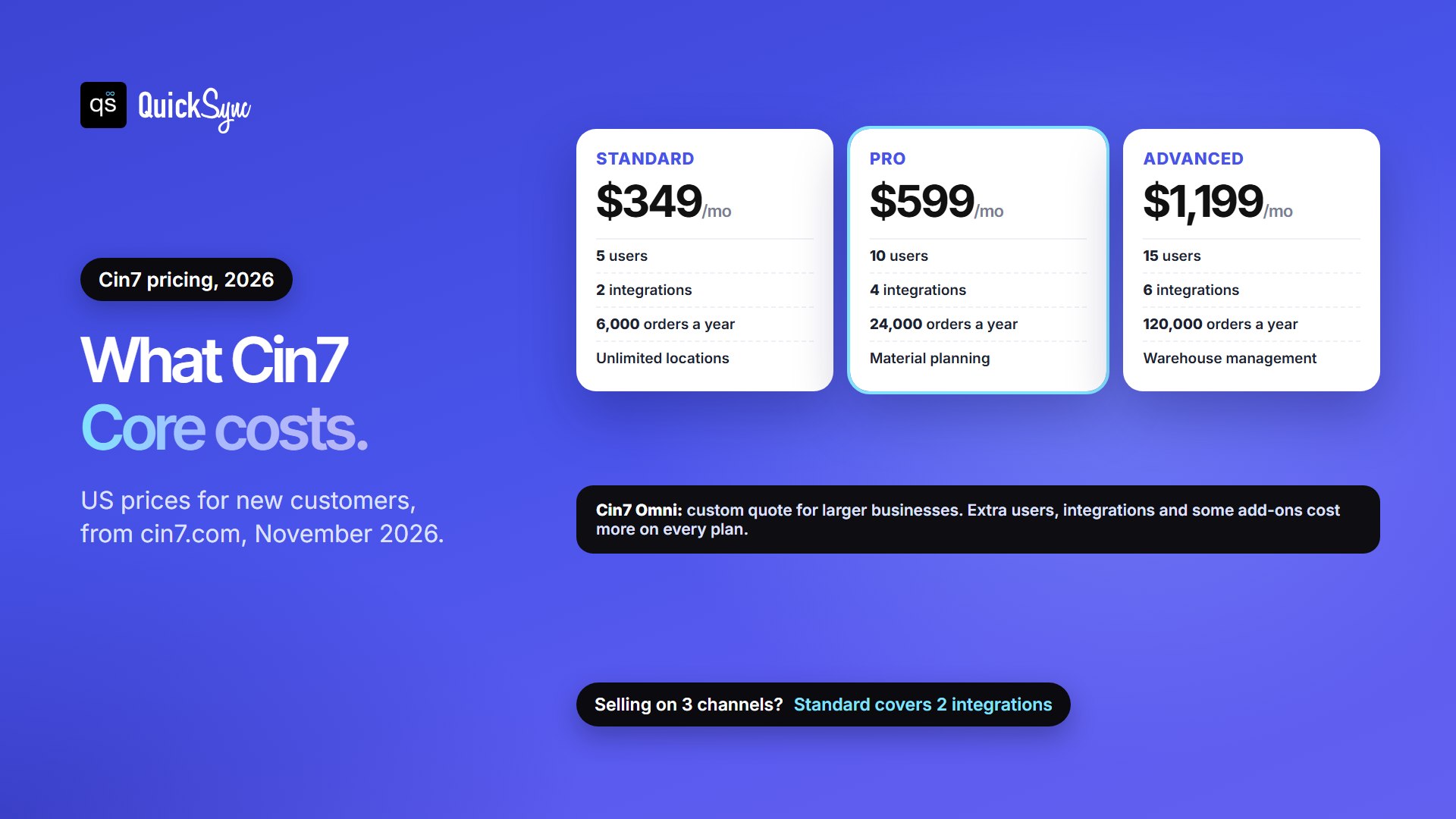
Cin7 is a full inventory platform, and it’s priced like one. Its entry plan, Cin7 Core Standard, costs $349 a month for 5 users, 2 sales channel or app integrations and 6,000 sales orders a year. The top Core plan now costs $1,199 a month.
That’s good value if you use what you pay for: purchasing, manufacturing planning, warehouse management and B2B selling. Many sellers who look for Cin7 alternatives need less. Some only want their stock to match across Shopify, Amazon and eBay. Others need more than the two integrations the entry plan includes.
This guide explains Cin7 pricing, compares seven cheaper or better-fitting options, and works out what each one costs a real seller. Every price comes from the company’s own pricing page, checked in November 2026.
Cin7 alternatives at a Glance
The best Cin7 alternatives in 2026 are QuickSync if you only need stock synced across sales channels, Zoho Inventory for a low-cost all-in-one system, inFlow for B2B and barcode workflows, Unleashed for wholesalers, Ordoro for shipping-led teams, Linnworks for high order volumes and Katana for manufacturers. Pick by the job you need done, not by feature count.
| Tool | Best for | Starting price | How the price grows | Purchasing or manufacturing |
|---|---|---|---|---|
| Cin7 Core (for reference) | Full inventory platform | $349/mo | Plan tier, users, integrations, orders a year | Yes |
| QuickSync | Stock sync across channels | $19/mo for two shops | Catalogue size and shops; orders unlimited | No |
| Zoho Inventory | Budget all-in-one | Free (50 orders/mo); $29/mo | Orders a month | Yes |
| inFlow | B2B and barcodes | $99/mo | Team members and locations | Yes |
| Unleashed | Wholesalers | $399/mo | Plan, users, order volume | Yes |
| Ordoro | Shipping-led teams | $349/mo (Inventory) | Orders a month | Premium plan |
| Linnworks | High order volumes | Quote | Order volume | Yes |
| Katana | Manufacturers | Free (30 SKUs); custom | Custom contract | Yes |
What is the Cin7 Pricing in 2026
Cin7 sells two products. Cin7 Core has three published plans. Cin7 Omni is a custom solution for larger businesses, and Cin7 quotes it after a call.
| Cin7 Core plan | Price | Users | Integrations | Sales orders a year | Adds |
|---|---|---|---|---|---|
| Standard | $349/mo | 5 | 2 | 6,000 | Unlimited inventory locations |
| Pro | $599/mo | 10 | 4 | 24,000 | Material requirements planning |
| Advanced | $1,199/mo | 15 | 6 | 120,000 | Advanced warehouse management |
Three details change what you actually pay:
- Integrations are counted. Standard includes 2 e-commerce and app integrations. Sell on Shopify, Amazon and eBay, and you’re buying a third. Cin7 sells extra integrations and users on top of each plan.
- Orders are capped per year. 6,000 a year on Standard is about 500 a month. Advanced allows more orders for an extra charge.
- Some features are add-ons. Cin7 says there are no hidden fees, and that optional add-ons such as advanced forecasting cost extra.
Some guides still list Advanced at $999 a month. Cin7’s own pricing page now shows $1,199.
Why Sellers Look For a Cin7 Alternative
Most reasons come down to fit, not quality:
- You only need stock synced. If the job is keeping one stock count across your online store and marketplaces, a full inventory platform is more system, and more cost, than you need.
- The integration limit. Two integrations on Standard fill up fast once you add a second marketplace or an accounting app.
- The entry price. $349 a month is a big step for a small brand, and Pro jumps to $599.
- Your main job is different. Heavy manufacturing, shipping or wholesale teams often want a tool built around that one job.
The 7 Best Cin7 Alternatives
1. QuickSync: best if you only need stock synced
Keeping stock accurate across multiple stores can be difficult. QuickSync keeps one stock count across the places you sell, matching products by SKU, and it can sync listings and orders too. It connects 13 platforms, including Shopify, Amazon, eBay, Etsy, TikTok Shop, WooCommerce, Square, Clover and Lightspeed, plus QuickBooks and Xero. See all integrations.
Price: Lite is $19 a month for two shops and up to 1,000 items, with stock syncing. Pro is $29 and adds product and order syncing, with up to 2,500 items. Each extra shop adds the plan price again, up to eight shops, and orders are unlimited on every plan. There’s a 14-day free trial with no card. See the pricing page.
The catch: QuickSync isn’t a full inventory system. It doesn’t do purchase orders and manufacturing.
2. Zoho Inventory: best budget all-in-one
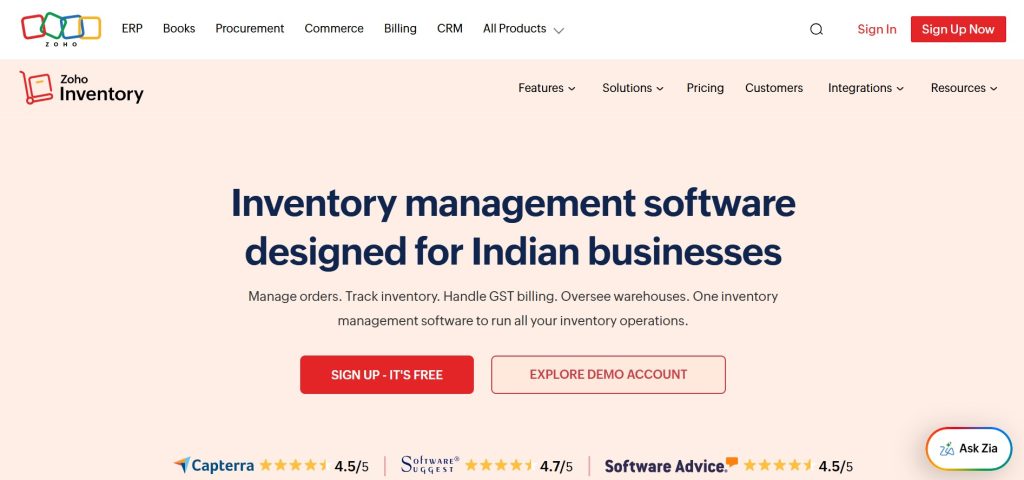
Zoho Inventory is the cheapest full inventory system on this list. It connects to Shopify, Amazon, eBay and Etsy, among others, and pulls orders in while pushing stock out. Pricing is a flat monthly fee per organisation, capped by orders.
Price: Free for 50 orders a month with 1 user. Standard is $29 a month billed yearly ($39 monthly) for 500 orders, 3 users and 2 locations. Premium is $79 ($99 monthly) for 3,000 orders, then Plus at $129 and Enterprise at $249. Details are on Zoho’s pricing page.
The catch: plans are capped by monthly orders, and Zoho says its native integrations depend on your region.
3. inFlow: best for B2B and barcode workflows
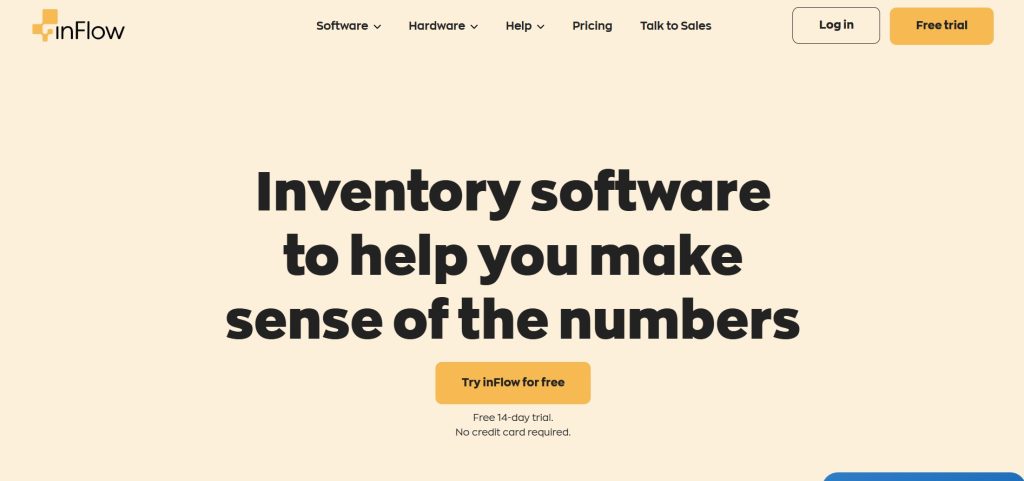
inFlow covers stock, purchasing, sales and barcode scanning, with unlimited products, sales, purchases and integrations on every plan. A B2B portal (Showroom) is included from Pro and available as an add-on below that.
Price, billed yearly: Lite $99 a month (2 team members, 1 location), Core $299 (5 members, 5 locations), Pro $499 (10 members) and Max $699 (20 members). See inFlow’s pricing page.
The catch: Core and above require a one-time $499 onboarding package.
4. Unleashed: best for wholesalers
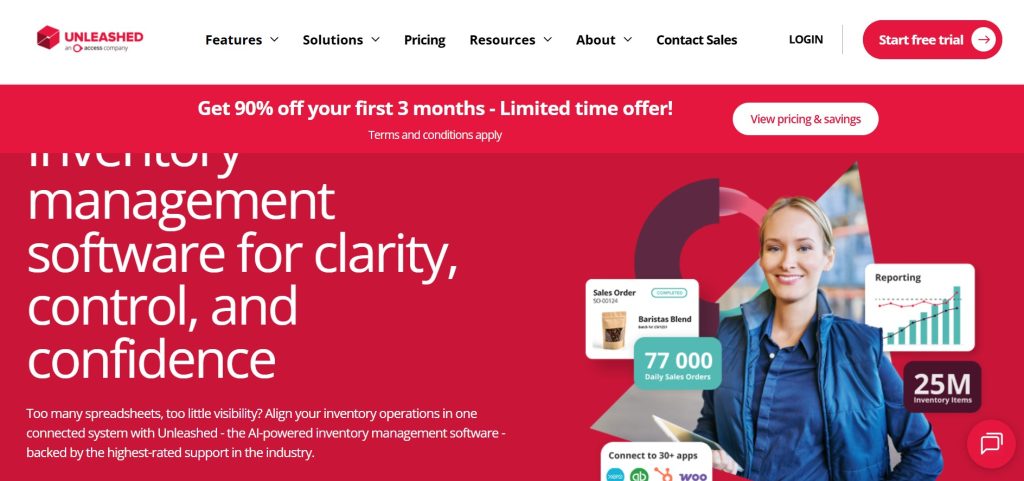
Unleashed is one of the most common Cin7 comparisons. It’s a cloud inventory system aimed at wholesalers, distributors and manufacturers, with purchase orders, multi-warehouse stock and batch and serial tracking.
Price: Core is $399 a month with 3 users, and Pro is $729 with 5 users. Extra users cost $69 or $89 a month, and higher order volumes are paid upgrades from $70 a month. See Unleashed’s pricing page.
The catch: its entry price is higher than Cin7 Standard, so it only saves money if its features fit you better.
5. Ordoro: best for shipping-led teams
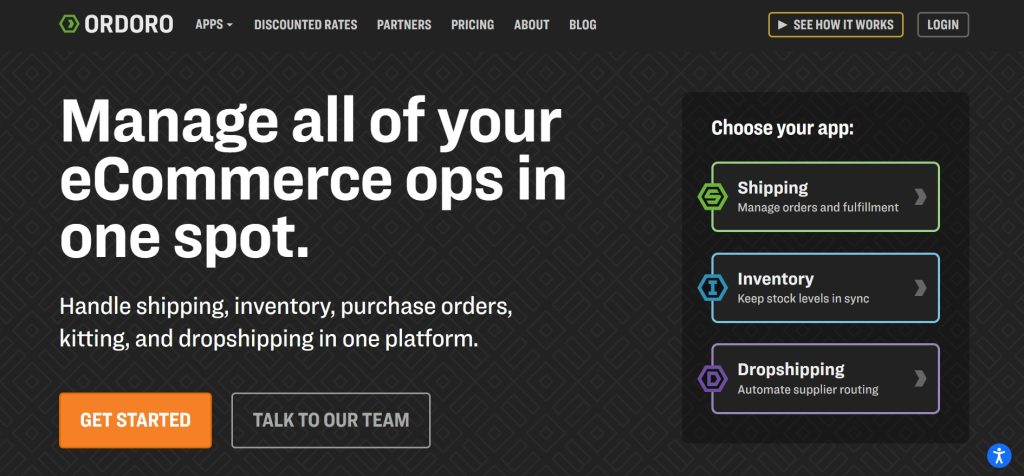
Ordoro is built as separate apps for shipping, inventory and dropshipping. Its Inventory app includes unlimited warehouses, sales channels and users, with kitting, bundling and a QuickBooks Online integration.
Price: Inventory Advanced is $349 a month and Premium is $499, both for 1,000 orders a month, with $100 for each extra 1,000. Premium adds purchase orders, bills of materials and manufacturing orders. The Shipping app starts free. See Ordoro’s pricing page.
The catch: purchase orders and manufacturing are on Premium only, and order overages add up at volume.
6. Linnworks: best for high order volumes
Linnworks is an order and inventory platform for larger sellers. It syncs stock across 100+ channels and handles warehouse picking, purchase orders and shipping rules.
Price: quote only. Linnworks prices plans on order volume, not revenue, with add-on modules, and every package includes guided onboarding. Our Linnworks alternatives guide goes deeper.
The catch: you can’t see a price until you talk to sales.
7. Katana: best for manufacturers
Katana is built for businesses that make what they sell, with production planning, bills of materials and traceability alongside inventory.
Price: a free plan covers up to 30 SKUs with unlimited users and integrations. Above that, the Advantage plan is custom priced under one annual contract, with guided implementation. See Katana’s pricing page.
The catch: there’s no published price for a full catalogue, so it’s hard to compare without a call.
Other Cin7 competitors you’ll see
Fishbowl, NetSuite, Finale Inventory, SkuVault and Brightpearl also appear in Cin7 comparisons, and in a Reddit r/ecommerce thread a 3PL owner recommended SkuVault and Logiwa. We’ve left them out of the ranking above because we couldn’t confirm current published prices for them. If you’re a larger or warehouse-heavy business, ask each for a quote.
Cin7 vs Unleashed
These two come up together more than any other pair. On published prices:
| Cin7 Core | Unleashed | |
|---|---|---|
| Entry plan | Standard, $349/mo | Core, $399/mo |
| Users included | 5 | 3 |
| Extra users | Available to buy | $69/mo (Core), $89/mo (Pro) |
| Order limits | 6,000 sales orders a year on Standard | Paid order-volume upgrades from $70/mo |
| Next plan | Pro, $599/mo | Pro, $729/mo |
Cin7 Core is cheaper to start and includes more users. Unleashed is worth comparing feature by feature if you’re a wholesaler.
What Each Costs a Real Seller
Prices are easier to compare for one real setup. Here’s a brand selling on Shopify, Amazon and eBay, with about 400 orders a month and 3 staff:
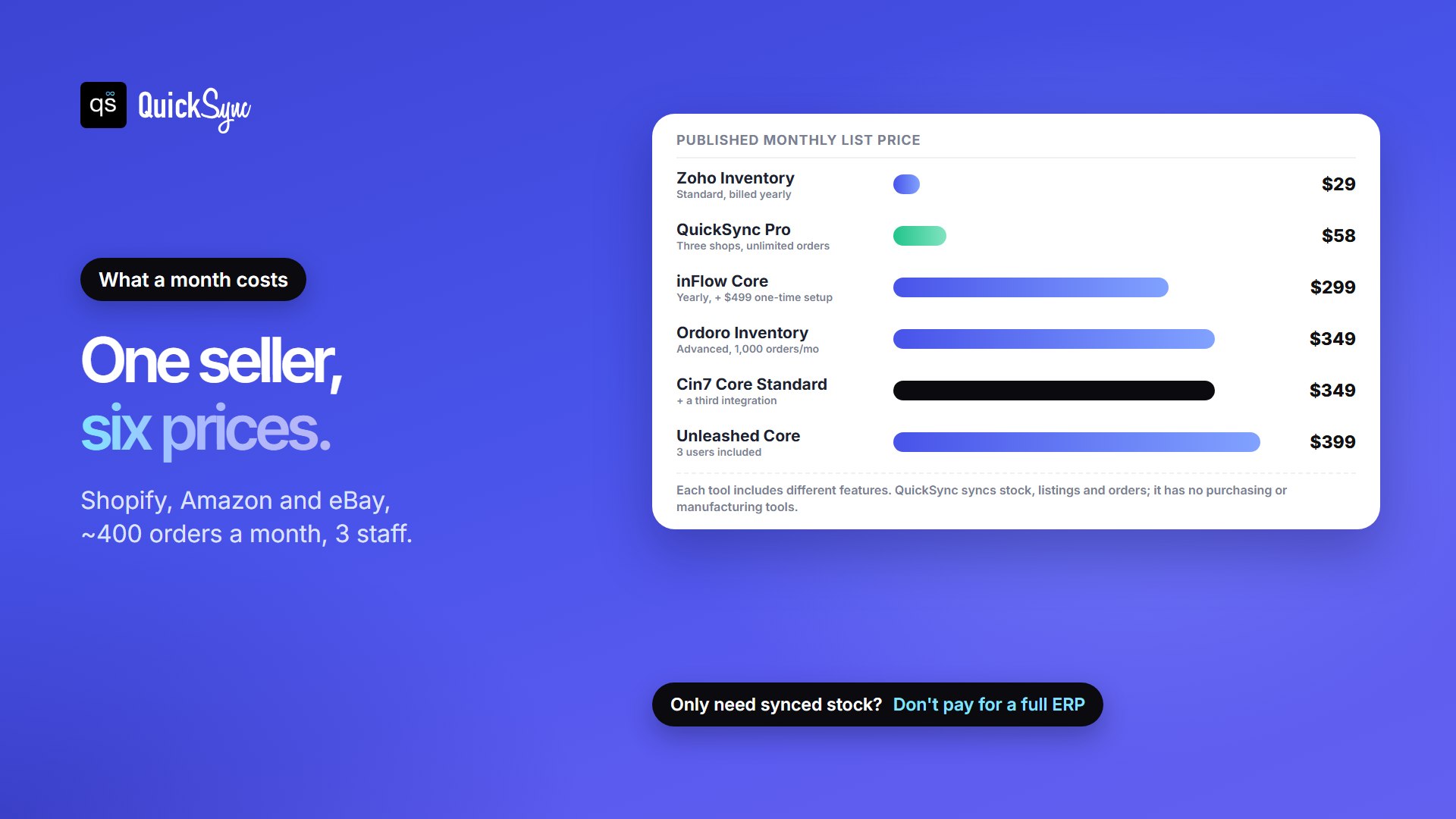
| Tool and plan | Monthly price | Fits this seller? |
|---|---|---|
| Zoho Inventory Standard | $29 (billed yearly) | Yes: 500 orders a month, 3 users; check which channel integrations your region and plan include |
| QuickSync Pro | $58 (three shops) | Yes for sync: unlimited orders, up to 2,500 items; no purchasing tools |
| inFlow Core | $299 (billed yearly), plus $499 once | Yes: 5 members |
| Ordoro Inventory Advanced | $349 | Yes: 1,000 orders a month, unlimited channels |
| Cin7 Core Standard | $349, plus a third integration | Yes: 4,800 orders a year is under the 6,000 cap |
| Unleashed Core | $399 | 3 users included; ask whether you need an order-volume upgrade |
The gap is big at this size. If you need purchasing and full stock control, Zoho Inventory is the cheapest. If you only need your channels to agree on stock, QuickSync costs a fraction of Cin7, and its price doesn’t rise with orders.
How to Choose a Cin7 Alternative
Start with one question: do you need a full inventory system, or do you need your sales channels to stay in sync?
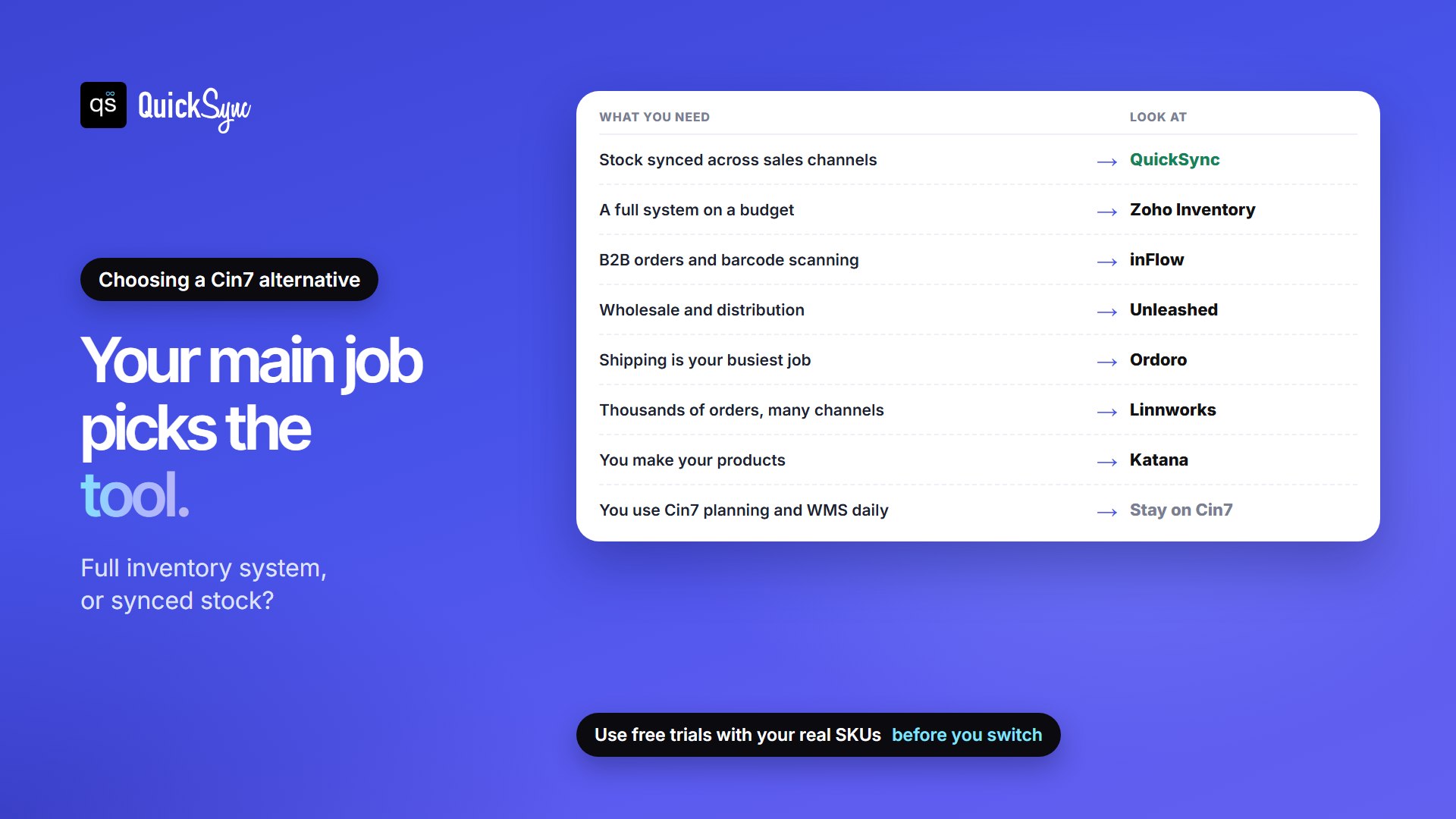
- Only need stock synced: QuickSync.
- Full system on a budget: Zoho Inventory.
- B2B orders and barcode scanning: inFlow.
- Wholesale and distribution: Unleashed.
- Shipping is the busiest part of your day: Ordoro.
- Thousands of orders across many channels: Linnworks.
- You make your products: Katana.
- You use Cin7’s planning, warehouse and B2B tools every day: stay on Cin7.
For wider comparisons, see our guides to the best inventory management software and ecommerce inventory management software, plus Trunk and Sellbrite alternatives.
How to Switch from Cin7 without Losing Stock
- Export your products and stock levels. In Cin7 Core, go to Inventory, then Products, then Export, and choose the inventory list for a CSV of product details. For current quantities by location, run the Product Stock Level report and export it to Excel.
- Check your SKUs. The new tool will match products by SKU. Cin7 warns that SKUs made only of numbers and starting with 0 can break CSV imports, so check that those survive the export.
- Set up the new tool and import. Connect your sales channels and import products, then compare stock levels against Cin7.
- Overlap briefly. Run both for a few days with a small set of products, and make sure every sale lowers stock everywhere.
- Hand over one channel at a time. Disconnect a channel from Cin7, then switch it on in the new tool, so two systems never update the same listings. Cancel Cin7 once every channel has moved.