Shopify makes it easy to start an online store, but it isn’t always the most affordable option. Monthly subscriptions, paid apps, and transaction fees can add up as your business grows. And paying more doesn’t always mean getting everything your business needs.
Whether you’re looking for lower fees, more control over your website, or an easier way to sell online and in-store, there are several Shopify alternatives worth considering in 2026. WooCommerce, BigCommerce, Wix, Squarespace, Square Online, and Etsy each offer something different.
This guide compares six of the best Shopify alternatives based on pricing, transaction fees, features, and the types of sellers they suit. We’ve also checked pricing against each platform’s official website in November 2026 to help you make an informed decision.
What Shopify costs, for comparison
Before you compare, here’s what you’d pay on Shopify. These prices come from Shopify’s pricing page:
| Shopify plan | Billed monthly | Billed yearly (per month) | Online card rate | Fee if you don’t use Shopify Payments |
|---|---|---|---|---|
| Basic | $39 | $29 | 2.9% + 30¢ | 2% |
| Grow | $105 | $79 | 2.7% + 30¢ | 1% |
| Advanced | $399 | $299 | 2.5% + 30¢ | 0.6% |
Shopify doesn’t have a free plan. New stores get 3 days free, then $1 a month for 3 months. Apps are billed on top of your plan. Our guide to Shopify fees breaks down the full cost.
Shopify alternatives at a glance
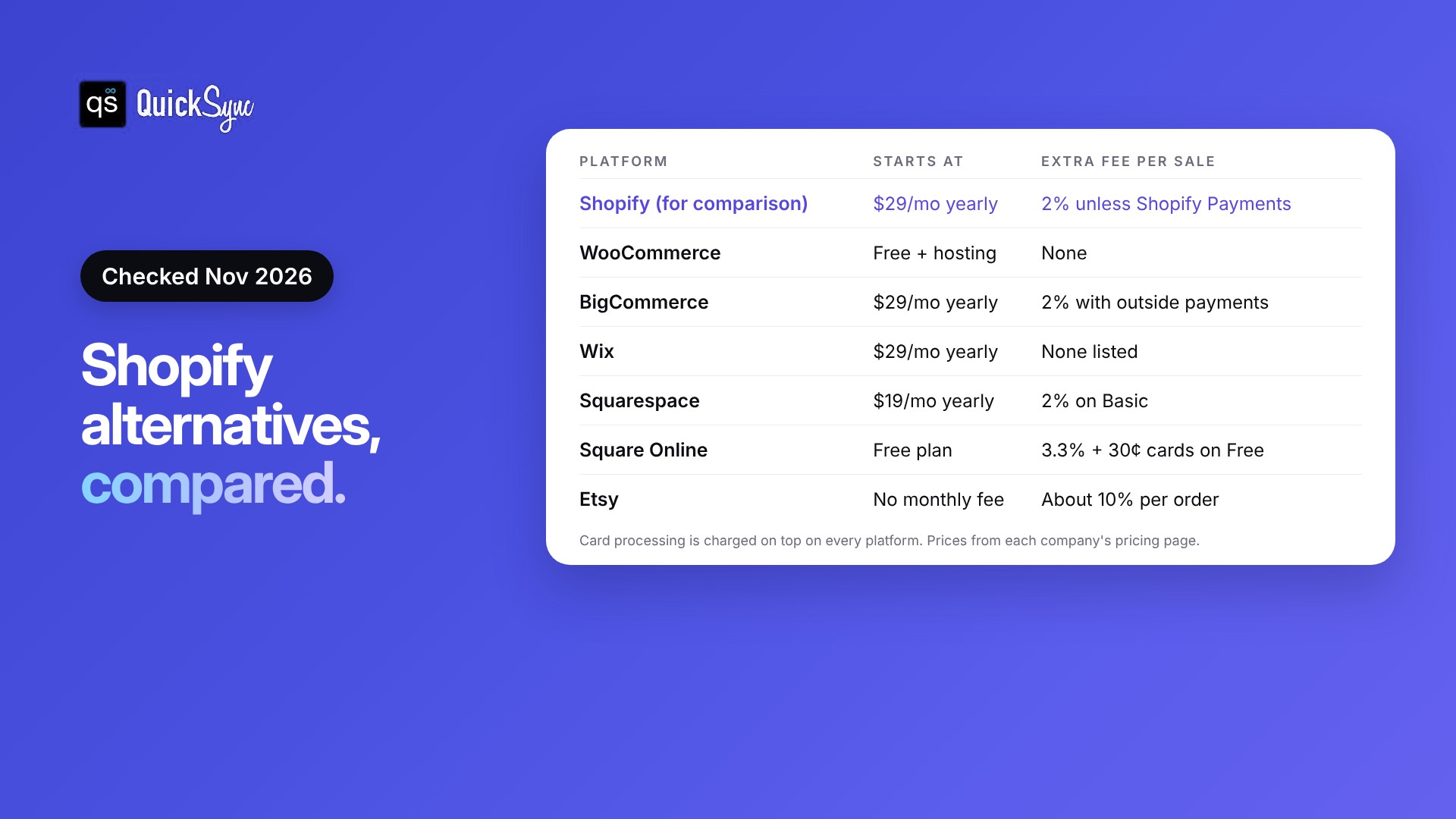
Here are the top Shopify alternatives for 2026, with what each one costs to start and the type of seller it suits best.
| Platform | Starting price | Best for | Works with QuickSync |
|---|---|---|---|
| WooCommerce | Free plugin, plus hosting from about $25/month | Full control on WordPress | Yes |
| BigCommerce | $29/month yearly, $39 monthly | Growing stores that want features built in | No |
| Wix | $29/month yearly (Core) | Service businesses and simple shops | Yes |
| Squarespace | $19/month yearly (Basic) | Design-led brands with small catalogs | Yes |
| Square Online | Free plan | Shops that also sell in person | Yes |
| Etsy | No monthly fee, about 10% per order | Handmade and vintage sellers | Yes |
Selling on Shopify now and thinking of adding a second store? Jump to running Shopify and an alternative together.
The 6 best Shopify alternatives
Each of these Shopify alternatives does one thing better than Shopify, whether that’s lower costs, more control, or a simpler setup. Here’s what each one costs, who it works best for, and where it falls short.
1. WooCommerce: best for full control
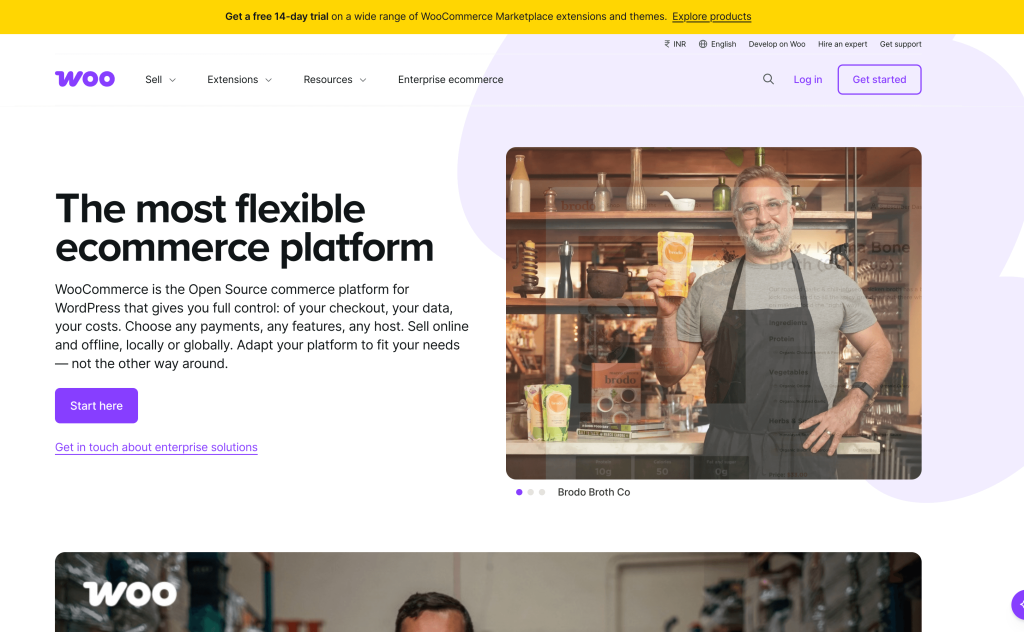
WooCommerce is a free plugin that turns a WordPress site into a store. You own the site and can change almost anything.
Pricing: The plugin is free. WooCommerce puts hosting at $25 to $350 a month for most stores, and paid extensions at $29 to $299 a year each. There’s no extra fee for using a third-party payment provider.
Good fit if: you want full control, already use WordPress, or have someone to help with setup and updates.
Not a fit if: you want everything managed for you. You’re responsible for hosting, security and updates.
Our Shopify vs WooCommerce comparison goes into more detail.
2. BigCommerce: best for features built in
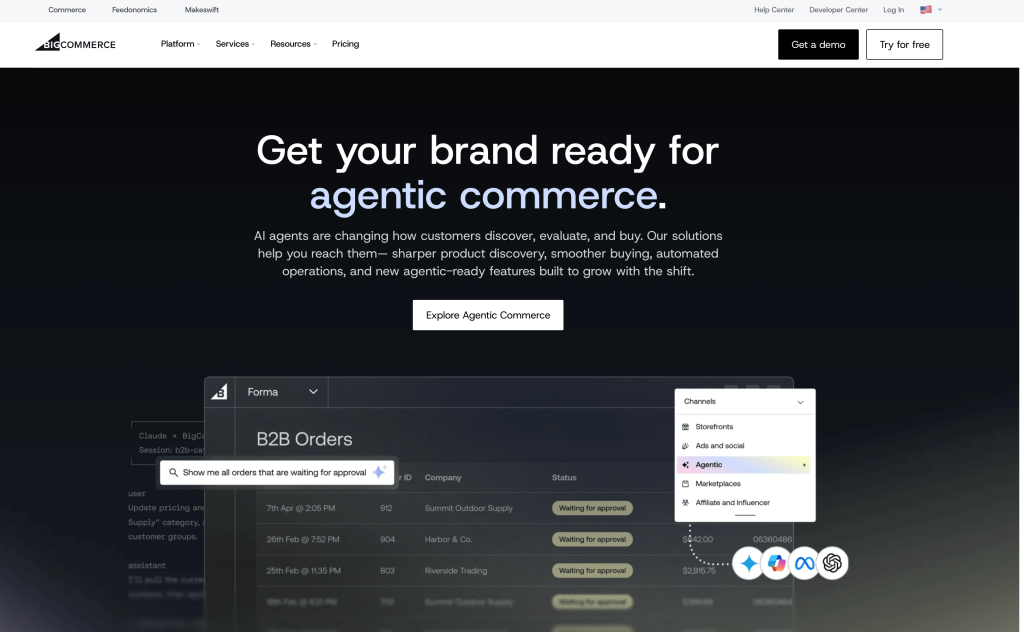
BigCommerce is one of the closest like-for-like alternatives to Shopify. It renamed its plans in June 2026 to Core, Growth, Scale and Performance.
Pricing: Core is $39 a month, or $29 a month billed yearly. Growth is $105 ($79 yearly) and Scale is $399 ($299 yearly). Each plan has a sales limit: Core covers up to about $30,000 in yearly sales before you move to Growth, and Growth covers up to about $100,000. Using an outside payment provider adds a fee of 2% on Core, 1% on Growth and 0.6% on Scale.
Good fit if: you want more features built in rather than added through apps.
Not a fit if: your sales are growing fast on a tight budget, since the sales limits push you up a plan.
3. Wix: best for service businesses and simple shops

Wix is a website builder with a store built in. It’s strong for businesses that sell products and take bookings.
Pricing: Wix shows yearly prices only, and they vary by location. In the US, Core is $29 a month, Business is $39 and Business Elite is $159, according to our Wix vs Shopify comparison, which uses Wix’s plans page. Core is the first plan that can take payments. There’s a free plan for building your site, and paid plans come with a 14-day money-back guarantee.
Good fit if: you want an easy site builder, sell a modest range of products, or take bookings.
Not a fit if: you plan to run a large catalog or sell heavily across marketplaces.
4. Squarespace: best for design-led brands
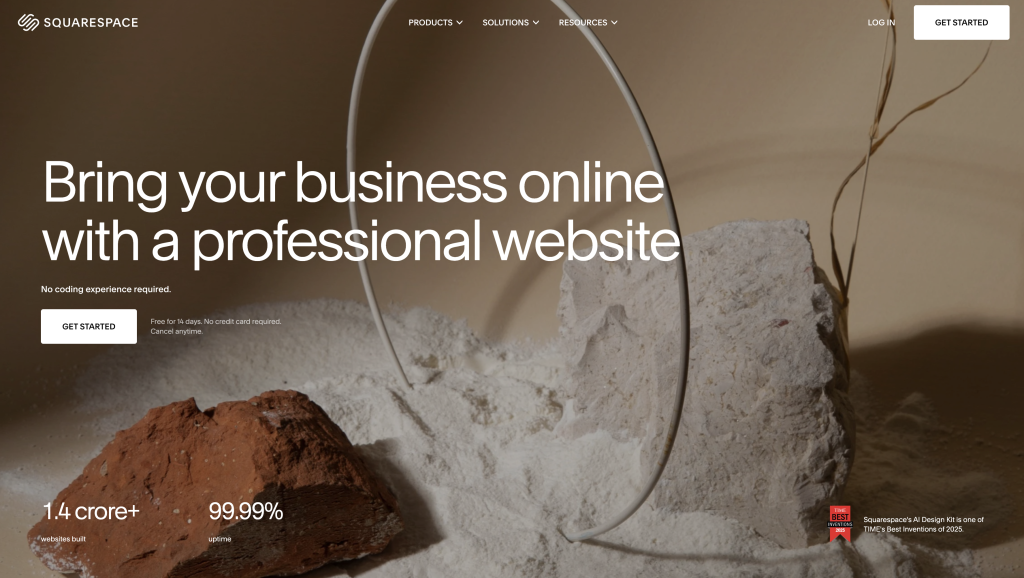
Squarespace is known for clean templates. It suits brands where the look of the site matters as much as the products.
Pricing: Basic is $19 a month billed yearly, or $25 monthly, with a 2% fee on every online sale. Core is $29 yearly ($39 monthly) with no transaction fee. Plus and Advanced cost $49 and $99 a month billed yearly. Our Squarespace pricing guide has the full breakdown.
Good fit if: you have a smaller catalog and want a site that looks polished with little work.
Not a fit if: you need deep inventory tools or plan to grow a large catalog.
5. Square Online: best if you also sell in person
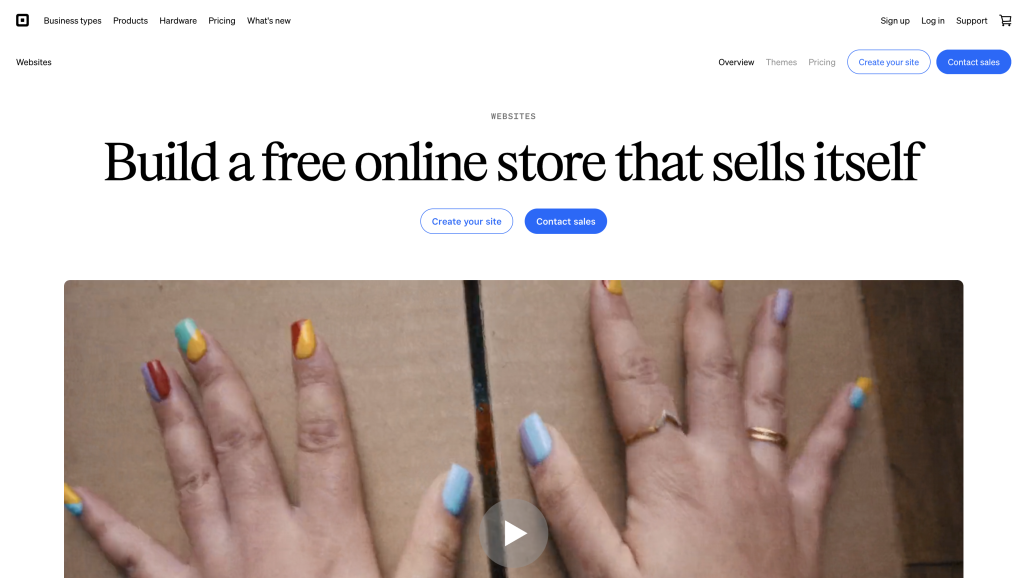
Square Online comes with Square’s point of sale. Your online store and your till share the same items and sales.
Pricing: Square Free costs $0 a month, with online card payments at 3.3% + 30¢. Square Plus is $49 a month per location and Square Premium is $149, both with online payments at 2.9% + 30¢ and a 30-day free trial.
Good fit if: you have a shop, market stall or café and want one system for in-person and online sales.
Not a fit if: online is your main channel and you want a highly customized store.
6. Etsy: best if you don’t want your own site
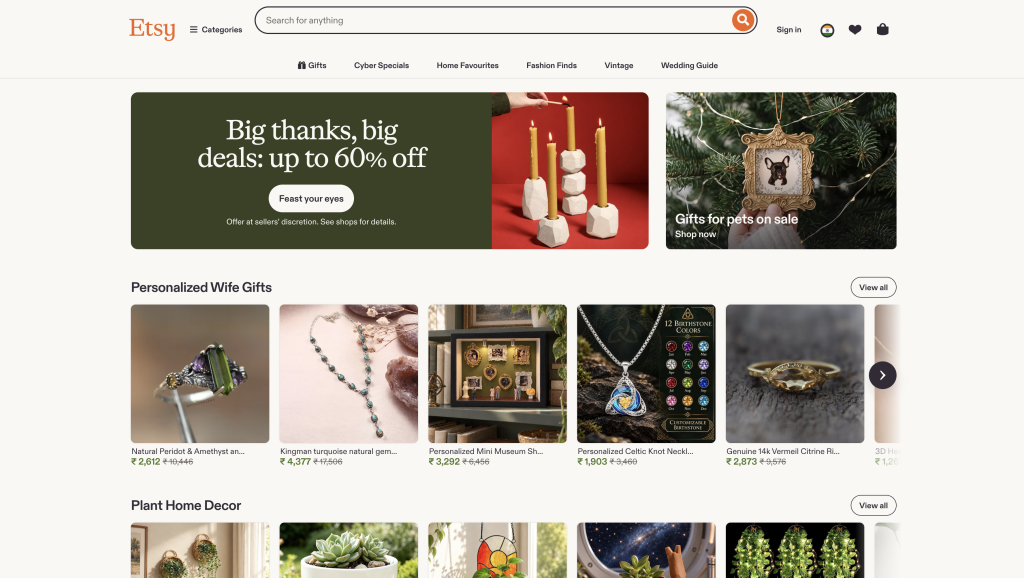
Etsy isn’t a store builder, but many handmade and vintage sellers use it instead of Shopify. You get Etsy’s buyers without building or running a site.
Pricing: No monthly fee. Every order pays a 20-cent listing fee, a 6.5% transaction fee on the price plus shipping, and payment processing of 3% plus 25 cents for US sellers. That’s about 10% of each order, according to our Etsy fees guide. Offsite Ads can add 12% to 15% on orders they bring in.
Good fit if: you sell handmade, vintage or craft supplies and want buyers without marketing your own site.
Not a fit if: you want your own brand, customer list and control over fees.
Which Shopify alternative should you choose?
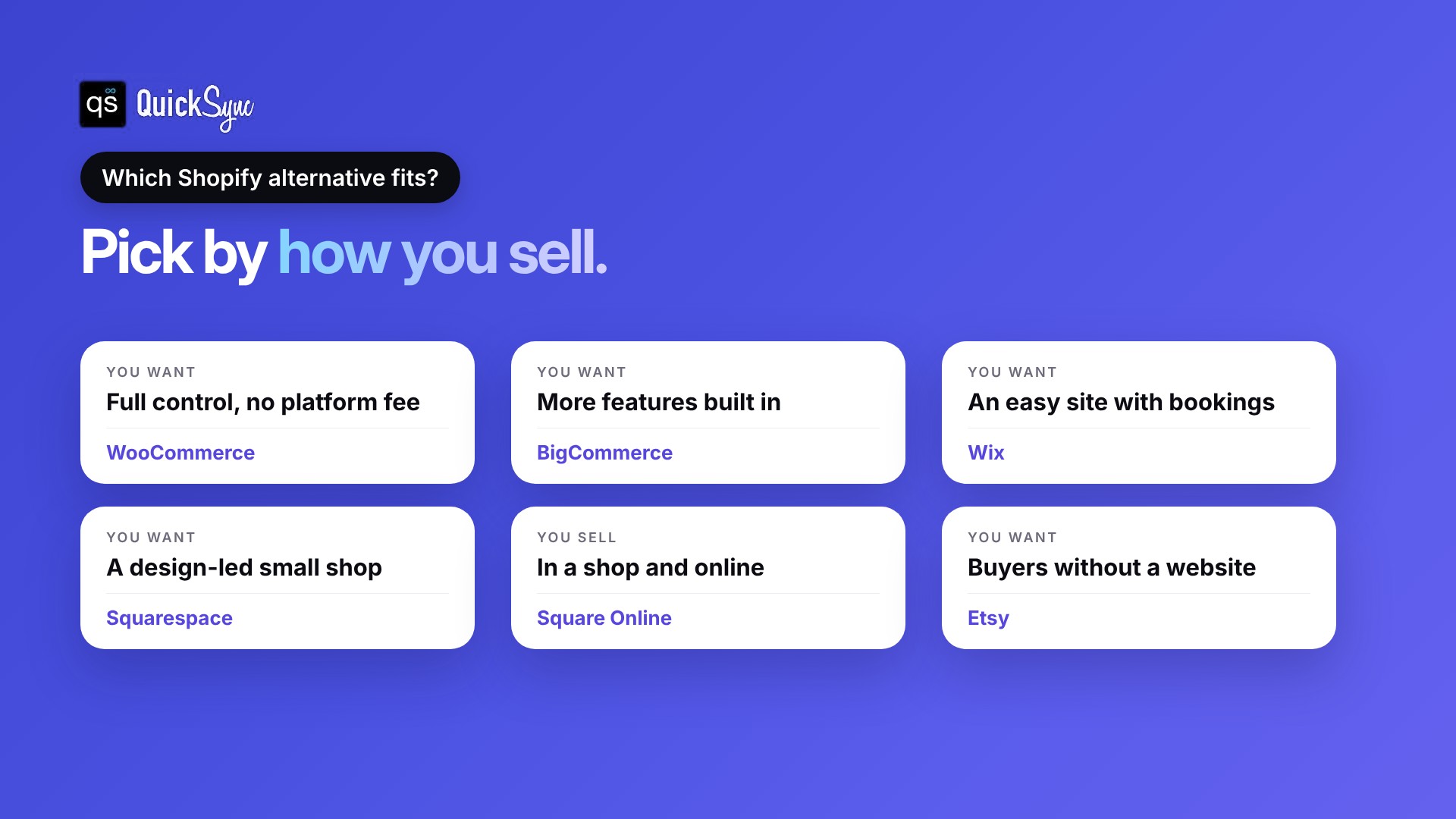
The right Shopify alternative is the one that matches how you sell, not just the one with the lowest price. Start with what matters most to your store, then use the table below to find the platform that fits.
| If you want… | Choose |
|---|---|
| Full control and no monthly platform fee | WooCommerce |
| A Shopify-style platform with more built in | BigCommerce |
| An easy site with bookings or a few products | Wix |
| A design-led site with a small catalog | Squarespace |
| One system for your shop and your website | Square Online |
| Buyers without running your own site | Etsy |
The cheapest option isn’t always the cheapest in practice. Add up the plan, the card rate, any transaction fee and the apps or extensions you’d need before you decide.
Run Shopify and an alternative together
You don’t have to choose just one. Many sellers keep Shopify and add another channel, like Etsy for handmade buyers, Square for an in-person shop, or a WooCommerce site for a second brand.
Others move off Shopify gradually, running both stores for a few weeks while they check orders and products on the new platform.
Either way, the risk is the same. The same stock is for sale in two places, and a sale on one doesn’t lower the count on the other unless something connects them. That’s how the last item sells twice.
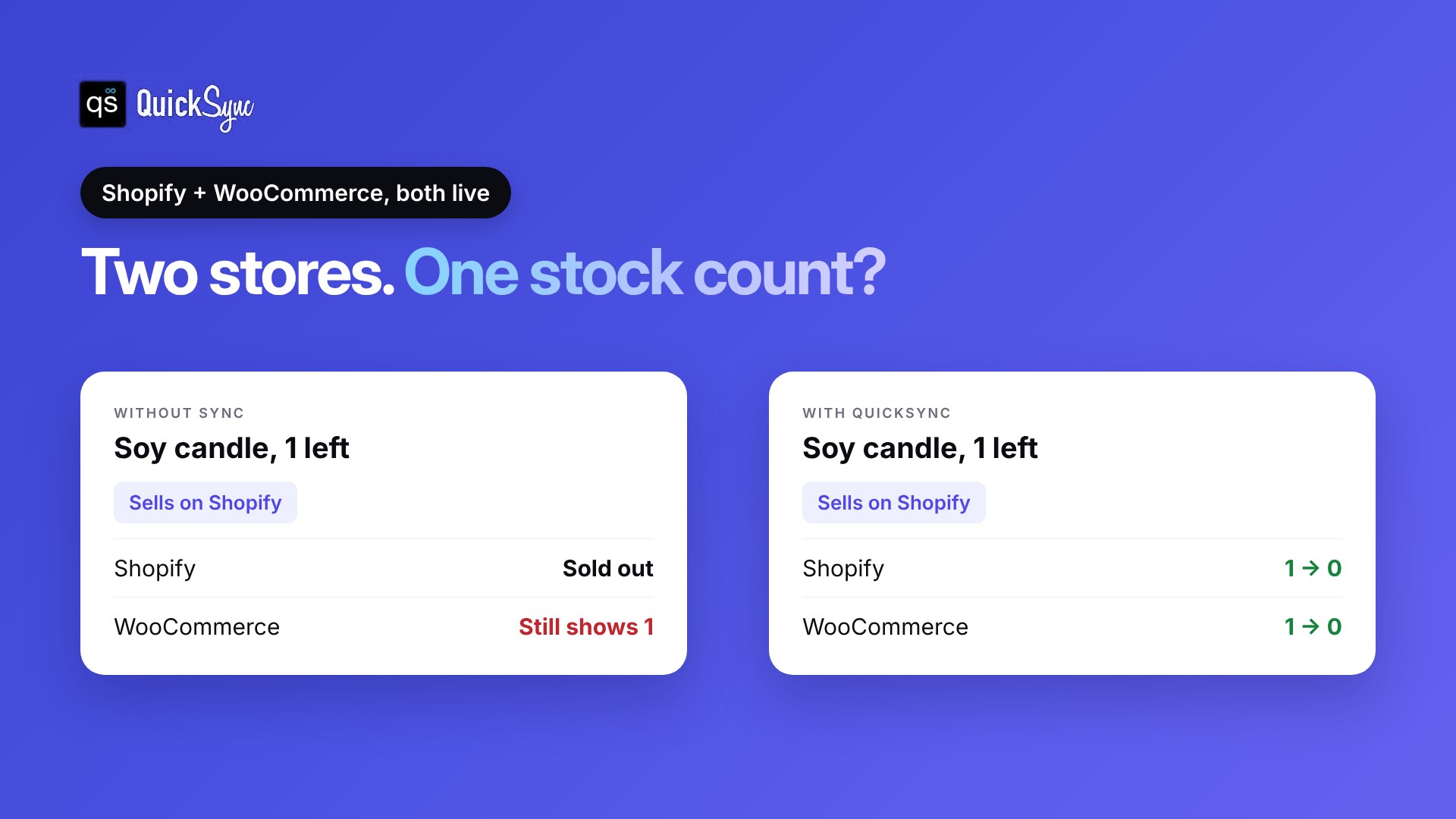
QuickSync connects Shopify to WooCommerce, Wix, Squarespace, Square, Etsy and more, and keeps stock, listings, prices and orders in step. According to the Shopify integration page:
- Stock syncs both ways. Sell on Shopify and your other store updates. Sell on the other store and Shopify follows.
- Listings: on the Pro plan, QuickSync can create and update listings on your other store from Shopify, with photos, sizes and colours. That makes it quicker to set up a second store or move your catalog.
- Prices are sent to your other store, with price rules on Ultra and above.
- Orders from your other store come into QuickSync and can be filled in Shopify, with tracking sent back.
QuickSync doesn’t connect to BigCommerce. Plans start at $19 a month for two shops, according to the pricing page. Every plan has a 14-day free trial with no card, and the team connects your first two shops with you on a free 30-minute call.
How to switch from Shopify without losing sales
If you’re moving off Shopify completely, a few steps keep the move smooth:
- Match your SKUs first. Give every product the same SKU on both platforms, so orders and stock line up. Our guide on what a SKU is explains how.
- Export your products and customers. Shopify lets you export them as CSV files, and most platforms can import them. Check that photos, variants and SKUs came across correctly.
- Run both stores for a few weeks. Keep Shopify live while you test checkout, shipping and emails on the new platform.
- Keep stock in sync while both are live, so a sale on either one lowers the count on the other.
- Redirect your old links to the matching pages on your new site, so search traffic and old customers still find you.
- Avoid your busiest weeks. Don’t switch during BFCM or the Christmas rush. January and February are usually quieter, so plan the move for then.
Pick the platform that fits how you sell
There’s no single best Shopify alternative. WooCommerce gives you control, BigCommerce gives you features, Wix and Squarespace keep things simple, Square Online joins your shop and website, and Etsy brings buyers without a site. Compare the full cost, not just the plan price, and if you run more than one store, keep them on the same stock count. For a closer look at two of the options, see our Shopify vs Squarespace and Shopify vs Square comparisons.