eBay takes 13.6% of most sales, plus 40 cents per order. That’s enough to make a lot of sellers look around.
The good news is there are plenty of sites like eBay, and some of these eBay alternatives charge a lot less. The catch is that each one suits a different kind of seller. A marketplace that’s great for vintage jackets can be a dead end for phone cases.
This guide compares the best eBay alternatives in 2026: what each one charges, who buys there, and what it’s best for. We checked every fee against the platform’s own pages on 30 October 2026. At the end, you’ll see why most sellers do better adding a second channel than leaving eBay altogether.
What is the best alternative to eBay?
The best alternative to eBay depends on what you sell. Amazon suits new, branded products. Etsy suits handmade and vintage. Poshmark and Depop suit clothing resale; Whatnot suits collectibles, and Facebook Marketplace suits local and bulky items. TikTok Shop has some of the lowest fees and suits products that sell well on video.
There’s no single winner because buyers go to different places for different things. Someone looking for a handmade ring opens Etsy. Someone looking for a phone charger opens Amazon. Someone selling a sofa wants a buyer within driving distance, not across the country.
So don’t ask which site is better than eBay. Ask where the buyers for your products already shop. The table below gives you a quick answer.
eBay alternatives at a glance
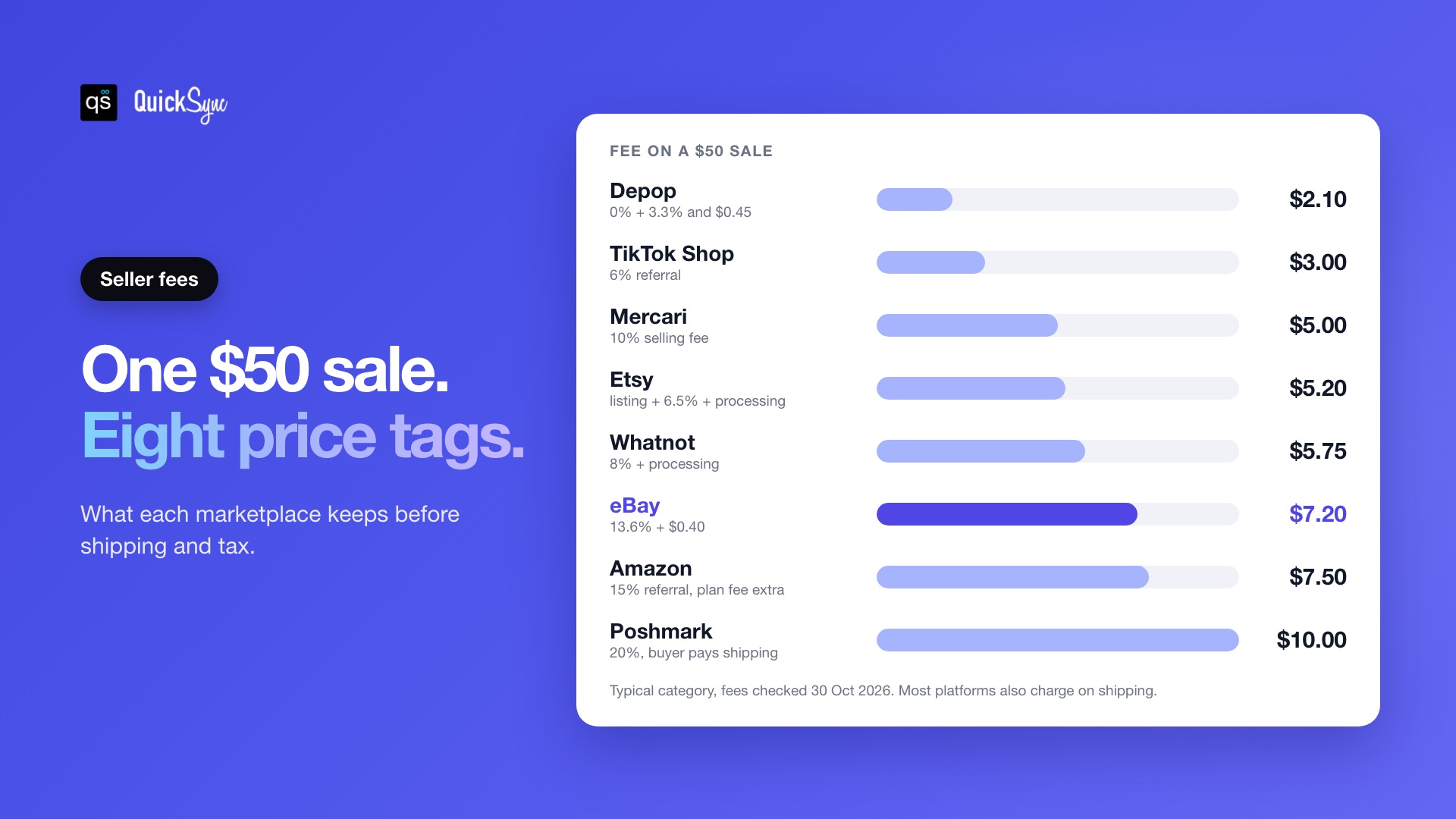
Here’s how the main sites like eBay compare. Fees below are for a $50 item in a typical category, without shipping or sales tax. Most platforms also charge on shipping, and some charge on tax, so your real fee will be a little higher.
| Platform | Best for | Main seller fees | Fee on a $50 sale | Syncs with eBay in QuickSync |
|---|---|---|---|---|
| eBay | Used goods, collectibles, parts | 13.6% + $0.40 per order | $7.20 | n/a |
| Amazon | New, branded products | 15% referral in many categories, plus $39.99/mo or $0.99/item | $7.50 (at 15%) | Yes |
| Etsy | Handmade, vintage, craft supplies | $0.20 listing + 6.5% + 3% and $0.25 processing | $5.20 | Yes |
| TikTok Shop | Trending products sold on video | 6% referral (most categories) | $3.00 | Yes |
| Your own store (Shopify) | Repeat buyers, your own brand | $29–$39/mo + 2.9% and 30¢ per card payment | $1.75 + plan | Yes |
| Facebook Marketplace | Local, bulky items | Free locally, 10% on shipped orders | $0 local, $5.00 shipped | No |
| Mercari | Everyday resale | 10% | $5.00 | No |
| Poshmark | Clothing and shoes | 20% ($2.95 under $15), buyer pays shipping | $10.00 | No |
| Depop | Vintage and streetwear | 0% selling fee + 3.3% and $0.45 processing | $2.10 | No |
| Whatnot | Collectibles, sold live | 8% + 2.9% and $0.30 processing | $5.75 | No |
| Walmart Marketplace | Established brands with a catalog | 8%–15% referral in most categories | $7.50 (at 15%) | No |
The 10 best eBay alternatives for sellers
Not every eBay alternative suits every seller, so we’ve grouped each one by what it sells best.
1. Amazon
Best for: new, branded products with steady demand.
Amazon has more shoppers than any other US marketplace, and they come ready to buy. If you sell new products that people search for by name, it’s the biggest step up from eBay.
Fees: The Individual plan costs $0.99 per item sold. The Professional plan costs $39.99 a month with no per-item fee. It pays off once you sell more than about 40 items a month. Amazon also takes a referral fee on each sale. It’s 15% in many categories, like home, toys, and sports, 8% for consumer electronics, and 17% for clothing over $20 (Amazon seller pricing). Fulfillment by Amazon (FBA) costs extra.
Watch out for: Amazon is strict. Some categories need approval, used goods have tight condition rules, and you compete with Amazon itself on price. Our guide to eBay vs Amazon goes deeper.
2. Etsy
Best for: handmade items, vintage (20 years or older), and craft supplies.
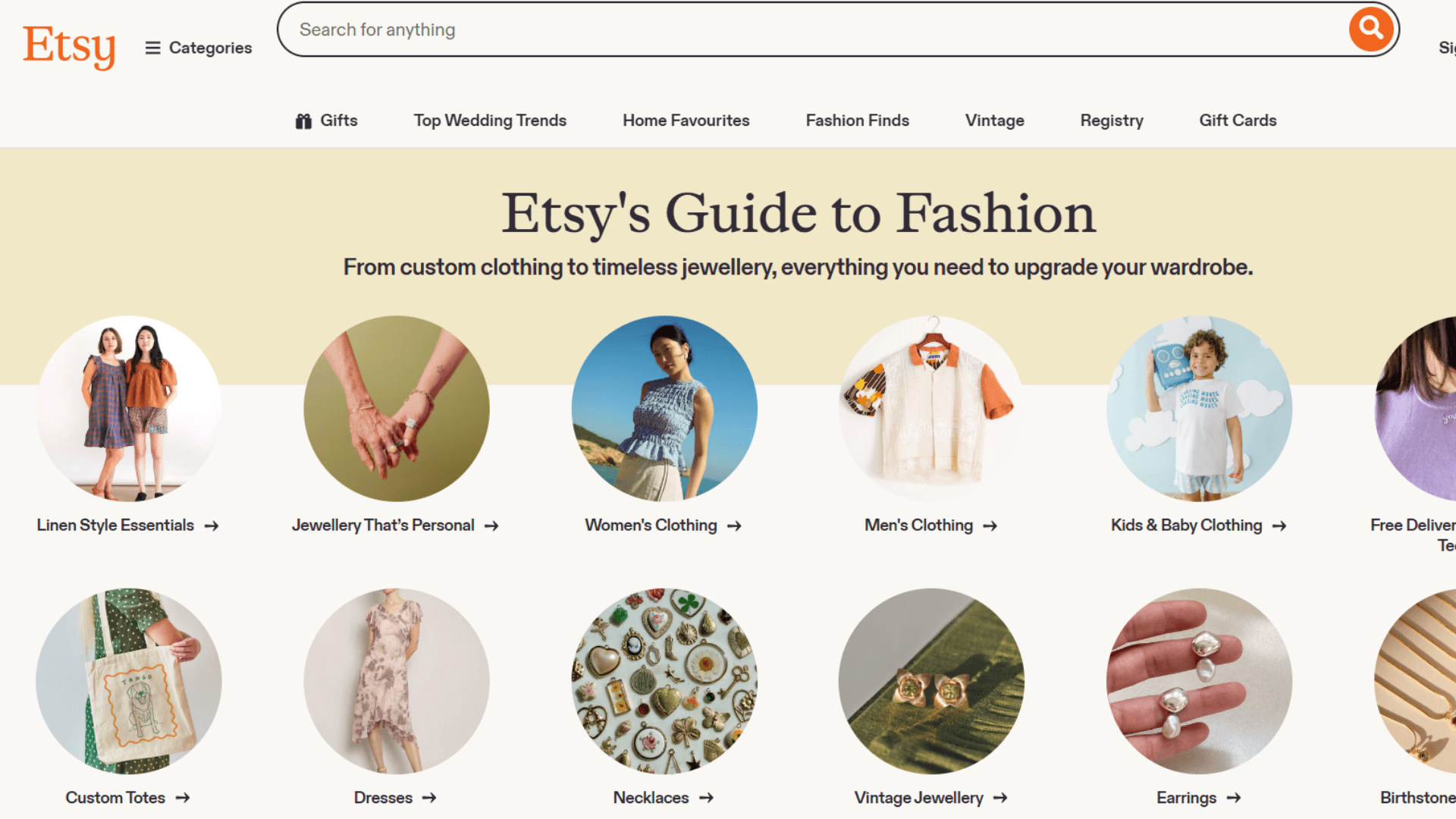
Etsy buyers come looking for something unique. If your products are handmade or vintage, they’ll get more attention here than on eBay, where they sit next to mass-produced goods.
Fees: It costs $0.20 to list an item for four months. When it sells, Etsy takes 6.5% of the item price and shipping, plus 3% and $0.25 for payment processing in the US (Etsy fees). Etsy can also charge an Offsite Ads fee of 12% to 15% when a sale comes from one of its ads. Once your shop has made $10,000 in a year, those ads are mandatory. The full breakdown is in our Etsy fees guide.
Watch out for: Etsy only allows handmade, vintage, and craft supplies. If you resell new mass-produced goods, it isn’t for you.
3. TikTok Shop
Best for: trending, giftable, or visual products that sell well on video.
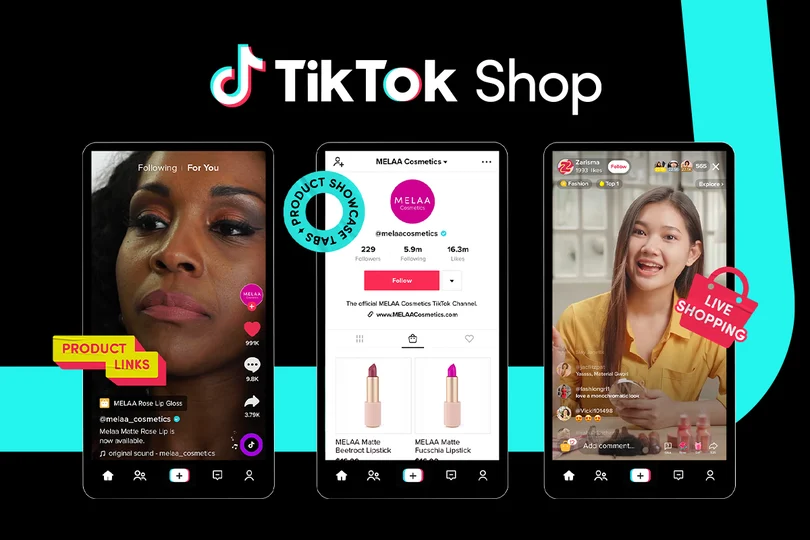
TikTok Shop puts products in front of buyers while they scroll. Nobody has to search for you. If your product looks good in a 20-second video, it can sell in volumes eBay rarely sees.
Fees: TikTok’s published rate table lists a 6% referral fee for most US categories, and there’s no listing or monthly fee. Some sellers report a rise to 8% since August 2026, so check the rate in your Seller Center before you price. Creators who promote your product usually take a 10% to 20% commission on top. See our TikTok Shop fees guide for the details.
Watch out for: Sales depend on content. Without videos or creators, a TikTok Shop listing gets very little traffic.
4. Your own online store

Best for: sellers who want repeat buyers and full control.
Your own store, built on Shopify, WooCommerce, Squarespace or Wix, is the only channel where you own the customer. You set the rules, keep the email list, and don’t pay a marketplace commission.
Fees: Shopify’s Basic plan costs $39 a month, or $29 a month billed yearly, plus 2.9% and 30¢ per online card payment (Shopify pricing). Our Shopify fees guide covers every plan.
Watch out for: No marketplace sends you buyers. You have to bring your own traffic through search, social media, or ads. That’s why most sellers run a store alongside a marketplace rather than instead of one.
5. Facebook Marketplace
Best for: furniture, appliances, and anything too big or bulky to ship.
Facebook Marketplace is where people look for things nearby. For a sofa or a treadmill, it beats eBay easily, because the buyer drives over and nothing needs packing.
Fees: Local sales paid in person are free. Shipped orders through Facebook checkout cost 10% of the order, with a $0.80 minimum (Meta commerce terms).
Watch out for: You handle the meetups, the no-shows, and the haggling yourself. It’s great for one-off items, harder for a business with steady stock.
6. Mercari

Best for: everyday items you want to list quickly.
Mercari is one of the simplest sites, like eBay. You snap a few photos, set a price, and ship with a prepaid label.
Fees: Mercari takes 10% of the item price and any shipping the buyer pays. There’s no separate payment processing fee for sellers (Mercari fees). Buyers pay a separate protection fee.
Watch out for: Mercari’s audience is smaller than eBay’s, so rare or high-value items can take longer to sell.
7. Poshmark
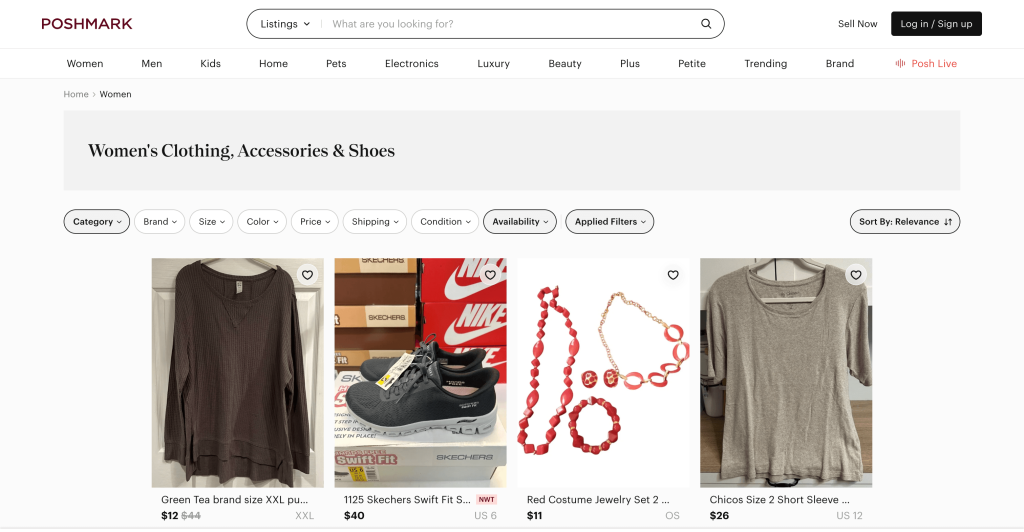
Best for: mid-priced clothing, shoes, and accessories.
Poshmark is built around fashion. Buyers follow sellers, share listings, and make offers, which suits clothing resellers who list a lot of items.
Fees: $2.95 on sales under $15, and 20% on sales of $15 or more (Poshmark fees). That covers payment processing. The buyer pays for shipping, and Poshmark emails you a prepaid label.
Watch out for: At 20%, Poshmark is one of the most expensive options for higher-priced items.
8. Depop
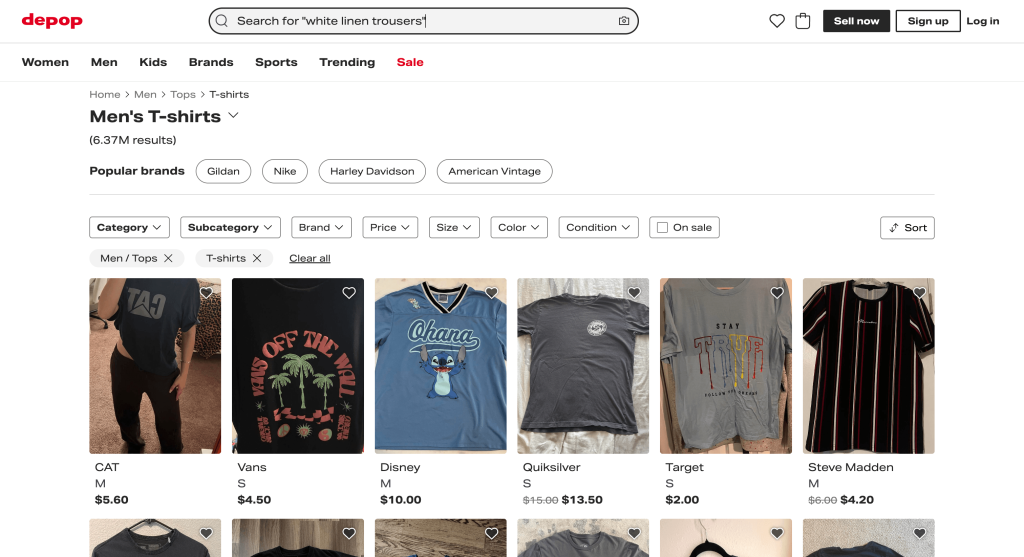
Best for: vintage, streetwear, and Gen Z fashion.
Depop’s buyers are young and style-led. If you sell secondhand fashion with a look to it, it’s often a better fit than eBay.
Fees: No selling fee for US sellers, just payment processing of 3.3% plus $0.45 on the total, including shipping (Depop seller fees). Boosted listings cost extra if you choose them.
Watch out for: Depop is almost entirely fashion. Outside that, there’s little demand.
9. Whatnot
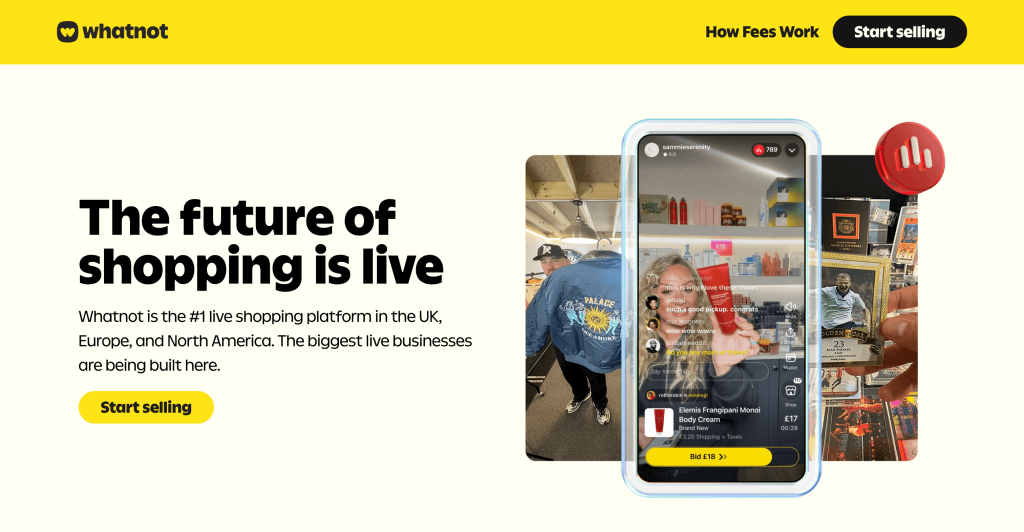
Best for: trading cards, comics, toys, sneakers, and other collectibles.
Whatnot is a live-selling app. Sellers run video auctions, and buyers bid in real time. For collectibles, it’s the closest thing to eBay’s auction buzz, with a crowd that’s actually watching.
Fees: Whatnot takes 8% of the item price, and less for high-volume sellers. Payment processing adds 2.9% and $0.30 on the order total (Whatnot fees).
Watch out for: You need to go live and keep a show running. It rewards sellers who enjoy being on camera.
10. Walmart Marketplace
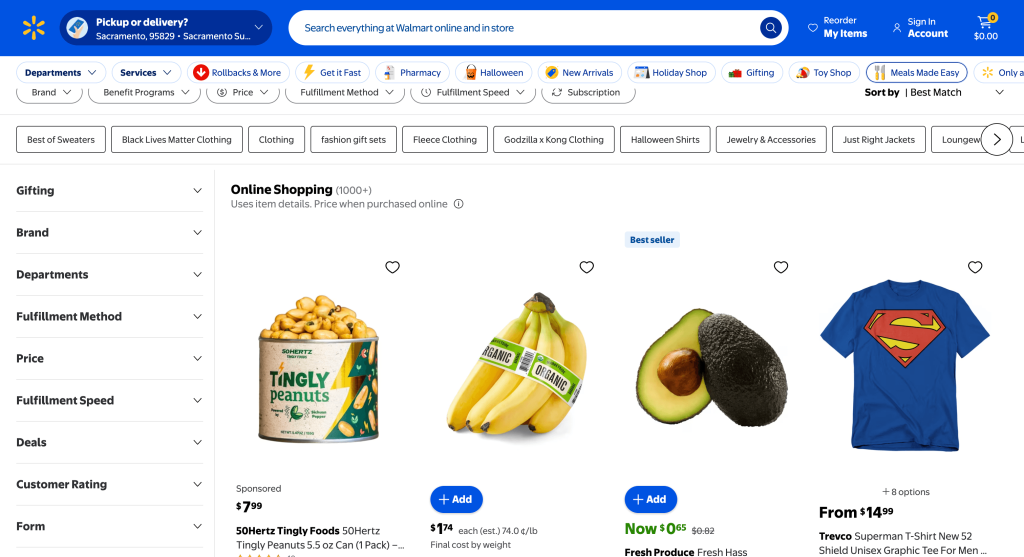
Best for: established sellers of new products with a solid catalog.
Walmart Marketplace reaches a huge US audience with far fewer sellers than Amazon. You have to apply and be approved, and Walmart checks your business details and selling history first.
Fees: No monthly or setup fee. Walmart takes a referral fee on each sale, mostly 8% to 15% depending on category (Walmart Marketplace pricing).
Watch out for: It isn’t for used goods or new sellers. Expect an approval process before you can list.
Also worth knowing
- Bonanza charges an 11% fee on the sale plus $0.25, and suits sellers moving niche stock (Bonanza pricing).
- Craigslist is free to post on in most for-sale categories. Like Facebook Marketplace, it’s best for local sales.
- OfferUp is now local pickup only. It stopped shipping orders in October 2025, so it’s a Facebook Marketplace alternative rather than an eBay one.
How to choose the right eBay alternative
Match the platform to what you sell, then to how much work you want to put in.
- New, branded products: Amazon first, Walmart once you have a track record.
- Handmade or vintage: Etsy.
- Clothing resale: Poshmark for mid-priced brands, Depop for vintage and streetwear.
- Collectibles: Whatnot if you like selling live, or keep eBay for auctions.
- Trending or giftable products: TikTok Shop, especially if you can make videos.
- Big, bulky items: Facebook Marketplace.
- A brand you want to grow: your own store, alongside at least one marketplace.
If two options fit, start with the one that has the lowest fee on your average order. Then give it 60 to 90 days before you judge it. New accounts take time to build reviews and search ranking.
Why are sellers leaving eBay?
Most sellers who look for an eBay alternative give three reasons: fees, slow sales, and account risk. eBay’s fee for most categories is 13.6% of the total the buyer pays, including shipping and sales tax, plus 40 cents per order. On a $50 item with $8 shipping and $4.06 sales tax, that’s $8.84.
Slow sales are the second reason. eBay’s buyers lean toward used goods, collectibles, and parts. If you sell new fashion, handmade gifts, or trending products, your buyers may simply be shopping somewhere else.
The third is risk. If your whole business runs through one account, one policy change or one suspension stops your income overnight.
None of this makes eBay a bad place to sell. It’s still one of the biggest marketplaces in the world. It just works best as one channel, not the only one.
Should you leave eBay or add a second channel?
For most sellers, adding a second channel beats leaving eBay. You keep the buyers, reviews, and sales history you’ve built, and you reach new buyers on top. Leaving means starting from zero on a new platform while giving up the sales eBay already brings in.
The catch is stock. The moment the same item is listed in two places, it can sell in both. Sell your last unit on eBay, forget to update Etsy, and a second buyer pays for something you don’t have. You refund, apologize, and take a cancellation on your account.
Sellers usually handle this in one of three ways:
- Update stock by hand. Fine for a few sales a week. It breaks on the first busy weekend.
- Split your stock. Put five units on eBay and five on Etsy. Nothing oversells, but one channel sells out while the other still has stock.
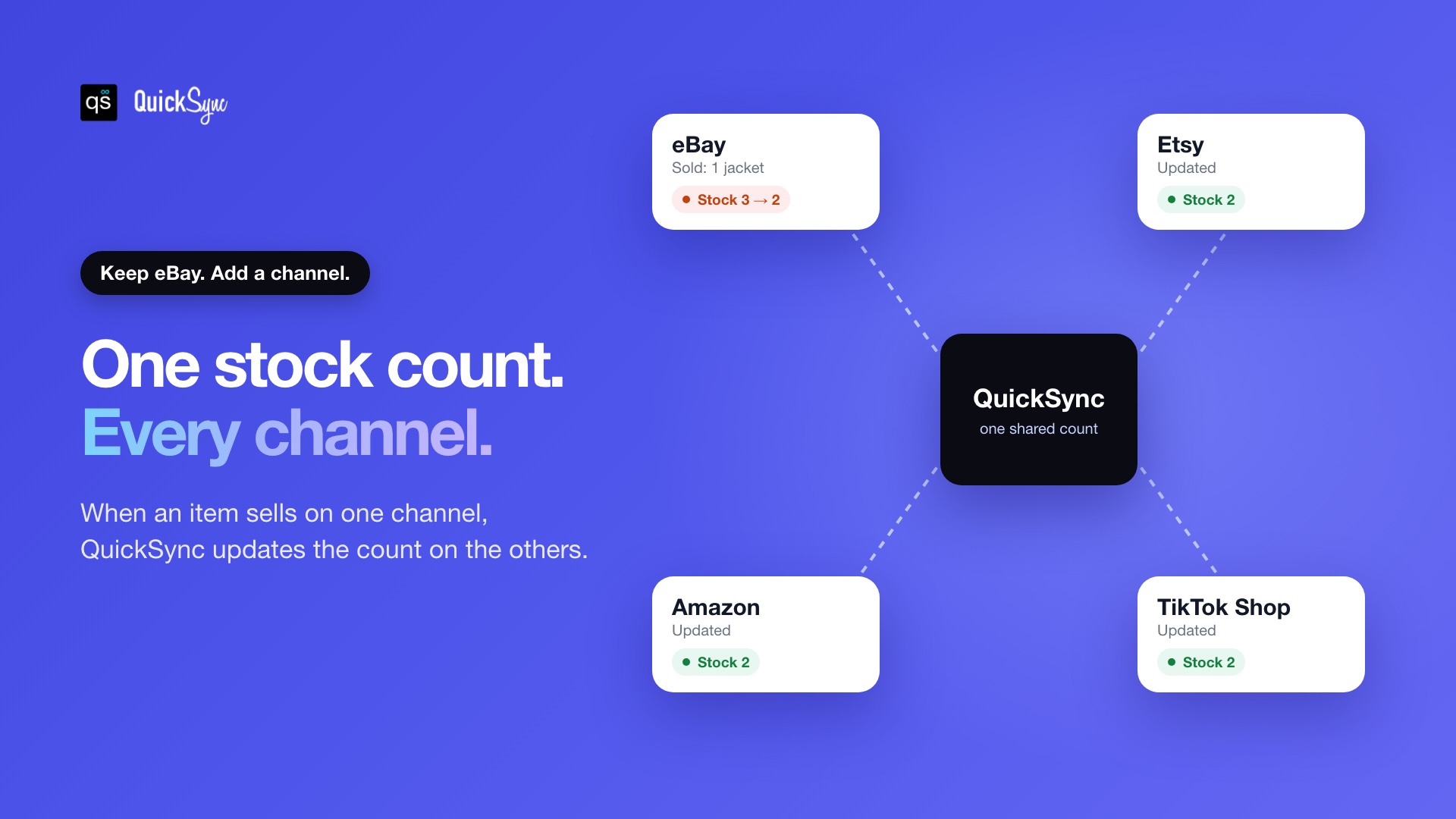
- Sync your stock. One count, shared by every channel, updated automatically when something sells.
Only the third holds up as you grow. Our guide on how to prevent overselling explains why in more detail.
How to sell on eBay and another marketplace without overselling
QuickSync is an inventory sync tool. It connects eBay to Amazon, Etsy, TikTok Shop, Shopify, WooCommerce, Squarespace, Wix, and POS systems like Square and Clover. Here’s how to set it up.
- Pick your second channel. Use the table above. If you’re unsure, choose the one whose buyers already shop for what you sell.
- Connect eBay and the new shop. QuickSync walks you through it in four steps. Every trial includes a free 30-minute session where the team connects your first two shops with you.
- Check your quantities first. Stock starts updating as soon as syncing begins, so make sure the counts in your main shop are right.
- Choose what to sync. On every plan, stock syncs both ways. On the Pro plan, QuickSync can also create listings on the new channel from your existing products and bring your orders into one place.
- Sell everywhere. When an item sells on one channel, QuickSync updates the count on the others, usually within a couple of minutes.
If you’re adding Etsy, our step-by-step guide to connecting eBay to Etsy walks through it with screenshots.
Don’t replace eBay. Add to it.
Every eBay alternative on this list is good at something. Amazon reaches the most buyers, and Etsy owns handmade. TikTok Shop combines low fees with video reach, and Whatnot brings collectors to a live audience.
But the fastest-growing sellers rarely pick just one. They keep eBay running and add the platform that fits their products, so the same stock reaches more buyers.
QuickSync makes that safe. It keeps one stock count across eBay and every other channel you connect, so you never sell the same item twice. Start 14-day trial: no card, and the team will connect your first two shops with you on a free 30-minute call. Plans start at $19 a month for two shops.
One more marketplace means more buyers. Make sure it doesn’t mean more cancelled orders.