An eBay Store subscription costs $4.95 to $2,999.95 a month, depending on the level and whether you pay yearly or monthly. In return, you get more free listings, a lower final value fee on most sales, and a branded storefront. The real question isn’t what each level includes. It’s whether the savings beat the subscription for the way you sell.
This guide lists every level with its current price, shows how much each one lowers your fees, and works out when a Store pays for itself, using the rates on eBay’s own fee pages as of November 2026.
Short answer: Basic ($21.95 a month on a yearly plan) is where the savings start. It pays for itself if you create or renew about 313 fixed-price listings a month, or sell about $2,440 a month in most categories ($517 in phones and electronics). Starter ($4.95) is a storefront, not a way to save: it keeps the standard fee rate. Start on a monthly plan until your volume is steady, because ending a yearly plan early costs a fee.
eBay Store Subscription Levels and Prices
There are five levels. You choose monthly or yearly renewal when you subscribe, and eBay bills the fee monthly either way. Yearly is cheaper per month but harder to leave.
| Store level | Yearly plan (per month) | Monthly plan | Free fixed-price listings a month | Each extra listing |
|---|---|---|---|---|
| No Store | $0 | $0 | 250 (shared with auctions) | $0.35 |
| Starter | $4.95 | $7.95 | 250 (shared with auctions) | $0.30 |
| Basic | $21.95 | $27.95 | 1,000, plus 250 auctions in select categories | $0.25 |
| Premium | $59.95 | $74.95 | 10,000, plus 500 auctions | $0.10 |
| Anchor | $299.95 | $349.95 | 25,000, plus 1,000 auctions | $0.05 |
| Enterprise | $2,999.95 | Not available | 100,000, plus 2,500 auctions | $0.05 |
One detail changes the math for many sellers: Good ’Til Cancelled listings count toward your free allowance every time they renew, and they renew once a calendar month. So a shop with 400 fixed-price listings uses 400 free listings every month, even if it adds nothing new.
Beyond fees, a Store gives you a storefront with your own name and homepage, promotion tools for sales and coupons, and eBay’s sales insights, though eBay notes some of these aren’t included with Starter. From Basic up, the extras grow with the level:
| Extra | Starter | Basic | Premium | Anchor | Enterprise |
|---|---|---|---|---|---|
| Lower final value fees | No | Yes | Yes | Yes | Yes |
| eBay-branded shipping supplies per quarter | None | $25 | $50 | $150 | $150 |
| Free Terapeak Sourcing Insights | No | Yes | Yes | Yes | Yes |
| Dedicated phone and email support | No | No | No | Yes | Yes |
The shipping supplies only help if you’d use eBay-branded boxes and mailers anyway, so judge a level on fees first and treat the extras as a bonus.
How an eBay Store Lowers Your Final Value Fees
The final value fee is the percentage eBay takes when an item sells, charged on the total amount the buyer pays, plus a per-order fee of $0.30 (orders of $10 or less) or $0.40. A Basic, Premium, Anchor or Enterprise Store pays a lower percentage in most categories. The per-order fee stays the same.
| Category | No Store or Starter | Basic and above |
|---|---|---|
| Most categories, including Home & Garden, Crafts, Collectibles, Antiques and most Clothing | 13.6% | 12.7% |
| Cameras, cell phones, most consumer electronics and most computer and networking items (not accessories) | 13.6% | 9.35% |
| Laptops, desktops, tablets, CPUs, RAM, monitors and printers | 13.6% | 7.35% |
| Coins & Paper Money (except bullion) | 13.25% | 9% |
| Jewelry (sales up to $5,000) | 15% | 13% |
| eBay Motors Parts & Accessories | 13.6% | 11.5% |
| Books & Magazines | 15.3% | 15.3% |
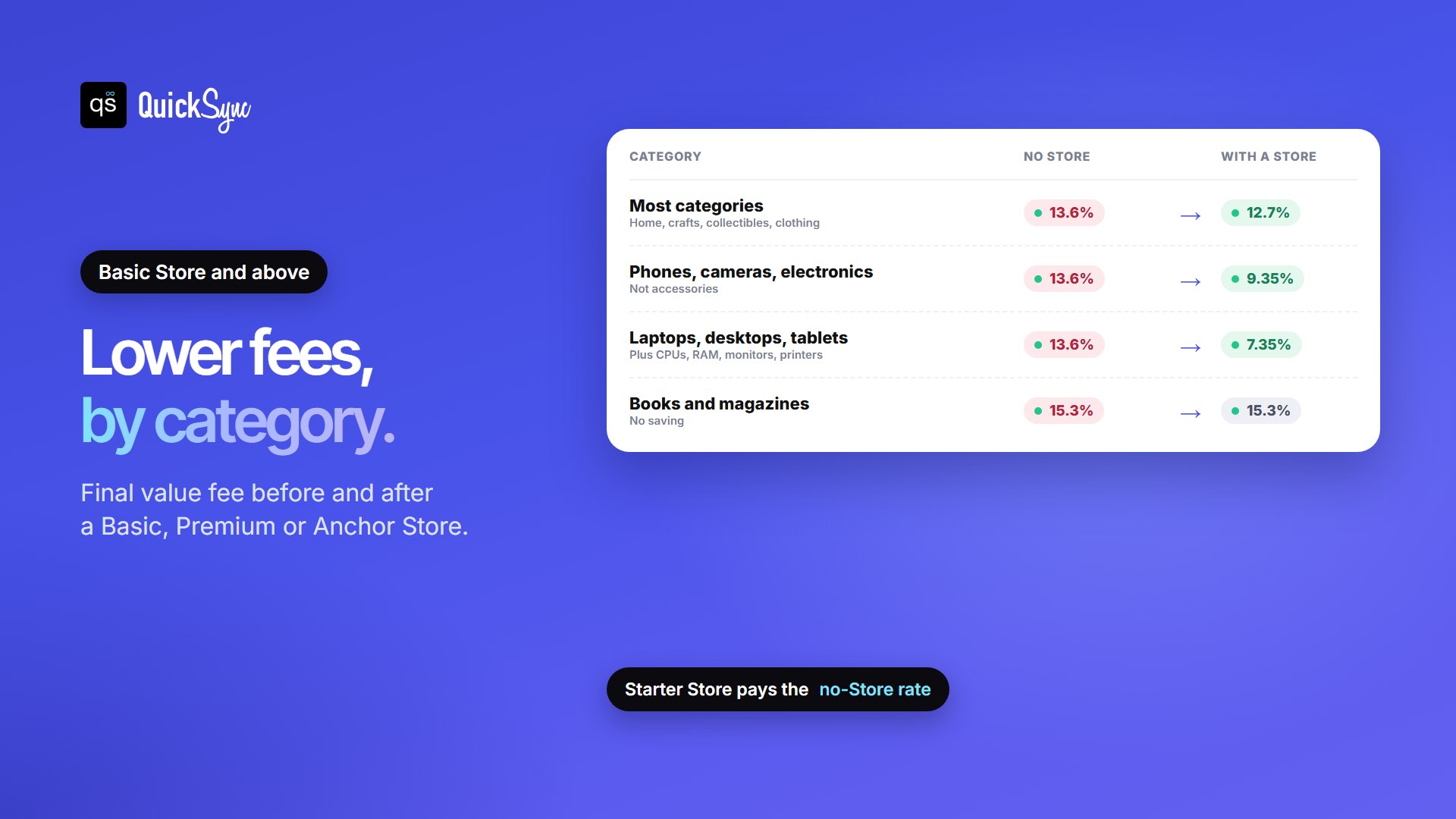
Two things to know before you subscribe. First, Starter gets no discount: its fee table is the same as selling without a Store. Second, eBay’s Store subscription terms apply the lower rates only to listings “created, relisted or renewed on or after your Subscription Start Date.” Listings you already have move to Store rates when they next renew, which for Good ’Til Cancelled listings is within a month.
When Does an eBay Store Pay for Itself?
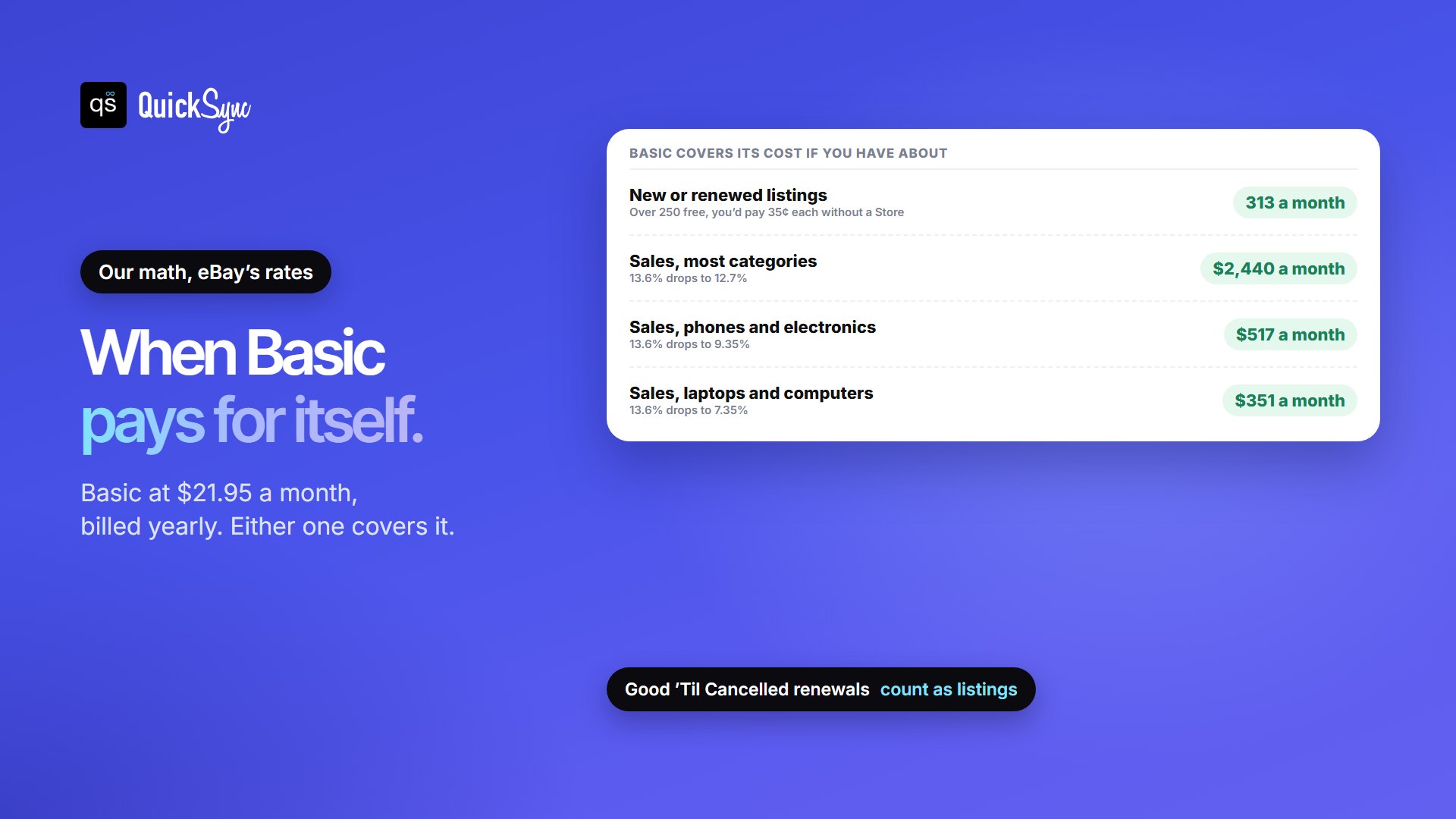
A Store pays for itself in two ways: fewer insertion fees and a lower final value fee. Either one alone can cover Basic. Here’s where the lines fall, using eBay’s published rates:
| Basic covers its cost if you have about | Yearly plan ($21.95) | Monthly plan ($27.95) |
|---|---|---|
| New or renewed fixed-price listings a month | 313 | 330 |
| Monthly sales, most categories (13.6% to 12.7%) | $2,440 | $3,106 |
| Monthly sales, phones and electronics (13.6% to 9.35%) | $517 | $658 |
| Monthly sales, laptops and computers (13.6% to 7.35%) | $351 | $447 |
Here are two example shops, comparing no Store with a yearly Basic Store. The per-order fee is the same either way, so it’s left out:
| Shop | No Store | Basic Store | Difference |
|---|---|---|---|
| Home decor: 400 Good ’Til Cancelled listings, $2,000 a month in sales | $52.50 insertion + $272 final value fees = $324.50 | $21.95 subscription + $0 insertion + $254 final value fees = $275.95 | Saves $48.55 a month |
| Used phones: 500 listings, $3,000 a month in sales | $87.50 insertion + $408 final value fees = $495.50 | $21.95 subscription + $0 insertion + $280.50 final value fees = $302.45 | Saves $193.05 a month |
Starter barely moves those numbers. The home decor shop would pay $4.95 for the Store and 30¢ instead of 35¢ on 150 extra listings, saving $2.55 a month. Starter makes sense when you want the storefront and branding, not when you want lower fees. For the rest of the fee picture, see our guide to eBay seller fees.
Which eBay Store Level Should You Choose?
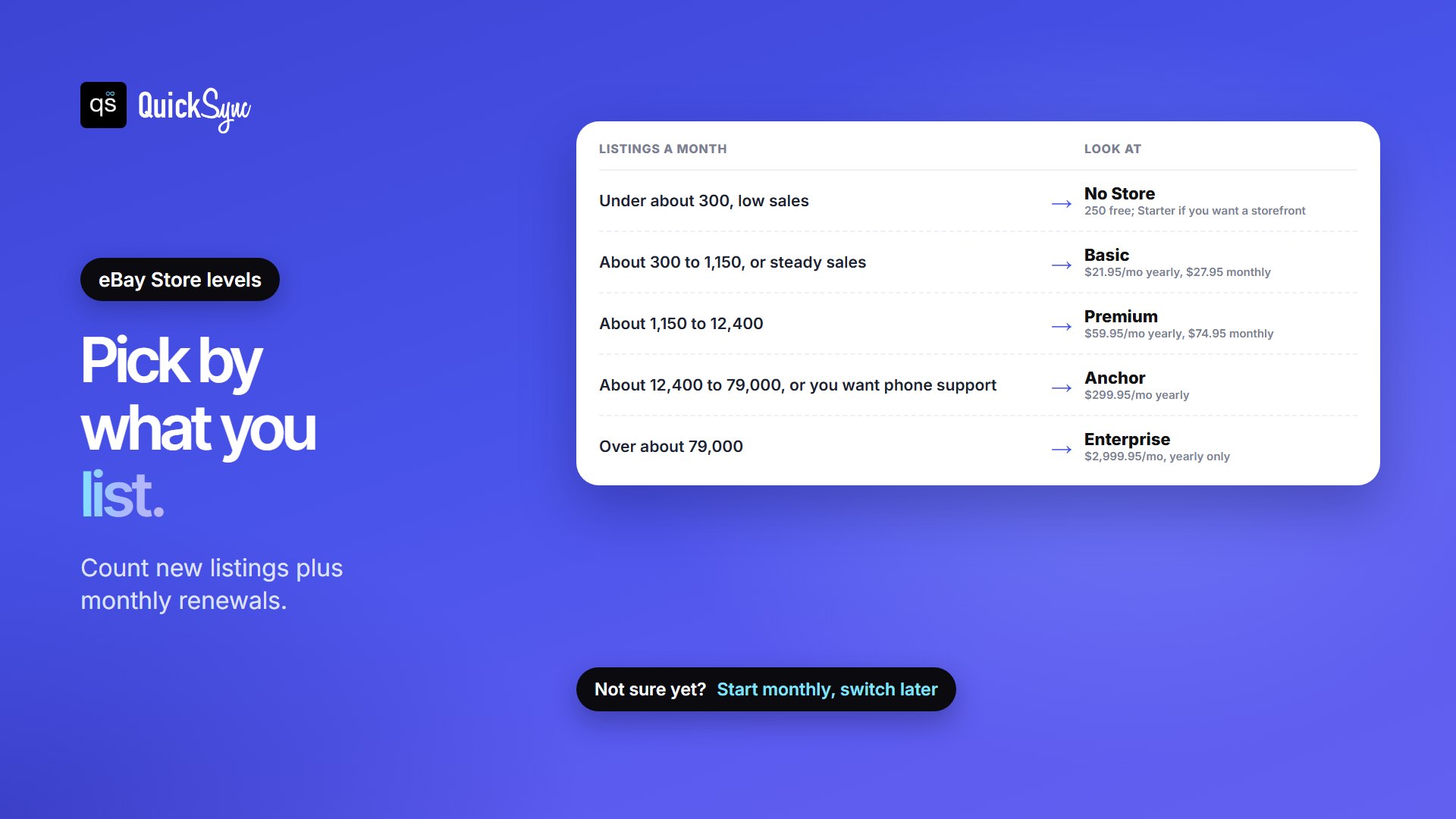
Count the fixed-price listings you create or renew in a month, then check your monthly sales against the table above. Comparing the yearly plans on insertion fees alone:
- No Store: under about 300 listings a month and modest sales. Add Starter only if you want the storefront.
- Basic: about 300 to 1,150 listings, or enough sales to clear the break-even above.
- Premium: about 1,150 to 12,400 listings. Premium costs $38 more than Basic, and past 1,000 listings Basic charges 25¢ each, so Premium wins at about 1,152.
- Anchor: about 12,400 to 79,000 listings, or if you want dedicated phone and email support.
- Enterprise: above about 79,000 listings a month. Yearly only.
eBay’s Seller Center runs the same check with its own example: an antiques seller listing about 1,100 items a month pays $25 in extra insertion fees on Basic, and Premium would cost $13 more, so Basic stays the better deal. Final value fees are the same on Basic, Premium, Anchor and Enterprise, so above Basic you’re paying for listings and support, not a lower rate.
Monthly or Yearly? Watch the Early Termination Fee
A yearly plan saves $3 a month on Starter, $6 on Basic and $15 on Premium. The catch: if you cancel or downgrade a yearly plan before its last calendar month, eBay charges an early termination fee of the months left multiplied by the monthly fee, divided by 3. Monthly plans have no termination fee.
| Months left on a yearly plan | Starter | Basic | Premium | Anchor |
|---|---|---|---|---|
| 1 | $1.65 | $7.32 | $19.98 | $99.98 |
| 3 | $4.95 | $21.95 | $59.95 | $299.95 |
| 6 | $9.90 | $43.90 | $119.90 | $599.90 |
| 12 | $19.80 | $87.80 | $239.80 | $1,199.80 |
Upgrading is easier: moving to a higher level, or from monthly to yearly at the same level, is prorated, and eBay credits the unused part of your current fee. So the low-risk path is to start monthly, watch two or three months of listings and sales, then switch to yearly once you know the level fits. Your first charge is also prorated, from the day you sign up to the first of the next month.
How to Subscribe, Change or Cancel Your eBay Store
You’ll need an eBay seller account with a linked checking account for payouts. Our guide to setting up an eBay Store covers design and categories once you’re subscribed.
- Subscribe: go to Choose a Store Subscription, pick a level, select Select and review, choose yearly or monthly, enter your Store name and select Submit order.
- Check or change your level: in My eBay, go to Account, then Subscriptions. Your active Store subscription is listed there; select Change level to move up or down. Your live listings stay live.
- Cancel: on the same Subscriptions page, find your Store and select Cancel subscription. Auction listings run until they end, active fixed-price listings may move to standard fees, and eBay keeps your Store settings for 30 days in case you reopen.
Going away rather than quitting? Put the Store on vacation instead of Canceling. Our guide to eBay vacation mode explains the settings.
What an eBay Store Doesn’t Do
- It doesn’t raise your selling limits. eBay says selling limits aren’t affected by opening a Store. See eBay selling limits for how to raise them.
- It isn’t your seller level. Store levels (Starter to Enterprise) are what you pay for. Seller levels (Top Rated, Above Standard, Below Standard) come from your performance, and a Store doesn’t change them.
- It doesn’t require a business account. eBay’s page on opening a Store asks for a seller account with a linked checking account. Our guide to eBay personal vs business accounts covers when to switch for other reasons.
- It doesn’t stop overselling. Sellers big enough for a Store often sell the same stock on their own site or other marketplaces. If an item sells elsewhere and you have to cancel the eBay order, eBay counts an out-of-stock cancellation as a transaction defect. Here’s how to cancel an eBay order as a seller when it happens.
That last point is where a sync tool earns its place. QuickSync connects eBay to Shopify, Etsy, Square, Clover, WooCommerce, TikTok Shop and more, matches products by SKU and keeps one stock count, from $19 a month for two shops with no cap on orders. If eBay’s monthly listing limit blocks a listing, QuickSync emails you, and you can choose to sync only a selected list of products.
FAQs
More for eBay sellers: eBay SEO, Terapeak, eBay business policies, and how QuickSync works with eBay.