One day your Etsy shop is making sales. The next morning, your account is suspended. You put hours into designing products, writing listings, and building your Etsy shop. Then you log in and see the message every seller fears: your Etsy account has been suspended.
Suddenly, your listings disappear. Orders stop coming in. Buyers can’t find your shop. For many sellers, this situation comes as a complete surprise.
Some accidentally break an Etsy policy. Others receive copyright complaints without realizing their designs violated someone’s intellectual property. Sometimes, unusual account activity or verification issues can also trigger Etsy’s review process.
The good news is that most suspensions are avoidable.
If you understand how Etsy evaluates seller accounts and follow its policies consistently, you can significantly reduce the risk of losing your shop. Whether you’re selling handmade goods, vintage finds, craft supplies, digital downloads, or print-on-demand products, protecting your Etsy shop should be just as important as making sales.
This guide explains how to not get banned on Etsy. The most common reasons sellers receive warnings or suspensions, and the best practices successful shops follow to stay compliant.
Let’s start with an important question.
Why Does Etsy Suspend Seller Accounts?
Many sellers assume Etsy only suspends shops after serious violations. In reality, that’s not always the case. Etsy’s goal is simple: create a safe marketplace where buyers can shop with confidence. To do that, the platform monitors seller activity, reviews listings, investigates complaints, and checks whether shops continue following its policies.
A single mistake rarely leads to a permanent suspension. More often, Etsy notices patterns. For example, repeated late shipments, multiple customer complaints, inaccurate listings, or unresolved intellectual property reports can gradually increase the risk of enforcement.
Some reviews happen automatically through Etsy’s internal systems. Others begin after a buyer reports a listing or a brand owner submits a copyright complaint.
That’s why protecting your account isn’t about avoiding one mistake. It’s about running your shop consistently and responsibly every day. The table below highlights some of the most common reasons Etsy reviews or suspends seller accounts.
| Common reason | Risk level | Usually preventable? |
|---|---|---|
| Selling prohibited products | Very High | Yes |
| Copyright or trademark infringement | Very High | Yes |
| Misrepresenting handmade items | High | Yes |
| Identity verification problems | High | Yes |
| Payment verification issues | High | Yes |
| Too many customer complaints | High | Yes |
| Repeated late shipping | Medium | Yes |
| Suspicious account activity | High | Yes |
| Linked suspended accounts | Very High | Usually |
| Ignoring Etsy policy warnings | High | Yes |
Most of these issues are preventable. Running your shop honestly, keeping your information updated, and following Etsy’s policies can significantly reduce the risk of suspension.
12 Proven Ways to Avoid Getting Banned on Etsy App

Protecting your Etsy shop isn’t about finding one secret trick. It’s about following good selling practices every day. The best way to stay compliant is to build good habits before problems appear.
Here are some tips that will help you on how not to get banned on Etsy.
1. Learn Etsy’s Seller Policies Before You List Products
Many sellers don’t read Etsy’s policies until they receive a warning. By then, fixing the problem is often more difficult. Before you list products, spend time reviewing Etsy’s Seller Policy, Terms of Use, and marketplace guidelines.
These documents explain what you can sell, how listings should be written, and what Etsy expects from every seller. Policies also change from time to time. A product or practice that was acceptable a few years ago may no longer meet Etsy’s current requirements.
Instead of relying on advice from old YouTube videos or social media posts, regularly consult Etsy’s Seller Handbook for updates.
2. Sell Only Products That Etsy Allows
One of the quickest ways to get banned from Etsy is selling products that violate the platform’s policies. Many new sellers assume a product must be allowed because they’ve seen similar listings online.
That’s a risky assumption. Thousands of Etsy product listings remain live simply because Etsy hasn’t reviewed them yet. If another seller breaks the rules, that doesn’t make it safe for you to do the same.
Before publishing a listing, make sure it complies with the Etsy prohibited items policy 2026. In general, Etsy allows:
- Handmade products
- Vintage items that are at least 20 years old
- Craft supplies
- Original digital products
However, products such as counterfeit goods, illegal digital downloads, dangerous weapons, and certain regulated items are prohibited.
3. Respect Copyright and Trademark Laws
Creating a product yourself doesn’t automatically give you the right to use someone else’s intellectual property. This is where many sellers get into trouble.
For example, selling products featuring Disney characters, famous sports logos, movie quotes, or well-known brand names without permission can lead to copyright or trademark complaints.
When rights owners report a listing, Etsy often acts quickly. Depending on the situation, your listing may be removed, your shop may receive a warning, or your account could be suspended.
It doesn’t matter if other sellers are offering similar Etsy top selling products. They simply may not have been reported yet.
- The safest approach is to create original designs.
- Purchase commercial licences when needed
- Avoid using protected names or artwork unless you have permission.
4. Create Honest Listings That Match Your Products
Your Etsy product listings set buyer expectations. If those expectations don’t match what customers receive, complaints become much more likely.
- Write product titles that clearly describe your products.
- Use accurate photos taken from multiple angles. Explain sizes, colours, materials, processing times, and personalisation options without exaggerating.
- Avoid stuffing every word with keywords just to rank higher in Etsy search.
Instead, focus on helping buyers understand exactly what they’re purchasing. When someone completes a purchase, the product arriving at their doorstep should match the listing they saw online.
5. Ship Orders on Time and Keep Buyers Updated
Fast, reliable fulfilment plays an important role in your Etsy shop’s reputation. Buyers expect clear communication from the moment they place an order until it arrives. You need to do proper order management so that customers receive orders on time.
- Ship orders within your stated processing time whenever possible.
- Upload tracking details promptly and let customers know if unexpected delays occur.
- If a buyer needs more information, respond politely when they contact you.
- Even a short update shows that you’re actively managing the order.
Consistently meeting delivery expectations helps reduce disputes, improve customer satisfaction, and strengthen buyer confidence in your shop.
6. Keep Your Payment and Account Information Up to Date
Running a successful Etsy shop isn’t only about creating great products. Your account details also need regular attention. Outdated payment information, expired cards, or incorrect bank details can interrupt payouts and trigger account reviews.
In some cases, Etsy may temporarily limit your shop until the information is verified. Review your account details every few months and whenever something changes. Make sure your:
- Bank account details are correct.
- Billing information is current.
- Tax information is accurate.
- Business address matches your records.
- Contact email is active.
You should ensure your Etsy fees are always paid on time. Missed payments can affect your ability to sell and may delay future payouts.
7. Complete Identity Verification Promptly
Identity verification has become an important part of selling on Etsy. If Etsy asks you to verify your identity, don’t ignore the request. The platform may ask for documents such as:
- Government-issued ID
- Business registration documents
- Tax information
- Proof of address
These checks help prevent fraud and protect buyers across the marketplace. Delaying verification can slow down payouts or temporarily restrict your shop.
Before submitting any documents, double-check that the details match the information on your Etsy account. Even small differences in names or addresses can create unnecessary delays.
8. Avoid Suspicious Account Activity
Etsy continuously monitors accounts for unusual behaviour. That doesn’t mean normal sellers need to worry. However, certain activities can trigger additional reviews.
Examples include:
- Logging in from multiple countries within a short period.
- Frequently changing payment methods.
- Sharing your account with several people.
- Creating multiple linked accounts incorrectly.
- Repeated failed login attempts.
If you travel often, try using trusted devices whenever possible. Avoid sharing your login credentials with others. The goal isn’t to avoid Etsy’s security checks. It’s to avoid creating unnecessary signals that make your account appear unusual.
Before promoting your Etsy shop on social media platforms like Instagram and Pinterest, ensure your account activity appears consistent and secure to avoid triggering Etsy’s automated reviews.
9. Respond to Buyers Quickly and Professionally
Customer service plays a bigger role than many sellers realise. Etsy buyers often decide whether to leave a positive review based on how you handle questions, not just the product itself.
When customers contact you, reply politely and as soon as possible. Even if you don’t have an immediate solution, a simple update shows buyers you’re paying attention.
Good communication helps reduce:
- Order cancellations
- Negative reviews
- Customer complaints
- Etsy cases
It also builds trust, encouraging buyers to return for future purchases. Remember, every conversation is part of your shop’s reputation.
10. Ship Every Purchase on Time
Late shipping doesn’t always lead to suspension. However, repeated delays can damage your shop’s performance. When buyers complete a purchase, they expect realistic processing times and regular updates.
To keep orders running smoothly:
- Do proper inventory management and prepare stocks before busy seasons.
- Update processing times if demand increases.
- Upload tracking information whenever available.
- Notify buyers about unexpected delays.
If a delay is unavoidable, communicate early rather than waiting for the customer to ask. Honest communication often prevents frustration and helps maintain positive reviews.
11. Use Production Partners Correctly
Many sellers use production partners for products like apparel, mugs, posters, and other print-on-demand items. That’s completely acceptable on Etsy, provided you follow the platform’s rules.
You should always disclose your production partner in your listing. Buyers deserve to know how their products are made.
Trying to hide a production partner or presenting mass-produced products as handmade can violate Etsy’s policies. Transparency builds trust. It also reduces the risk of future account reviews.
12. Stay Updated With Etsy’s Policies
Etsy regularly updates its marketplace policies. A rule that applied last year may change as the platform evolves. Instead of relying on outdated blog posts or social media advice, regularly consult Etsy’s Seller Handbook and official announcements.
Pay special attention to updates involving:
- Intellectual property
- Digital products
- Seller verification
- Payment requirements
- Prohibited products
Staying informed helps you avoid accidental policy violations before they affect your shop.
How Etsy Detects Sellers Who Break Its Policies
Many sellers wonder why their shop was reviewed while similar listings remain active. The simple answer is that Etsy doesn’t rely on a single system.
Instead, it combines automated technology with manual reviews, customer reports, and verification checks to identify accounts that may be violating its policies. Here’s how Etsy detects policy violations.
Automated Listing Reviews
Every time you publish or update a listing, Etsy automatically reviews the information you’ve provided. This includes your product title, description, tags, images, pricing, and categories. The goal isn’t to penalize sellers but to identify listings that may violate marketplace policies or mislead buyers.
Buyer Reports and Customer Complaints
Etsy also relies on buyer feedback to maintain a trusted marketplace. If customers repeatedly contact Etsy because an item doesn’t match its description, arrives late, or never arrives, your shop may receive additional scrutiny. One complaint is rarely enough to cause serious issues, but repeated reports can indicate ongoing problems.
Copyright and Trademark Complaints
Using copyrighted artwork, logos, or trademarked names without permission is one of the fastest ways to put your Etsy shop at risk. Rights owners can submit formal complaints, and Etsy often removes listings while reviewing the claim. Repeated intellectual property violations may result in account warnings or suspension.
Identity and Payment Verification
Not every account review is related to your products. Etsy may request identity or payment verification to confirm that your shop belongs to a legitimate seller. If asked, provide the requested documents as soon as possible and make sure your account information matches your official records. Keep your payment methods active and ensure all Etsy fees are paid on time.
4 Warning Signs Your Etsy Account Could Be Suspended

Most Etsy suspensions don’t happen without warning. In many cases, sellers notice small signs that something isn’t right but choose to ignore them.
Recognising these warning signs early gives you the opportunity to fix problems before they become more serious. Here are some of the most common indicators.
You’re Receiving More Customer Complaints
An occasional complaint is part of running any online business. However, if buyers repeatedly report the same issue, Etsy may take a closer look at your shop. Common reasons include orders arriving late, products not matching their descriptions, or customers believing an item isn’t handmade.
Etsy Requests Identity Verification
Etsy may occasionally ask you to verify your identity or business details. These requests help protect buyers and ensure sellers are genuine. If you receive a verification request, submit the required documents and make sure the information matches your account. Delaying or ignoring these requests can lead to payment holds or temporary selling restrictions.
Your Listings Keep Getting Removed
Having one Etsy product listing removed doesn’t necessarily mean your account is at risk. However, repeated removals usually indicate that some of your products don’t comply with Etsy’s policies. Instead of uploading similar listings again, review the reason for the removal and update your products if necessary.
You’re Receiving Copyright or Trademark Notices
If you receive a copyright or trademark notice, take it seriously, even if you believe it’s a mistake. Etsy investigates intellectual property complaints carefully, and repeated violations can affect your shop’s standing. Review the complaint, remove or update the listing if required, and only sell products that you have the legal right to create or distribute.
What to Do Immediately If Etsy Suspends Your Shop
Getting your Etsy shop suspended can be stressful, but don’t rush into making changes or sending an emotional appeal on Etsy forums. Taking the right steps in the right order gives you the best chance of restoring your account.
Here’s what you should do.
Read Etsy’s Suspension Email Carefully
Your first step is to understand exactly why Etsy suspended your account. The suspension email usually explains what happened and what Etsy expects from you. Look for details such as:
- The reason for the suspension
- The policy that may have been violated
- Any actions Etsy wants you to take
- Whether you can submit an appeal
Understanding the issue first will help you avoid making unnecessary changes.
Fix the Issue Before Appealing
Before contacting Etsy, resolve any problems that caused the suspension. Showing that you’ve already corrected the issue demonstrates that you’re willing to follow Etsy’s policies. Depending on your situation, you may need to:
- Remove prohibited products
- Update inaccurate listings
- Complete identity verification
- Resolve payment issues
- Respond to open customer cases
Don’t submit an appeal until you’ve addressed the underlying problem.
Submit a Clear and Professional Appeal
If you believe the suspension was a mistake, write a professional appeal that focuses on facts instead of emotions. Your appeal should:
- Explain what happened
- Acknowledge any genuine mistakes
- Describe the changes you’ve made
- Include supporting documents if available
A respectful and well-organized appeal is much more effective than blaming Etsy or demanding an immediate response.
Learn From the Experience
Whether Etsy reinstates your shop or not, use the experience to improve your business. Many successful sellers adjust their processes after receiving a warning or suspension. Going forward, make it a habit to:
- Review Etsy’s policies regularly
- Keep listings accurate
- Respond to buyers quickly
- Monitor customer feedback
- Stay updated on policy changes
Building good selling habits today can help prevent similar issues in the future.
Can You Recover a Suspended Etsy Account? Here’s What to Expect
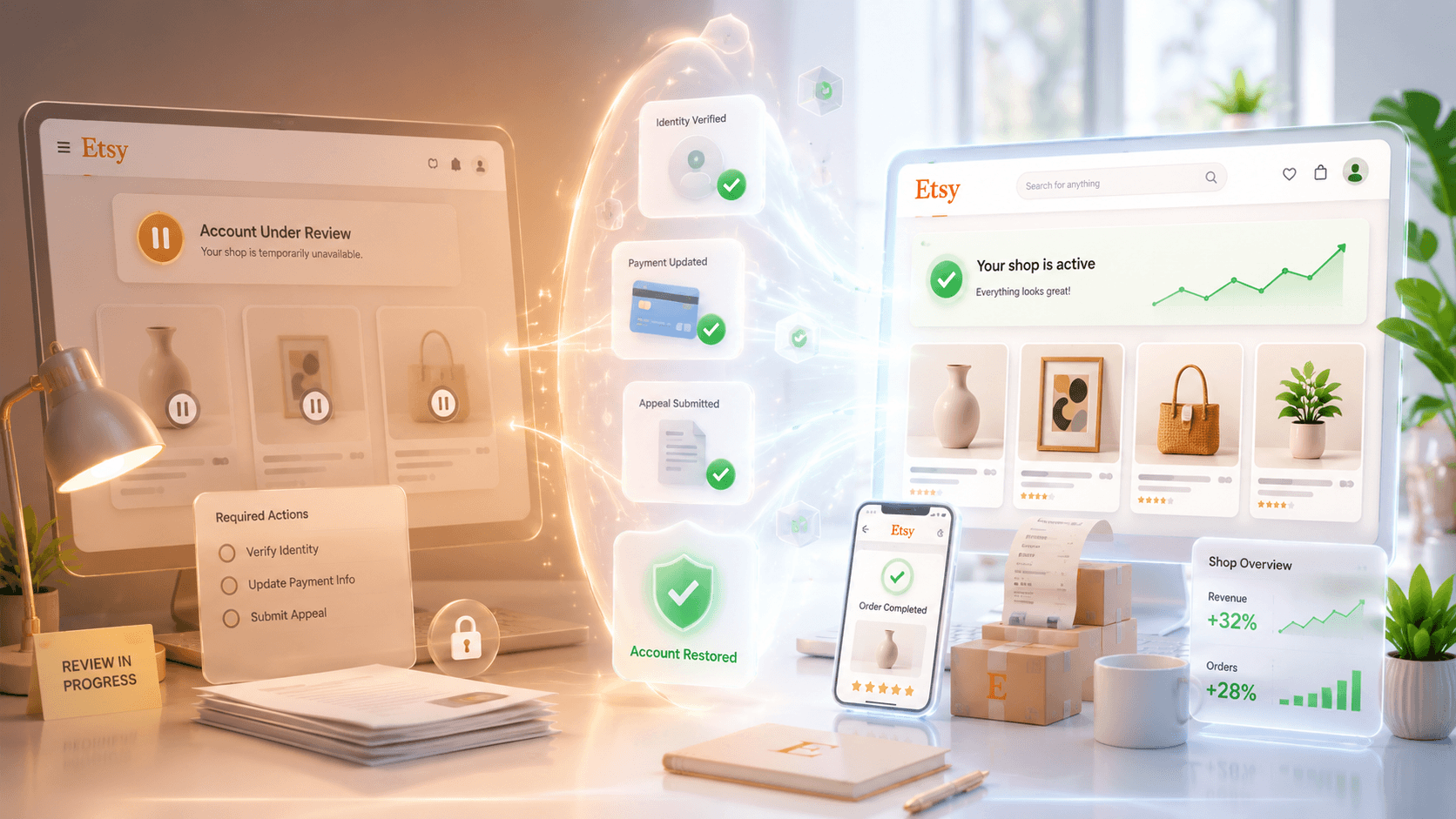
Yes, in many cases, you can recover a suspended Etsy account. However, it depends on why your shop was suspended.
Temporary suspensions are often resolved once you complete Etsy’s requested actions. These may include verifying your identity, updating payment information, or removing listings that violate marketplace policies.
Permanent suspensions are more difficult to reverse. They usually involve serious or repeated policy violations, such as selling counterfeit products, repeatedly infringing on copyrights, or trying to bypass previous suspensions.
If Etsy allows you to appeal, take your time before responding. Read the suspension notice carefully, fix any issues within your control, and submit a clear, professional explanation supported by relevant documents where needed.
Even if your appeal isn’t successful, understanding why the suspension happened can help you avoid making the same mistakes in future businesses.
Can You Open a New Etsy Shop After Being Suspended?
This is one of the most common questions sellers ask after losing access to their Etsy shop account. The answer depends on the reason for your suspension.
If Etsy permanently suspended your account for violating its policies, creating a new shop simply to continue selling is unlikely to work. Etsy may connect accounts using information such as your identity, payment details, bank account, address, IP address, or other account information.
Attempting to bypass a suspension by opening another shop can result in that account being suspended as well.
If your original account was suspended by mistake, focus on resolving the issue through Etsy’s appeal process instead of creating a replacement account. Building a new shop is only appropriate if Etsy specifically allows it or your previous suspension has been resolved.
Etsy Shop Safety Checklist: Best Practices Every Seller Should Follow
Protecting your Etsy shop isn’t about following one rule. It’s about building consistent habits that create a positive experience for both buyers and Etsy. Use this checklist to review your shop regularly.
✔ Read Etsy’s latest Seller Policies.
✔ Review the Etsy prohibited items policy 2026 before launching new products.
✔ Create original designs.
✔ Avoid copyrighted images and trademarks.
✔ Keep listings honest and accurate.
✔ List products only after checking they comply with Etsy’s rules.
✔ Ship every purchase within your stated processing time.
✔ Reply quickly when customers contact you.
✔ Keep your identity and payment details updated.
✔ Ensure all Etsy fees are paid on time.
✔ Monitor customer feedback and resolve issues early.
✔ Regularly consult Etsy’s Seller Handbook for policy updates.
Following these simple habits helps reduce unnecessary risks while building a stronger, more trustworthy business.
Manage Your Etsy Store with Fewer Manual Mistakes
Protecting your Etsy shop isn’t only about following Etsy’s policies. As your business grows and you start selling on Shopify, Amazon, eBay, or other marketplaces, manually updating products and inventory becomes more difficult. A missed inventory update or outdated product listing can lead to overselling, incorrect product information, unhappy customers, and unnecessary account issues. Shopify is usually the first shop sellers add — here is how to connect Etsy to Shopify without keeping two stock counts.
That’s where QuickSync helps. It automatically keeps your products, inventory, and orders synced across your connected sales channels, so you spend less time making manual updates and more time growing your business. While QuickSync can’t prevent Etsy policy violations, it helps reduce everyday operational errors that can negatively impact your shop’s performance.
With QuickSync, you can:
- Inventory sync automatically across multiple sales channels
- Keep product titles, descriptions, images, and variants consistent
- Order syncing from connected stores: we check Etsy every five minutes for new orders
- Reduce overselling caused by outdated stock levels
- Save hours of manual product management
- Manage your multichannel business from one place
Final Thoughts
Building a successful Etsy shop takes patience, creativity, and consistency. Protecting that shop should be part of your daily routine.
The good news is that most Etsy suspensions are preventable. Sellers who follow marketplace policies, create original products, communicate professionally, and provide a great customer experience are far less likely to run into serious account issues.
Instead of worrying about getting banned from Etsy, focus on running your shop the right way from the beginning.
Small improvements made consistently often have the biggest impact over time.
As Etsy continues updating its marketplace, staying informed and reviewing your shop regularly will help you grow with confidence.