Amazon Handmade gives makers something Etsy can’t: a spot on the biggest store in the US, in a section where factory-made goods aren’t allowed. The catch is that Amazon decides who gets in, and the fees don’t work the way Etsy’s do.
Most of what you need to know fits in four questions. Will your products qualify? What will each sale actually cost you? How do you apply? And what happens when the same one-of-a-kind piece is listed on Etsy and Amazon at once?
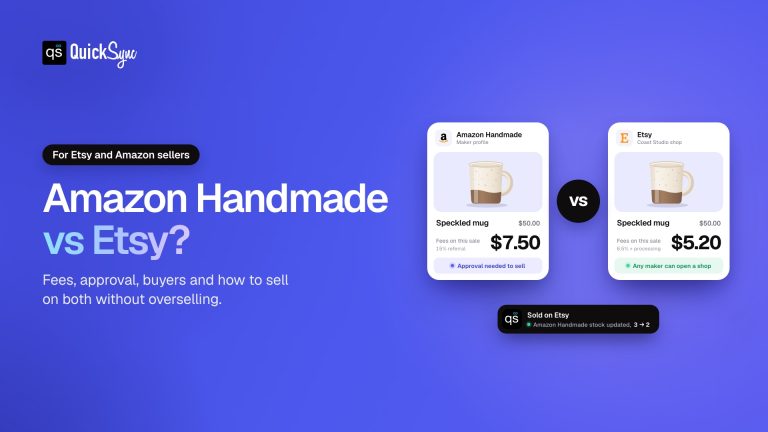
This guide answers all four, using Amazon’s own rules and fees, checked in November 2026. You’ll also see a side-by-side cost breakdown for a $50 sale, so you can decide whether Amazon Handmade is worth it before you apply.
What is Amazon Handmade?
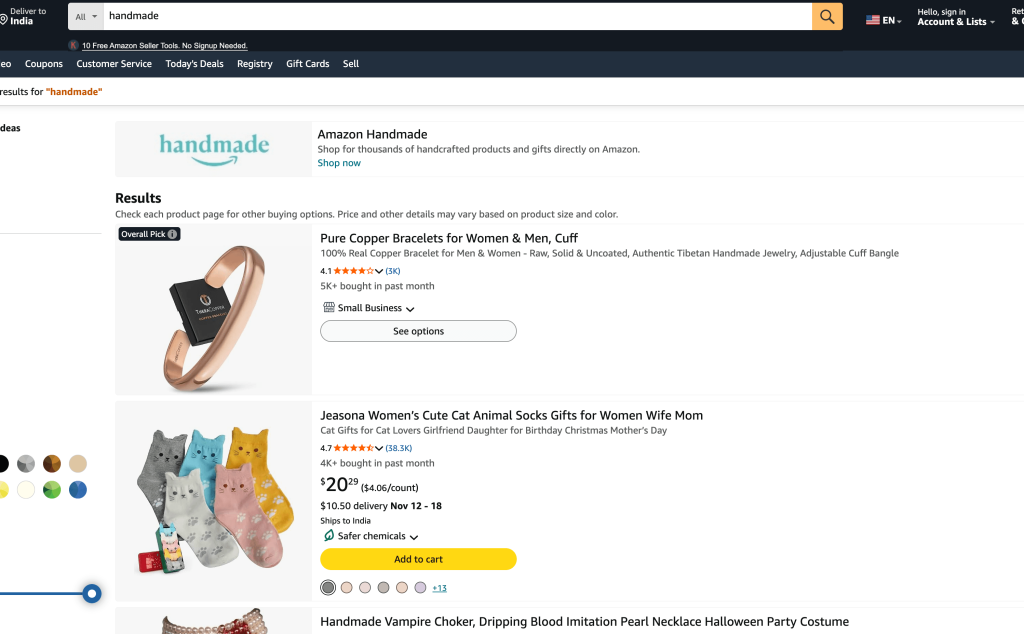
Amazon Handmade is a section of Amazon where approved makers sell products they make or change by hand. Shoppers can browse it as its own store. Sellers apply first, and Amazon reviews each maker before they can list.
It’s open to individual makers and to collaborative groups, such as cooperatives, nonprofits, and charities. You sell from a normal Amazon seller account. Your Handmade listings also get a public maker profile, which tells shoppers who you are and how you work.
The appeal is reach. Amazon puts your work in front of shoppers who may never browse Etsy, and Handmade gives your work a space apart from factory-made goods. The trade-off is that you work inside Amazon’s system: its listing rules, its shipping expectations, and its account health metrics.
If you’re deciding between the two platforms rather than adding one, our Amazon Handmade vs Etsy comparison covers that choice in detail.
Amazon Handmade requirements
To sell on Amazon Handmade, your products must be made or changed by you, and they must fit one of Amazon’s listed categories. Amazon says items must be handcrafted, hand-altered, hand-designed, repurposed, or upcycled. You also need a Professional seller account and an approved application.
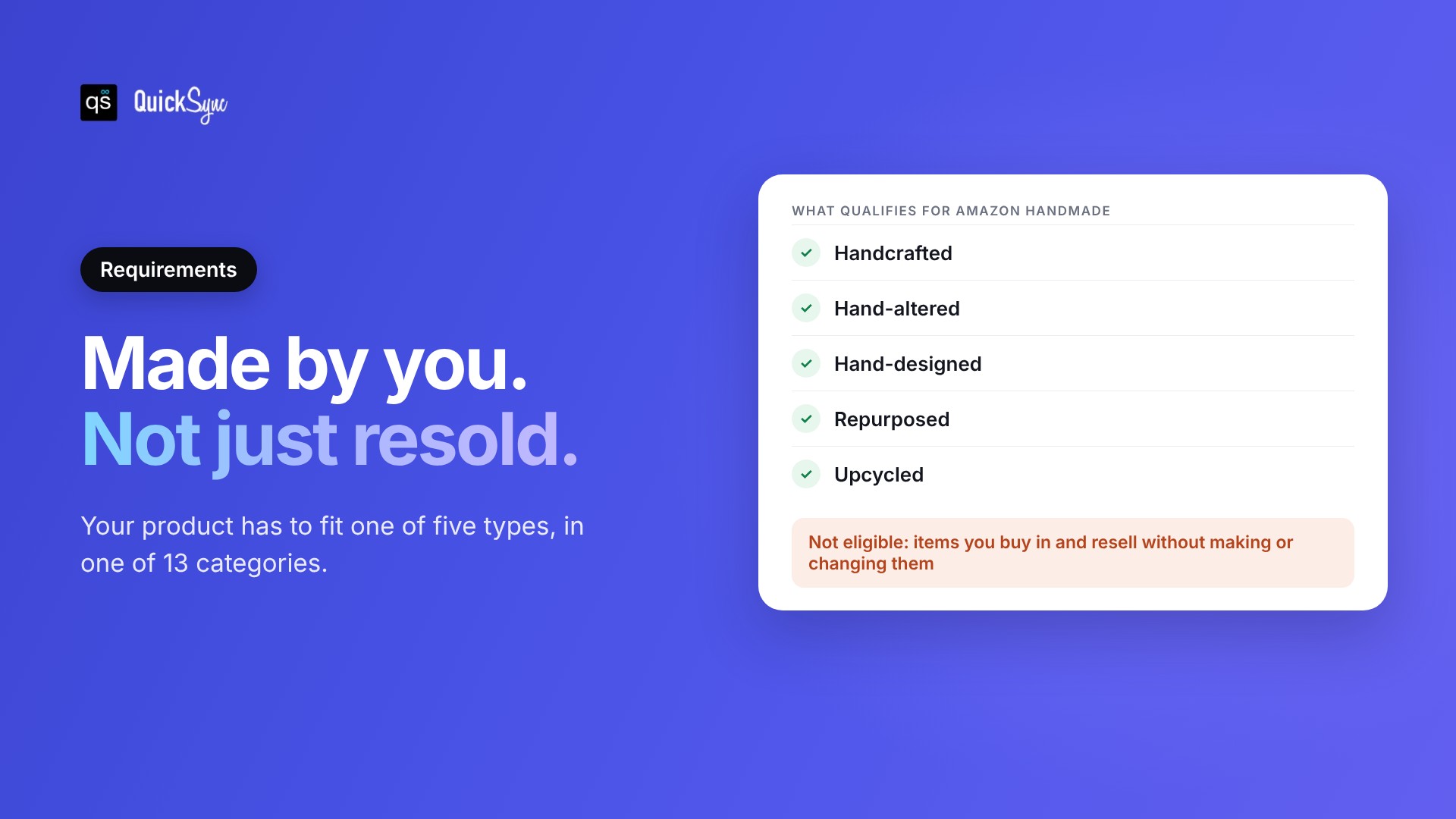
Here’s what each type means, with Amazon’s own examples:
- Handcrafted: made by hand from raw materials, like a hand-carved wooden bowl.
- Hand-altered: a premade item you change, like a T-shirt or mug you add a graphic to.
- Hand-designed: an original design, like an art print or stationery.
- Repurposed: an item turned into something with a new use, like a planter made from tires.
- Upcycled: an item you improve, like refinished furniture.
What doesn’t qualify is anything you buy and resell without making or changing it. Your product also has to fit one of the 13 Handmade categories. Items in other categories can’t be sold in the Handmade store.
| Handmade categories | |
|---|---|
| Accessories | Jewelry & Watches |
| Artwork | Kitchen & Dining |
| Baby | Outdoor & Home Care |
| Beauty & Personal Care | Pet Supplies |
| Clothing, Shoes & Handbags | Sporting Goods |
| Home | Stationery & Party Supplies |
| Toys & Games |
Before you apply, look at your catalog with those two filters. It’s common to find one or two products that don’t pass, often a supply item or something you source rather than make.
Amazon Handmade fees
Amazon Handmade costs $39.99 for your first month, then Amazon waives the monthly fee. After that, you pay a 15% referral fee on each sale, or $0.30 per unit if that’s higher. There’s no per-listing fee, and the storefront is free.
Here’s how that works. Handmade requires Amazon’s Professional plan, which normally costs $39.99 a month plus selling fees. For approved Handmade sellers, Amazon charges the first month once and then waives the plan fee, which it says saves $480 a year. The referral fee is the main cost you’ll see on every order.
Compared with Etsy, the structure is simpler, but the percentage is higher. On a $50 item with free shipping and no tax:
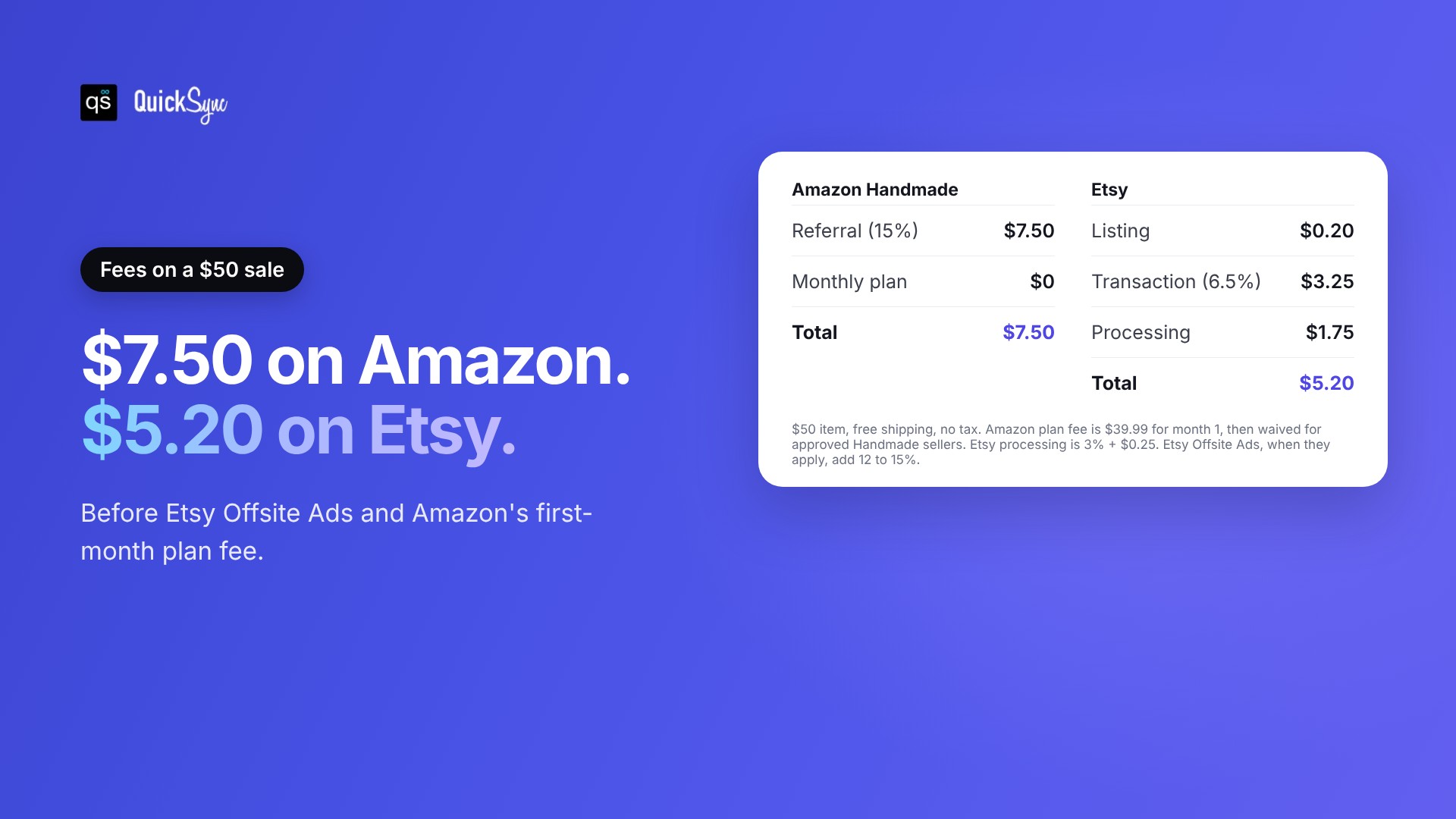
| Fee | Amazon Handmade | Etsy |
|---|---|---|
| Monthly plan | $0 after month 1 | $0 |
| Listing fee | $0 | $0.20 |
| Per-sale fee | $7.50 (15% referral) | $3.25 (6.5% transaction) |
| Payment processing | Included | $1.75 (3% + $0.25) |
| Total on a $50 sale | $7.50 | $5.20 |
The Etsy figures come from its fees policy and payments policy. One thing changes the math: Etsy’s Offsite Ads. If a sale comes through one, Etsy adds 15%, or 12% for shops with $10,000 or more in sales over the past year. Etsy caps that fee at $100 per order. On those orders, Etsy costs more than Amazon. Our full breakdown of Etsy fees covers the rest.
If you use Fulfillment by Amazon, FBA fees come on top of the referral fee. If you ship orders yourself, you set your own shipping charges.
How to apply for Amazon Handmade (step by step)
Applying to Amazon Handmade takes five steps. Amazon reviews your application before you can list, so have your product details and photos of your process ready before you start.
1. Register as a Professional seller
Create an Amazon seller account on the Professional plan. If you already sell on Amazon with the Individual plan, upgrade under Manage Your Services in Seller Central.
2. Submit the Handmade application
Confirm that your products follow the Handmade guidelines, then fill in the application. Amazon asks about you, your products, and how you make them. Be specific about your process. “I hand-carve each bowl from walnut, then oil and finish it in my workshop” tells a reviewer far more than “handmade wooden bowls.”
You can check your application status in Seller Central with your email and the confirmation code Amazon sends.
3. Add the Handmade Classification to your listings
Once you’re approved, add the Handmade Classification attribute to each product. Amazon also asks for a product ID, such as a UPC, for each listing. If your items don’t have one, which is common for handmade goods, you can request an exemption. Already on Etsy? Amazon lets you transfer your product details from Etsy to Handmade, so you don’t have to rewrite every listing.
4. Build your maker profile
Your maker profile is public. Use it to show your workspace, explain your process, and say what makes your work different. It’s the closest thing Amazon has to an Etsy shop’s “About” section.
5. Expand to other countries (optional)
Each Amazon region needs its own seller account and its own maker profile. The good news is that your Handmade approval carries over, so you don’t need to apply again.
Shipping, FBA and personalized orders
You can ship Amazon Handmade orders yourself, and for standard items, Amazon’s programs include Fulfillment by Amazon (FBA). Personalized items are different. They go through Amazon Custom, and Amazon requires you to ship those yourself.
Amazon Custom lets buyers personalize a product from a set of options or with their own text, images or logos. It’s free with a Professional plan, which Handmade sellers already have. A few rules matter for makers:
- FBA isn’t allowed for Custom orders. You fulfill them yourself.
- Custom products aren’t returnable, but Amazon can refund or replace them within 30 days of delivery if they arrive damaged, defective or materially different from the order.
For everything else, the choice is about time versus control. Shipping yourself keeps your packaging and costs in your hands. FBA takes packing and shipping off your hands, but adds fees and means sending stock to Amazon ahead of time. That works for small batches you repeat. It rarely makes sense for one-offs.
Selling on Amazon Handmade and Etsy at the same time
Selling the same handmade products on Etsy and Amazon Handmade works well until the same item sells on both. Handmade inventory is small, so there’s no buffer. Each channel needs to know the moment something sells on the other, or one buyer ends up with an order you can’t fill.
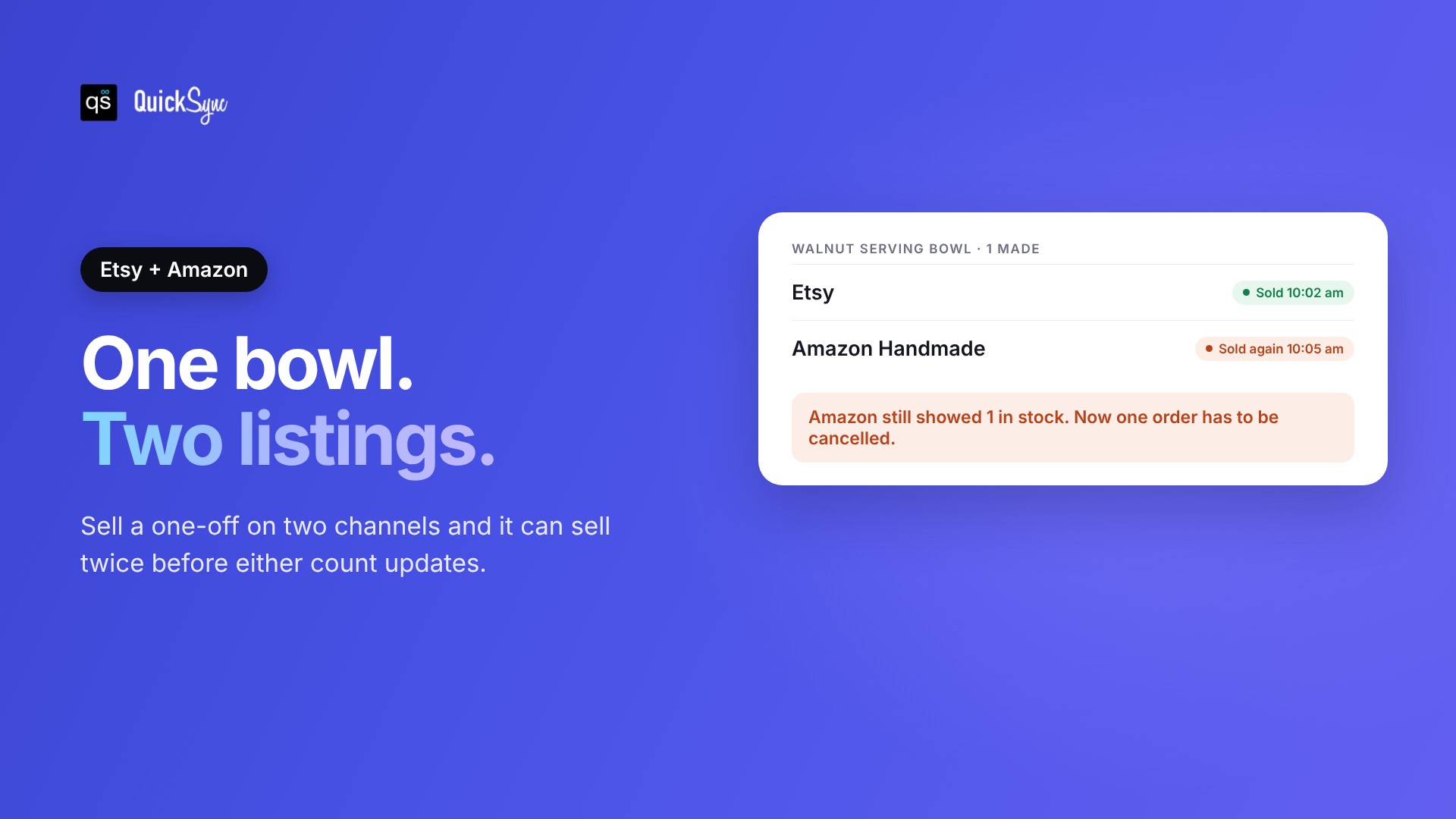
Here’s how it plays out. You make one walnut serving bowl and list it on both channels. It sells on Etsy at 10:02 am. Amazon still shows it in stock because nothing has told it otherwise, and it sells again three minutes later. Now you either make a second bowl and ship late, or cancel. Amazon tracks both cancellations and late shipments in your account health, and our backorder guide explains what you owe a buyer who has to wait.
There are two common workarounds. Some makers list each item on only one channel, which halves the number of people who see it. Others update both channels by hand after every sale, which works until a busy weekend. The reliable fix is one stock count that both channels share, so a sale on Etsy drops the quantity on Amazon right away. Our guide on how to prevent overselling covers why the shared count matters.
That’s what QuickSync does for Etsy and Amazon. With QuickSync, merchants can sell across Etsy and Amazon without rebuilding the listings. It keeps one stock count across Etsy, Amazon, Shopify, and your other channels, and updates each one when something sells, usually within a couple of minutes. See how real-time inventory syncing works, or how the Etsy and Amazon integration is set up.
Is Amazon Handmade worth it?
Amazon Handmade is worth it if your products repeat, ship well and sell at a price where a 15% fee still leaves a margin. It’s less worth it for one-off pieces, very low-priced items, or makers who don’t have time to keep up with Amazon’s shipping and service standards.
| Good fit | Harder fit |
|---|---|
| You make the same designs in small batches | Every piece is one of a kind |
| Prices with room for a 15% fee | Low-priced items, where 15% leaves little margin |
| You can ship quickly and consistently | Long or unpredictable making times |
| Personalized products buyers search for | Supplies, vintage or bought-in items |
| You already track stock carefully | Stock lives in your head or a notebook |
If most of your answers sit on the left, it’s worth applying. Start with your best sellers rather than your whole catalog, see how they perform for a couple of months, then add more. And if you’re adding Amazon on top of Etsy, set up a shared stock count before your first Amazon sale, not after your first oversold order. A 14-day QuickSync trial is the quickest way to do that.