
For most artisans, Etsy is where the business starts. It’s easy to open a shop, and buyers come looking for handmade products. But sooner or later, sales go down, and Amazon Handmade starts to look tempting.
That problem isn’t just in your shop. Etsy had about 87 million active buyers in the year to June 2026, according to Etsy’s Q2 2026 shareholder letter. That’s roughly the same as a year earlier. When the pool of buyers stops growing, finding new customers often means selling somewhere else too.
This guide compares Amazon Handmade vs Etsy on the things that decide your profit: fees, approval, buyers and workload. Every fee was checked against Amazon’s and Etsy’s own pages in October 2026. By the end, you’ll know which platform suits your products, and how to sell on both without selling the same piece twice.
Key Differences of Amazon Handmade vs Etsy at a Glance
| Etsy | Amazon Handmade | |
|---|---|---|
| Who can sell | Anyone who meets Etsy’s Creativity Standards | Approved makers, after an application and review |
| Monthly fee | $0 | $39.99 for the first month, then waived |
| Fees per sale (US) | $0.20 listing, 6.5% transaction, 3% + 25¢ payment processing | 15% referral fee, or $0.30 minimum |
| Advertising fee | Offsite Ads: 15%, or 12% above $10,000 a year | None unless you choose to run ads |
| What you can sell | Handmade, vintage (20+ years old) and craft supplies | Handmade work in Amazon’s listed categories |
| Fulfilment | You ship | You ship, or use FBA (not for custom items) |
| Custom orders | Personalisation built in | Through Amazon Custom |
| Buyers | About 87 million active buyers | Amazon shoppers browsing the Handmade store |
The table shows the Etsy vs Amazon Handmade differences in short. Etsy is open and flexible, while Amazon Handmade is selective and simpler on fees. Those fees are the first thing most makers look at, so that’s where we’ll start.
Amazon Handmade vs Etsy fees: Which Offers Better Selling Fees?
These two platforms charge in very different ways. Etsy adds up several small fees on every sale. Amazon Handmade fees are simpler: one referral fee that already covers payment processing.
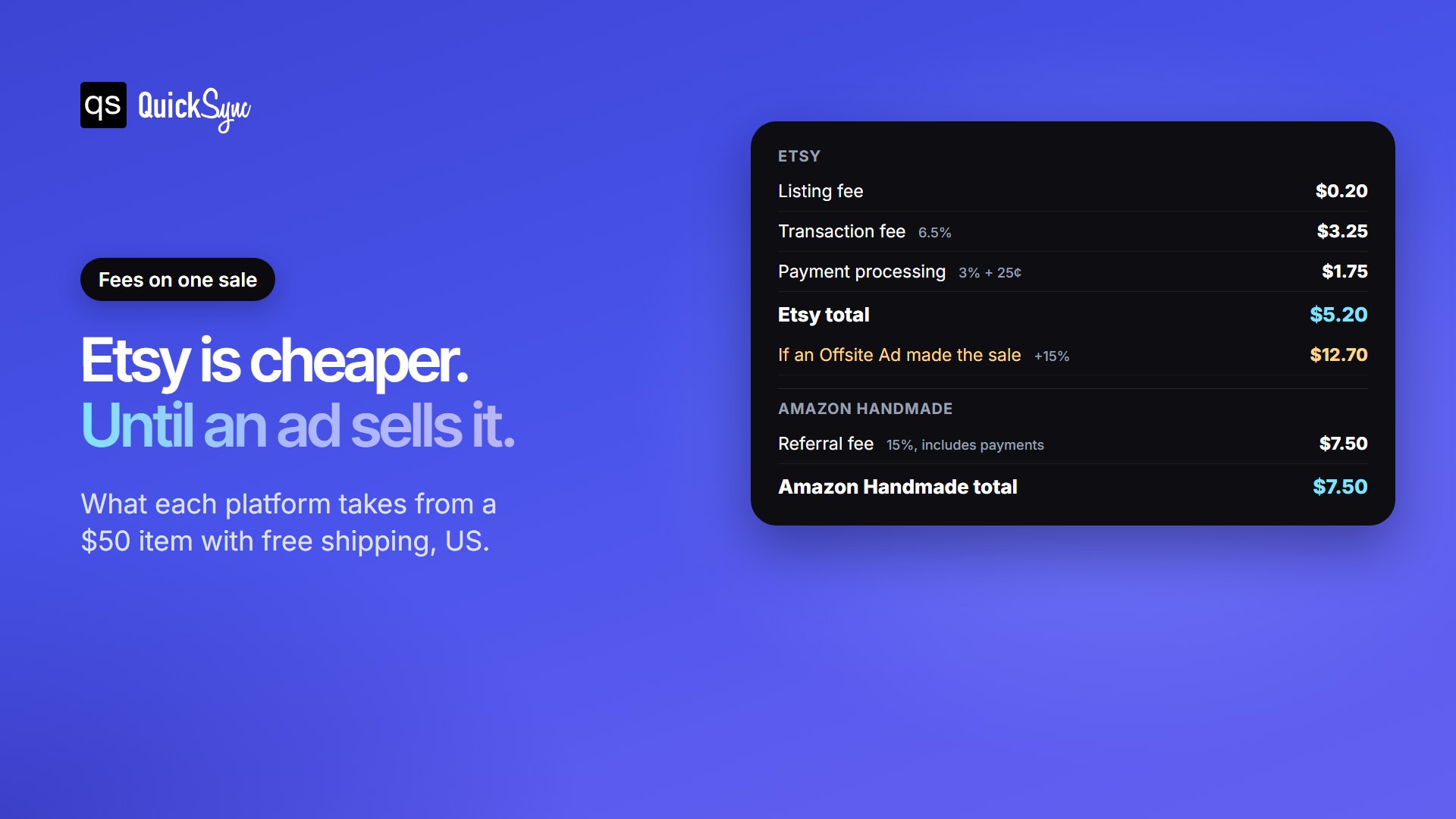
On a $50 item with free shipping, Etsy takes $5.20. That’s a $0.20 listing fee, a 6.5% transaction fee of $3.25 and $1.75 in payment processing. Amazon Handmade takes $7.50, its 15% referral fee. On a normal sale, Etsy is cheaper by about $2.30.
Offsite Ads change that math. When Etsy advertises your item on Google or social media and a buyer clicks through and purchases, Etsy adds a 15% fee, capped at $100 per order. The same $50 sale then costs $12.70, far more than Amazon. Sellers that sell more than $10,000 in any 12 months must stay in the program, at a lower 12% rate. Our full breakdown of Etsy fees covers the rest.
Amazon Handmade’s monthly fee works differently too. You register as a Professional seller, which normally costs $39.99 a month. Amazon waives it for approved Handmade sellers after the first month, so selling there has no fixed cost once you’re in.
Getting in: Etsy’s rules vs Amazon Handmade Requirements
Fees only matter once you can sell, and here the two are opposites. Etsy lets anyone open a shop, as long as items meet its Creativity Standards. That covers items you make or design, vintage pieces at least 20 years old, and craft supplies.
Amazon Handmade works by application, and that’s where selling handmade items on Amazon starts. You register as a Professional seller, confirm your work follows its guidelines, and describe your products and how you make them. Amazon then reviews and audits your Amazon Handmade application. Only handcrafted, hand-altered, hand-designed, repurposed or upcycled items in its listed categories qualify. Vintage finds and craft supplies stay on Etsy.
That review has an upside. Amazon says its application and audit process makes sure the Handmade store features genuine handcrafted products. That gives your listings credibility next to mass-produced items. Once you’re approved, you also get a maker profile, which tells shoppers who you are and how you work.
Understanding Their Buyers and Shopping Habits
Getting approved is one thing. Selling depends on who’s searching, and these two platforms attract different shoppers.
Etsy buyers come looking for handmade. They browse for something unique, personalised or made by a small business. They’re happy to message a seller, wait for a custom piece, and pay for the story behind it. One-of-a-kind and made-to-order work fits Etsy best.
Amazon shoppers come looking for a product. Handmade items can appear in ordinary Amazon searches, next to everything else. They expect clear photos, quick delivery and a fair price. Amazon Handmade sellers can use Fulfillment by Amazon (FBA) for Prime delivery, though custom items must still ship from you. Repeatable, giftable products made in small batches do well here.
A practical way to choose is to look at your best sellers. If you can make the same item again and again, and it photographs well, it has a strong chance on Amazon. If every piece is different, Etsy’s buyers will value it more.
What It’s Like to Control and Manage Etsy vs Amazon
The day-to-day work differs as much as the buyers. On Etsy, your shop feels like yours. You set up shop sections, write your own policies, and talk to buyers directly.
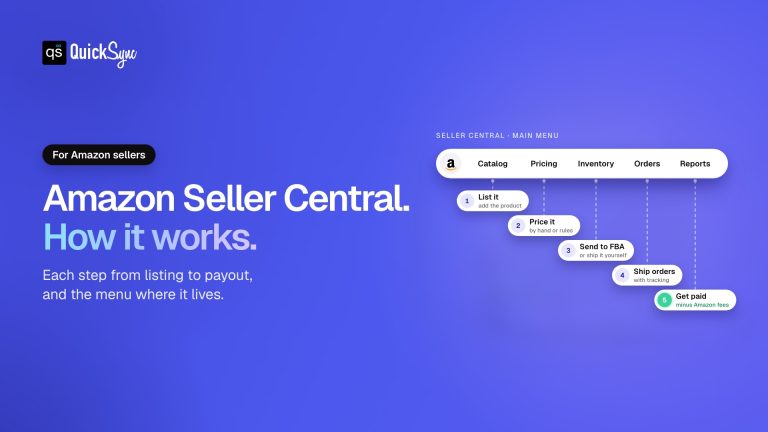
Amazon runs things more tightly. You manage everything in Seller Central, and your account is measured on shipping speed, cancellations and customer feedback. Fall behind on those, and your account can be restricted. If you’re new to that side of Amazon, our guide to Amazon Seller Central explains how it works. In return, Amazon handles payments, and FBA can take shipping off your hands entirely.
When to Sell on Etsy, Amazon Handmade, or Both Platforms
- Choose Etsy if you’re just starting, sell one-of-a-kind or custom work, or also sell vintage or craft supplies.
- Choose Amazon Handmade if you make repeatable products, want Prime delivery through FBA, and prefer one simple fee per sale.
- Choose both if Etsy is working, but your sales have slowed or gone down, and some of your products could sell to Amazon’s shoppers.
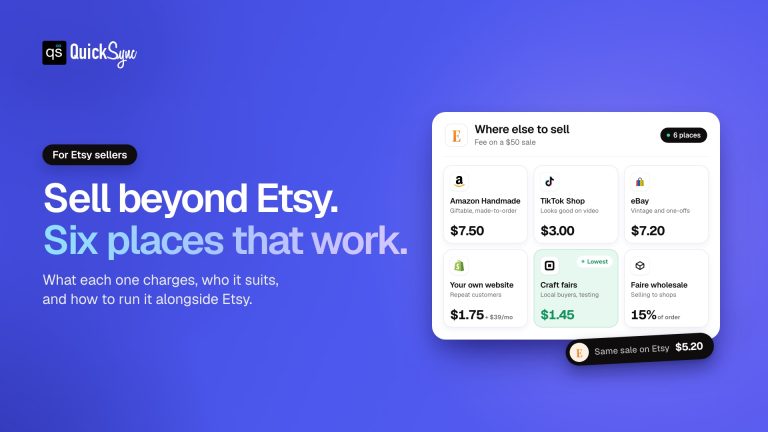
For many established artisans or handmade product sellers, the answer is using both platforms together. Keep Etsy for the work it suits, and test your most repeatable products on Amazon Handmade. Our list of Etsy alternatives compares other places to sell, if neither platform sounds interesting to you.
How to Sell on Etsy and Amazon without Overselling
Selling on both brings one real risk. Handmade stock is small. If you made three mugs and one sells on Etsy, Amazon still shows three until you change it. Sell the last one on both, and you’re refunding a buyer and hurting your rating on one platform.
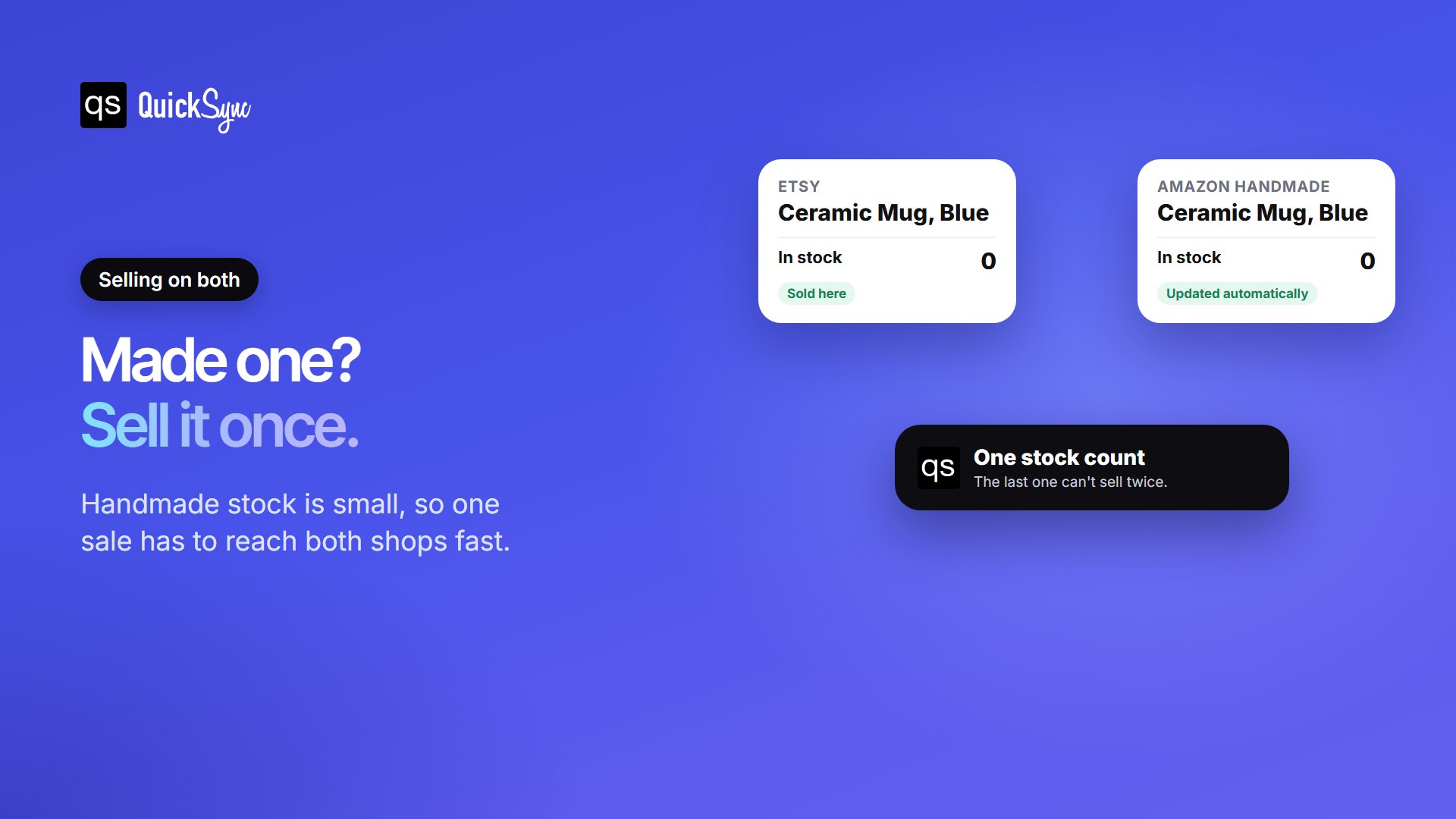
The fix is one shared stock count. QuickSync’s Etsy Amazon integration keeps stock in sync between your Etsy shop and your Amazon listings. A sale on either one updates the other on its own. Products match by SKU, so your existing listings link up without re-listing.
Stock you ship yourself syncs both ways. If you send stock to FBA, Amazon keeps its own count for those units, because Amazon holds them. QuickSync can also connect Shopify, eBay and TikTok Shop if you sell there too. Plans start at $19 a month for two shops.