Etsy is where most handmade buyers start looking. That is exactly why it keeps getting harder to be found there.
Etsy’s own numbers show the squeeze. In its second-quarter 2026 letter to shareholders, Etsy reported about 87 million active buyers and described that number as “returning to roughly stable levels” year over year. In other words, the crowd of buyers isn’t getting much bigger. Every one of those sales still costs you around 10% in fees, and more when Etsy’s ads brought the buyer in.
The good news is that you don’t have to leave Etsy to grow. You can keep your shop and add a second place to sell, where different buyers are already looking. This Etsy alternatives guide covers six of them, from sites like Etsy to markets and wholesale, and compares where to sell handmade items on fees, effort, and the kind of seller each one suits. By the end, you’ll know which one to try first.
Why Etsy sellers look for an alternative
Before comparing options, it is better to know what you want a second channel to fix. For most sellers, it comes down to three things.
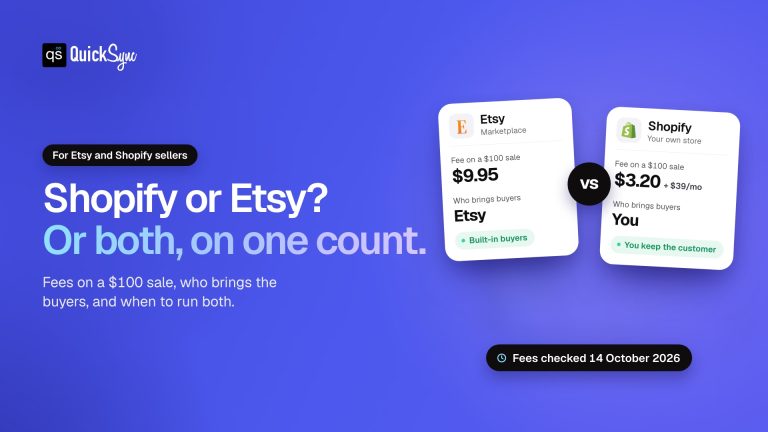
Fees. Etsy charges 20 cents to list, 6.5% of the sale and about 3% plus 25 cents to process the payment. On a $50 order with free shipping, that adds up to $5.20. If the buyer arrived through an Offsite Ad, Etsy takes another 15%, or 12% once your shop passes $10,000 a year. The full breakdown is in our guide to Etsy fees, based on Etsy’s fees policy. Those ad fees bite hardest on low-margin items. Craftybase, which makes inventory software for makers, warns that if your margin isn’t at least 20 to 25% after Etsy’s standard fees, an Offsite Ads sale can leave you losing money or barely breaking even.
Risk. One shop means one set of rules. If Etsy holds your payments, changes how search ranks listings, or suspends the shop, your sales stop overnight. Our guide on how to avoid getting banned on Etsy covers the most common reasons this happens.
Reach. Plenty of people who would love your work never browse Etsy. They scroll TikTok, shop on Amazon, or buy in person at a weekend market.
Each alternative below fixes at least one of these problems. None of them fixes all three, so the right choice depends on which one matters most to you.
Etsy alternatives at a glance
Here is how the six options compare on the same $50 sale. The fee is only half the picture, so the last column shows who does the work of finding buyers.
| Where to sell | Best for | Fee on a $50 sale | Monthly cost | Who brings the buyers |
|---|---|---|---|---|
| Amazon Handmade | Giftable and made-to-order items | $7.50 (15%) | $39.99 for the first month, then waived | Amazon |
| TikTok Shop | Products that look good on video | $3.00 (6%), plus any creator commission you set | None | TikTok and its creators |
| eBay | Vintage, one-offs and craft supplies | $7.20 (13.6% plus 40 cents) | None needed | eBay |
| Your own website | Repeat customers and your brand | $1.75 on Shopify (2.9% plus 30 cents) | $39 on Shopify ($29 billed yearly) | You |
| Craft fairs and markets | Local buyers and testing new products | $1.45 with Square’s free plan | Stall fees vary | You |
| Faire (wholesale) | Selling to shops in bulk | 15% of the wholesale order, plus $10 on a new shop’s first order | None | Faire |
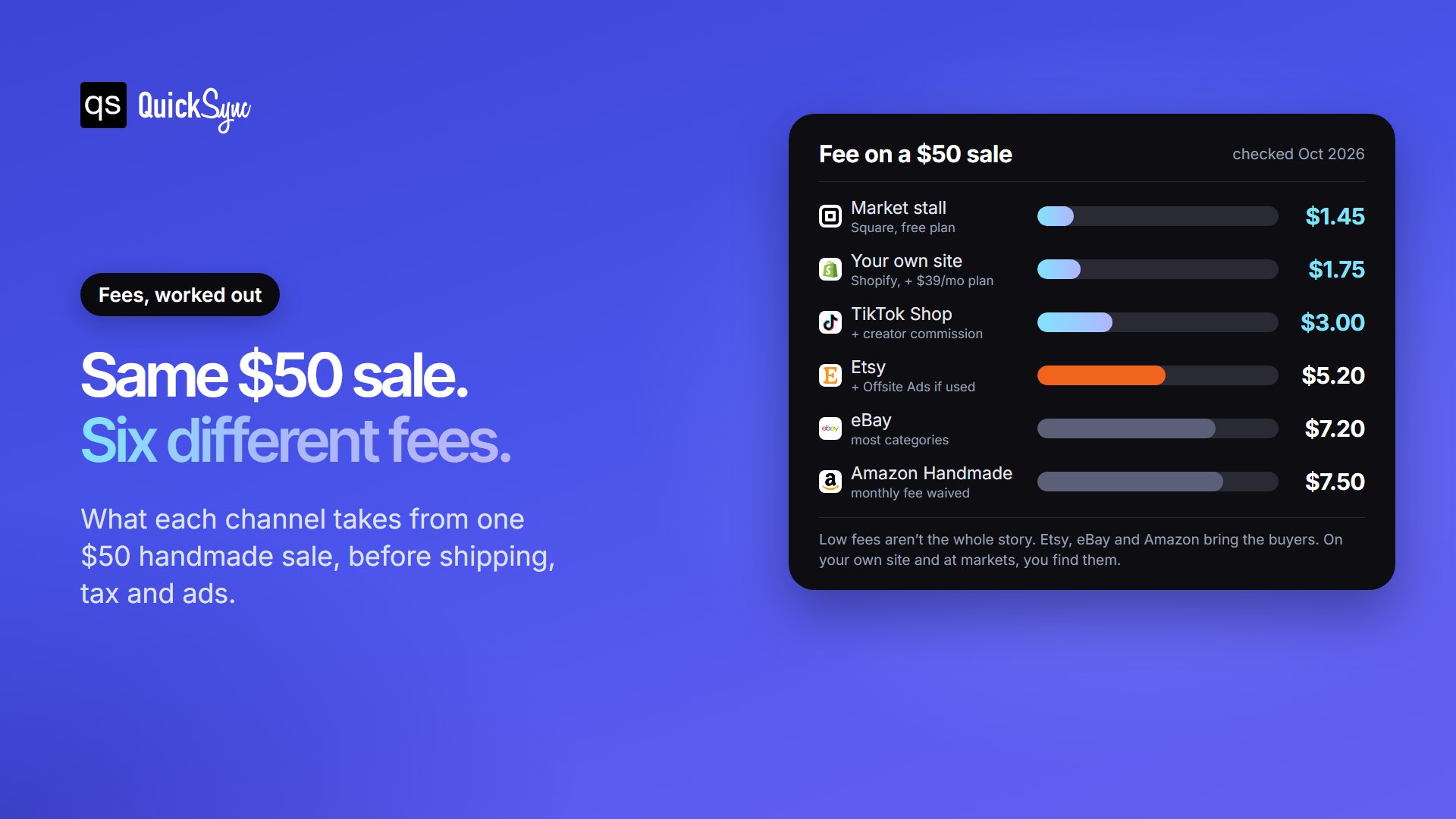
The cheapest options are the ones where you find the buyers yourself. The marketplaces cost more because they bring the traffic. Keep that trade-off in mind as you read each one.
1. Amazon Handmade
Amazon Handmade is a section of Amazon reserved for makers. It puts your work in front of people who already shop on Amazon for gifts and home goods, and many of them would never think to search Etsy.
The fees are simple. According to Amazon’s Handmade page, you pay 15% of each sale, or 30 cents if that’s higher. You need a Professional selling plan, which usually costs $39.99 a month, but Amazon waives it after the first month for approved Handmade sellers. On a $50 sale, you pay $7.50. That’s more than Etsy’s $5.20, but Amazon’s fee already covers payment processing.
The catch is approval. Amazon reviews every maker, and products must be handcrafted, hand-altered, hand-designed, repurposed or upcycled. Buyers there also expect Amazon-style speed, so it works best for items you can ship quickly. If you already sell on Etsy, the Etsy Amazon integration keeps stock matched between the two.
2. TikTok Shop
Where Amazon brings shoppers who are searching, TikTok Shop brings shoppers who weren’t. People discover products in videos and buy without leaving the app. That suits handmade work well, because watching something being made is exactly the kind of video people stop for.
It’s also the cheapest marketplace on this list. TikTok Shop charges a 6% referral fee on most categories, with no listing fee and no monthly plan. On a $50 sale, that’s $3.00.
The real cost is creators. Many TikTok Shop sales come from creators who promote your product in their videos. In return, they earn a commission, and as Printify’s fee guide explains, you set that rate yourself. Budget for it before you price anything, because it often costs more than TikTok’s own fee. Even so, it’s the channel we see Etsy sellers add most often at QuickSync. Our TikTok Shop fees guide works through the numbers, and the TikTok Shop Etsy integration keeps both shops on one stock count.
3. eBay
If your shop leans toward vintage, one-of-a-kind pieces or craft supplies, eBay is worth a look. Its buyers are used to hunting for unusual items, and the site has no rule that work must be handmade.
Listing is free for your first 250 items a month. When something sells, eBay takes 13.6% of the total plus 40 cents on most categories, according to eBay’s selling fees page. On a $50 sale, that’s $7.20. The total includes shipping and sales tax, which our eBay fees guide explains.
eBay buyers compare prices closely, so price from real sales, not from your Etsy listing. You can see what similar items sold for on eBay before you list. When you’re ready, the Etsy eBay integration copies listings across and keeps stock in step.
4. Your own website
The three marketplaces above all have the same downside: the customer belongs to them. Your own website fixes that. You keep your customers’ email addresses, set your own rules and pay the lowest fees per sale.
Shopify is the most common choice. Its Basic plan costs $39 a month, or $29 a month billed yearly, and online card payments cost 2.9% plus 30 cents, according to Shopify’s pricing page. On a $50 sale, that’s $1.75. Squarespace and WooCommerce work too, and the choice mostly comes down to which builder you find easiest.
The catch is traffic. Nobody stumbles onto a new website, so you need a way to bring people there, such as Instagram, an email list or a market stall. One rule to know: Etsy’s off-platform policy bans moving an Etsy sale elsewhere, so never ask an Etsy buyer to pay you on your own site. That’s why a website works best as a home for repeat customers, not as your first source of new ones. To run it next to Etsy, see the Shopify Etsy integration or our comparison of Shopify Etsy integration apps. There are also integrations for Squarespace and WooCommerce.
5. Craft fairs and local markets
Selling in person is the oldest Etsy alternative, and it still does something no website can. You see how people react to your work, which pieces they pick up and what they’ll pay. That makes markets a cheap way to test new products before you list them online.
Card payments cost very little. With Square’s free plan, an in-person payment costs 2.6% plus 15 cents, according to Square’s fee page, so a $50 sale costs $1.45. Your bigger costs are the stall fee and your time. If you’re choosing a card reader, our Clover vs Square comparison covers both.
Markets add one problem that sellers often miss. The items on your table are usually still listed on Etsy. If one sells online while you’re at the market, you can end up selling the same piece twice. The Square Etsy integration and Etsy Clover integration take an item off Etsy when it sells at your stall.
6. Faire (wholesale)
Every option so far sells one item to one buyer. Faire works differently. It’s a wholesale marketplace where independent shops order your products in bulk to sell in their stores.
Faire’s help center for brands lists a 15% commission on orders that come through its marketplace, plus a one-time $10 fee on a new shop’s first order. Brands outside North America pay a one-time 10% instead. Orders from shops you bring yourself through Faire Direct carry 0% commission.
Wholesale only works if your margins allow it. Shops usually expect to pay around half your retail price, so run the numbers first. If you make each piece by hand and can’t produce more without hiring help, Faire may not fit yet.
How to choose your first Etsy alternative
Now that you’ve seen all six, the choice usually follows from what you sell and how much time you have.
- You want new buyers with little setup: start with TikTok Shop or Amazon Handmade.
- You sell vintage, one-offs or supplies: try eBay.
- You already have repeat customers or a following: build your own website.
- You sell locally or want feedback on new work: book a market stall.
- You can make in volume at half your retail price: apply to Faire.
Whichever you pick, start small. List your best-selling pieces first rather than your whole catalogue, then add more once you see how buyers there behave.
Keep Etsy, and keep your stock in sync
Adding a second channel brings one new risk. Handmade stock is usually small, and many pieces are one of a kind. If an item sells on Etsy and is still live on Amazon or TikTok Shop, a second buyer can pay for something you no longer have. Then you’re refunding an order and explaining yourself to a customer.
Updating counts by hand works until a busy weekend. A sync tool does it for you. Etsy doesn’t send an alert when something sells, so QuickSync checks it every five minutes and updates your other shops within seconds. TikTok Shop reports sales instantly, so a TikTok sale comes off Etsy straight away.