You spend months building a product. Then a copycat lists a cheaper version under your brand name, or someone edits your listing’s title and photos. Without Amazon Brand Registry, there’s little you can do about it quickly.
Brand Registry is free to join. The hard part is the trademark it requires. In the US, the USPTO took an average of 10.4 months to register or close a trademark application as of October 2026. The good news is that you don’t have to wait that long, because Amazon accepts a pending trademark.
This guide covers what Amazon Brand Registry is, the requirements, what it really costs, how long it takes, how to enroll step by step, and whether it’s worth it. Trademark fees and timings come from the USPTO and were checked on 28 October 2026.
What is Amazon Brand Registry?
Amazon Brand Registry is a free Amazon program for trademark owners. It gives you tools to report copies and counterfeits, more control over your product listings, and brand features such as A+ Content, a Brand Store and Sponsored Brands ads. You need a registered or pending trademark to join.
Amazon describes it as a free program that helps you protect and grow your brand, even if you don’t sell in the Amazon store. You manage it at brandregistry.amazon.com, signing in with your Seller Central or Vendor Central account.
Do you need Brand Registry to sell on Amazon?
No. Anyone with a seller account can list products without it. Brand Registry matters when you sell your own brand. If you resell other companies’ products, you can’t enroll their brands, because only the trademark owner, or someone acting for them, can.
New to selling on Amazon? Start with our guides to Amazon Seller Central and Amazon FBA.
Amazon Brand Registry requirements
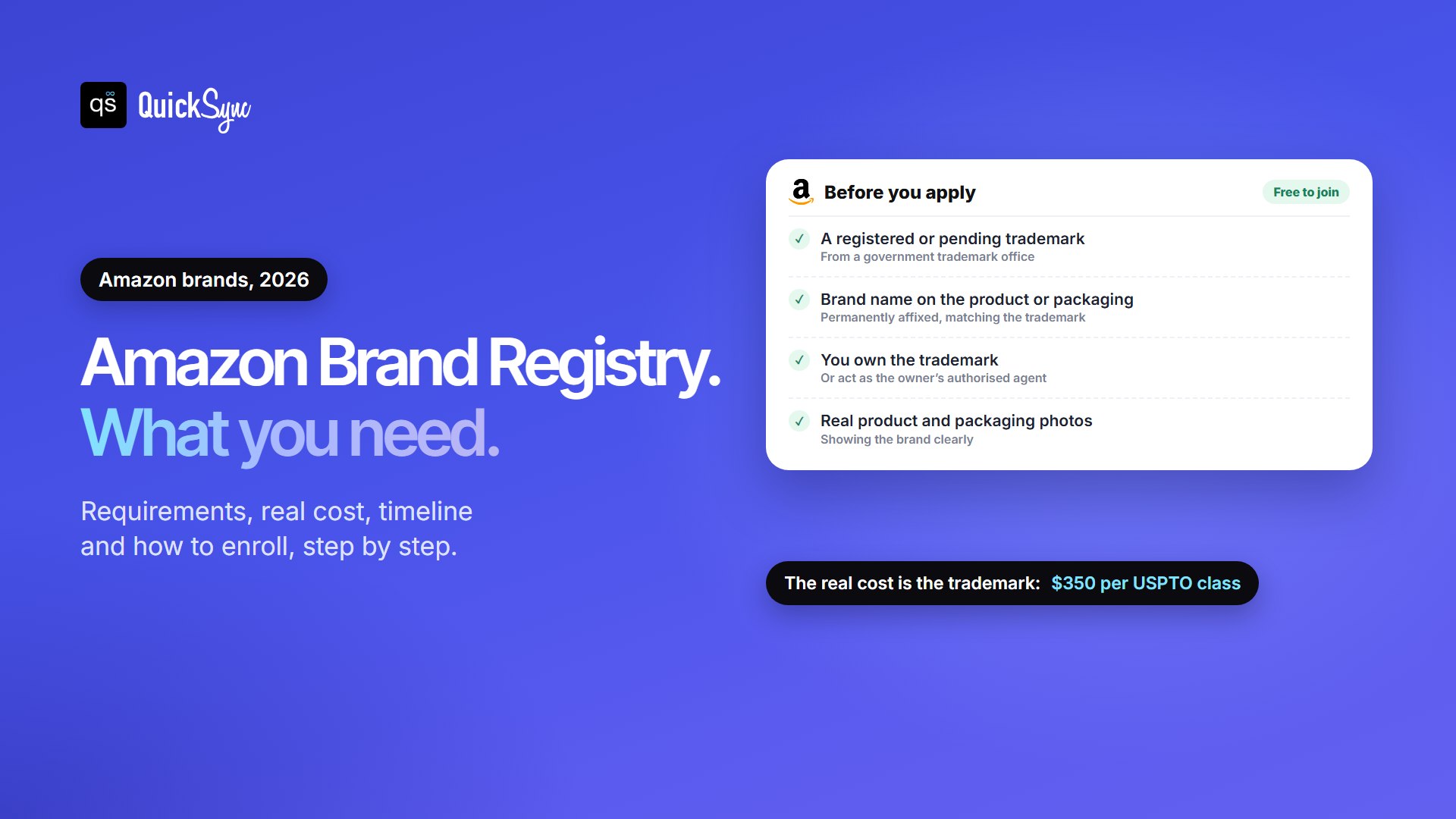
- A registered or pending trademark for your brand name or logo, from a government trademark office. A pending trademark is one you’ve applied for that hasn’t been approved yet.
- An exact match. The brand name in your application must match the trademark record, including spacing and punctuation. Small differences cause delays.
- The brand permanently on your product or packaging. Printed, engraved or sewn on, for example. A sticker that peels off doesn’t count.
- Ownership. You must own the trademark or be authorised to act for the owner.
- Real photos of your product and packaging showing the brand. Mockups and stock images won’t do.
- An Amazon account to sign in with, such as Seller Central or Vendor Central.
Amazon doesn’t file trademarks for you. You apply to a trademark office yourself or through a lawyer. If you sell in several countries, you may need a trademark in each one.
How much does Amazon Brand Registry cost?
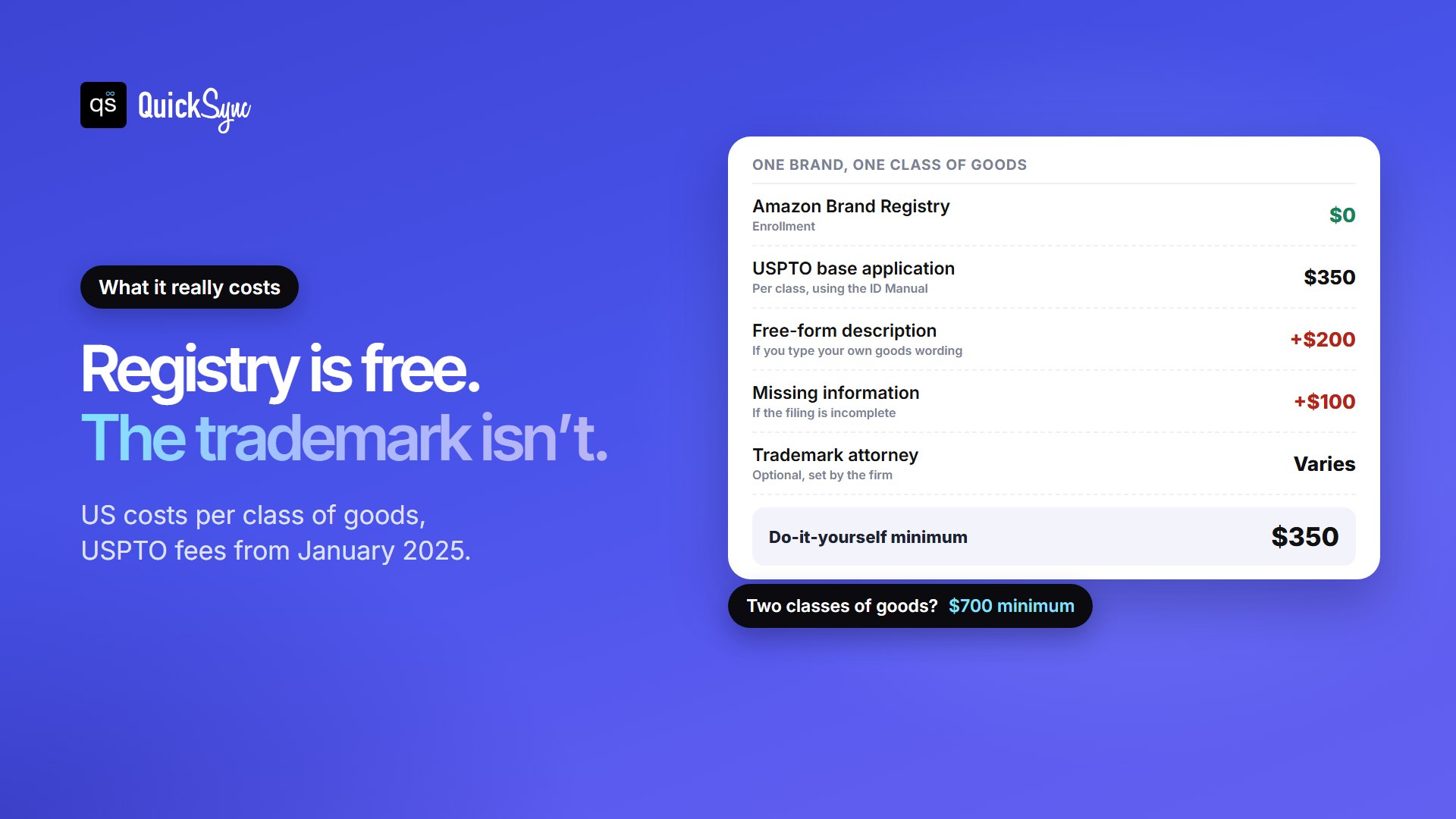
Brand Registry itself is free. The cost is the trademark. Here is what a US trademark costs at the USPTO:
| Cost | Amount | When it applies |
|---|---|---|
| Amazon Brand Registry | $0 | Always free to join |
| USPTO base application | $350 per class | Every application, for each class of goods |
| Free-form description surcharge | +$200 per class | If you type your own description of goods instead of choosing it from the USPTO’s ID Manual |
| Long description surcharge | +$200 per class | For each extra 1,000 characters in a free-form description |
| Insufficient information surcharge | +$100 per class | If required details are missing when you file |
| Trademark attorney | Varies | Optional, priced by the firm |
A “class” is a category of goods, such as clothing or kitchenware. Most small brands start with one class, so the do-it-yourself minimum is $350. Two classes cost at least $700. Writing your own goods description instead of using the ID Manual turns $350 into $550 per class.
Many sellers hire a trademark attorney to avoid mistakes that cost time later. Amazon’s IP Accelerator connects brands with vetted trademark law firms, but the firms set their own fees, so compare quotes.
How long does Amazon Brand Registry take?
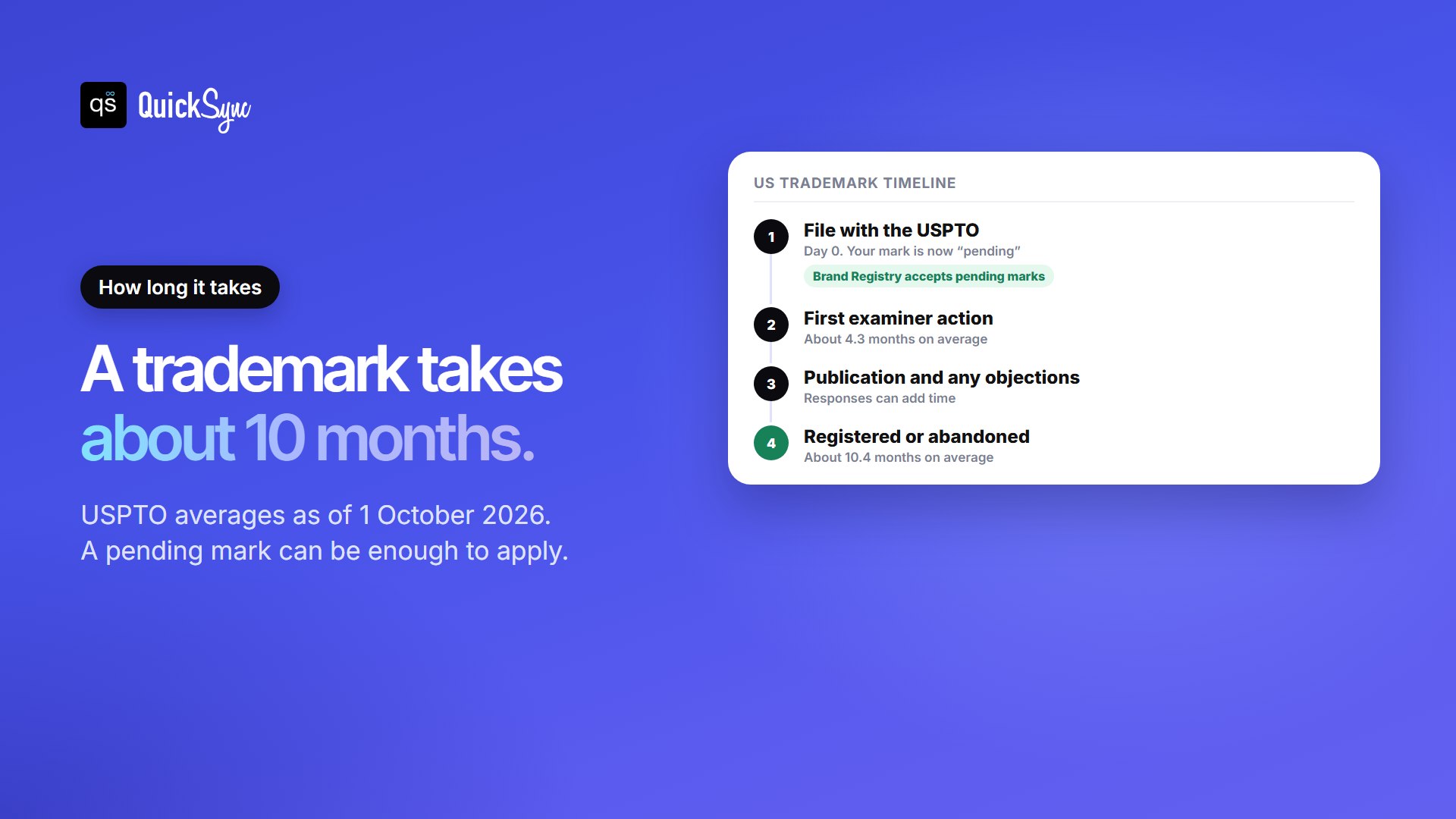
Most of the wait is the trademark, not Amazon. These are the USPTO’s averages:
| Stage | Average time from filing |
|---|---|
| First action by a USPTO examiner | About 4.3 months |
| Registered (or abandoned) | About 10.4 months |
Because Amazon accepts a pending trademark, you can apply to Brand Registry as soon as you have a USPTO application number. You don’t need to wait 10 months.
How to enroll in Amazon Brand Registry, step by step
Have your trademark number, logo file, product photos and a list of your product categories ready, then:
- Create your Brand Registry account. Go to brandregistry.amazon.com and sign in with your Seller Central or Vendor Central login.
- Enroll your brand. Enter your brand name exactly as it appears on the trademark, the trademark registration or application number, the trademark office, and your logo if it’s part of the mark.
- Add your products. Choose your product categories and upload real photos of your products and packaging with the brand clearly visible.
- Verify. Amazon checks your identity and your right to the trademark. If a lawyer is the contact on your trademark filing, tell them to expect an email from Amazon so the verification isn’t missed.
Most delays come from three things: a brand name that doesn’t exactly match the trademark, photos where the brand is on a removable label, and a verification email that nobody answers.
What you get with Brand Registry
Tools to protect your brand
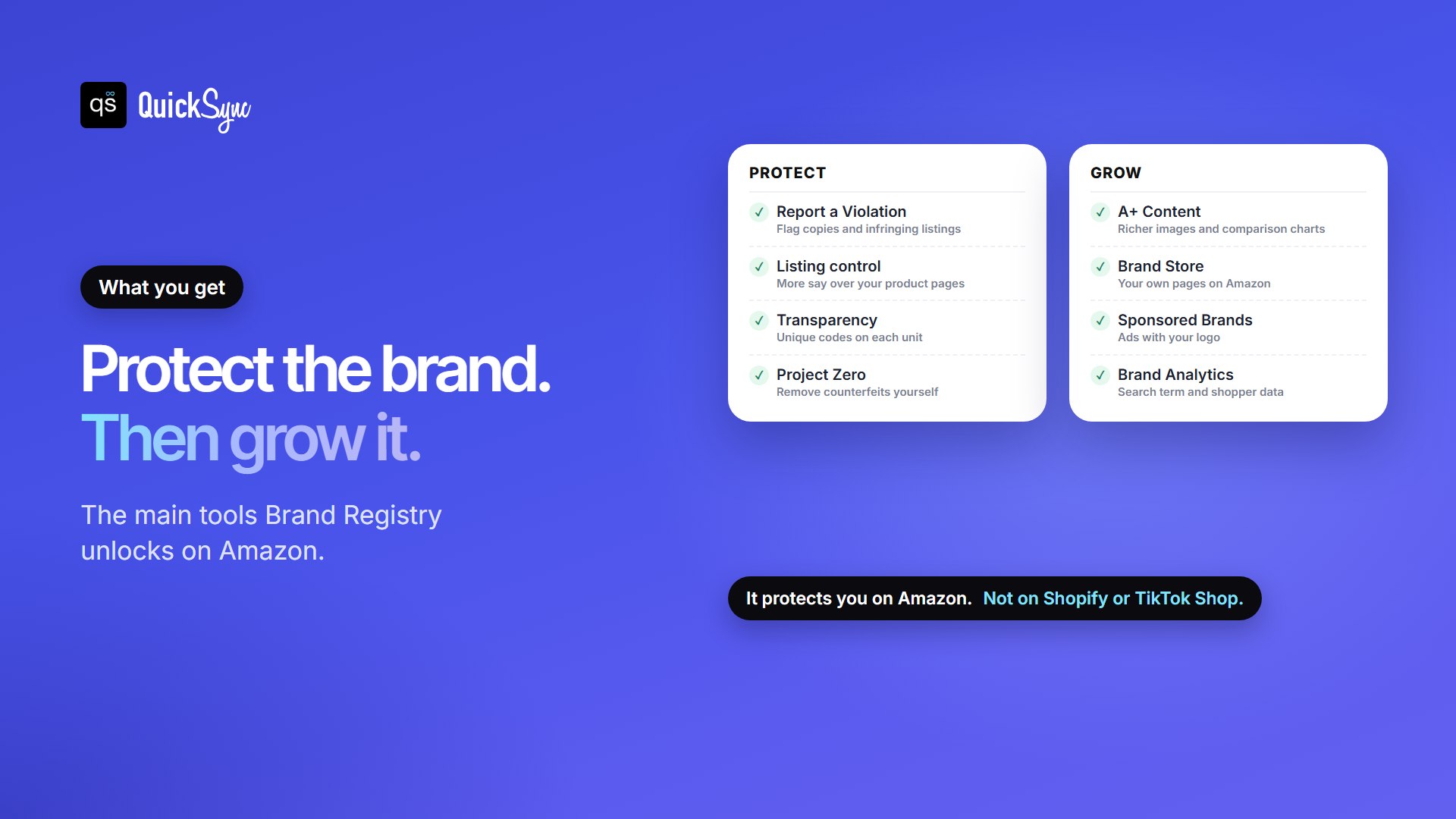
- Report a Violation: find and report listings that infringe your trademark, such as copies and counterfeits.
- More control over your listings: your brand information carries more weight, which helps stop others changing your product details.
- Transparency: Amazon’s product serialisation service, which puts a unique code on each unit so fakes can be caught.
- Project Zero: lets eligible brands remove counterfeit listings themselves, without waiting on Amazon support.
Tools to grow your brand
- A+ Content: richer product pages with extra images, comparison charts and brand story sections.
- Brand Store: your own multi-page shop inside Amazon.
- Sponsored Brands: search ads that feature your logo and several products.
- Brand Analytics: data on the search terms and shopping behaviour around your products.
- Amazon Vine: sends your new products to trusted reviewers to help you get early reviews.
Amazon sometimes offers extra incentives to brands that enroll, such as credits. The terms change, so check what’s available in your account when you join.
Is Amazon Brand Registry worth it?
Yes, if you sell your own brand on Amazon. Joining is free, and the protection and content tools are hard to get any other way. The trademark is worth having regardless, because it protects your brand name in the country where it’s registered, on every channel, not just on Amazon.
It’s not for you if you resell other brands, sell one-off or unbranded goods, or aren’t ready to put your brand permanently on your products and packaging.
Brand Registry protects Amazon. What about your other channels?
Brand Registry works inside Amazon. Many brands don’t sell only there. They run their own Shopify store, sell on TikTok Shop, and often ship Amazon orders through FBA. Each channel has its own listings and its own stock count.
That’s where things slip. A product sells out on Amazon but stays live on Shopify. A price or title changes in one place and not the others. Customers see different versions of the same brand.
QuickSync keeps your brand consistent behind the scenes. It links Amazon with Shopify, TikTok Shop, WooCommerce, eBay, Etsy and Square, matches each product by SKU, and updates stock on every channel when something sells. Our guide to SKUs explains how to set them up, and our roundup of Shopify Amazon integration apps compares the options.
FAQs
More guides for Amazon sellers: what is Amazon FBA, how to connect Shopify to Amazon, Shopify Amazon inventory sync and eBay vs Amazon.